The European Union has intensified its calls for Israel to cease the expansion of settlements in the occupied West Bank, warning that continued construction and other unilateral actions are critically undermining the prospects for a future Palestinian state and exacerbating regional instability. This renewed diplomatic pressure underscores a growing international concern over the escalating violence and its impact on Palestinian communities.
Mounting EU Pressure on Israeli Settlement Policy
A spokesperson for the European Union reiterated on Friday the bloc’s demand that Israel halt its settlement activities, including the legalization of previously unauthorized outposts, land seizures, demolitions of Palestinian homes, and forced evictions. These actions, the EU stated, directly contravene international law and threaten the viability of the two-state solution, a long-standing cornerstone of international peace efforts in the region.
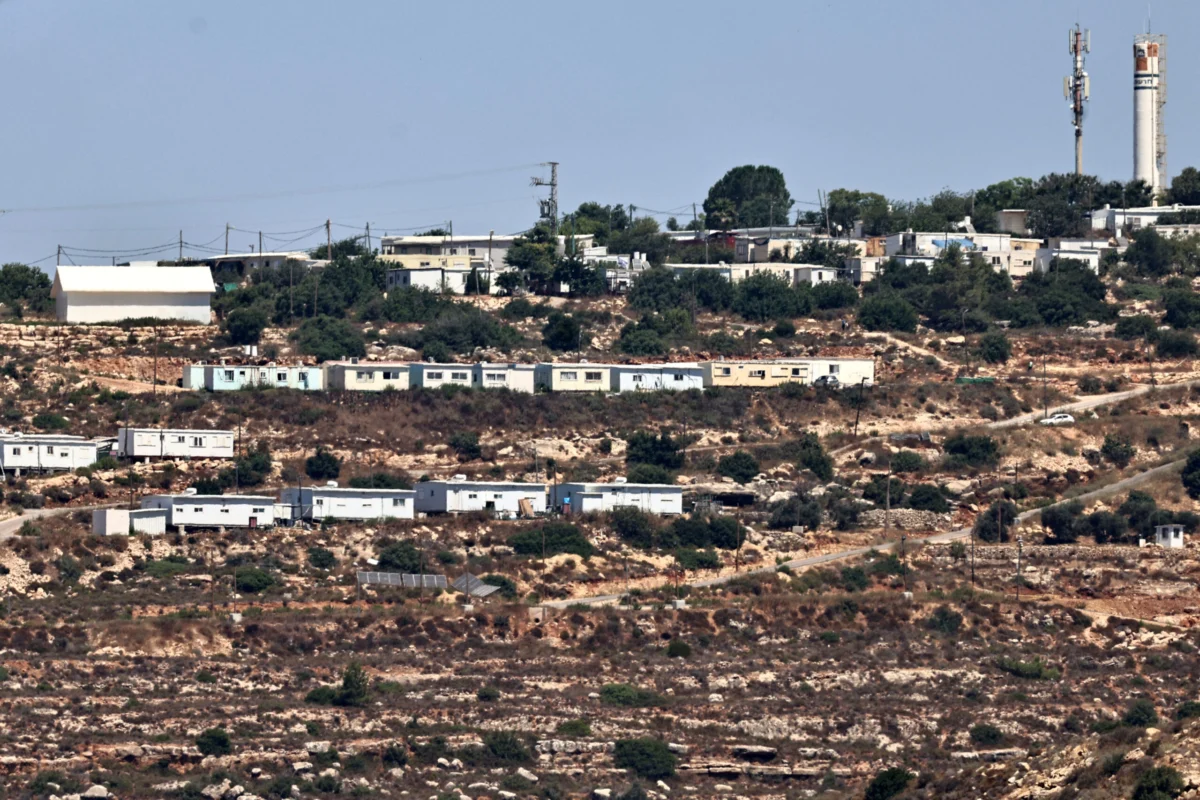
The EU’s firm stance comes in the wake of a significant financial commitment from Israel’s security cabinet. Last week, the cabinet approved a substantial allocation of 1.3 billion shekels, equivalent to approximately $427.8 million, specifically earmarked for the establishment of 34 new settlements in the occupied West Bank. This funding package represents one of the most significant recent investments by Israel in expanding its settlement infrastructure.
International Law and the Status of Settlements
The international community, including the United Nations and the International Court of Justice, overwhelmingly considers Israeli settlements in territories occupied by Israel since the 1967 Six-Day War to be illegal under international law. These settlements are viewed as a major impediment to peace, violating principles of self-determination and human rights. Israel, however, has consistently rejected this interpretation, asserting its own claims and security interests in the West Bank.
For decades, the European Union has maintained a consistent position: it does not recognize Israel’s sovereignty over territories occupied in 1967. Despite this official stance, the 27-member bloc has grappled with internal divisions regarding the implementation of stronger measures against Israel’s settlement policy. This divergence in opinion among member states has historically hampered the EU’s ability to present a unified and decisive front.
Disagreement on Stronger Sanctions
This week, EU foreign ministers convened but failed to reach a consensus on proposals aimed at restricting trade with Israeli settlements in the occupied West Bank. The discussions highlighted a growing divide, with several member states advocating for more robust action to pressure Israel, while others expressed reservations about the potential consequences of such measures. The lack of agreement signals a continuing challenge for the EU in translating its concerns into concrete policy changes.
The intensified diplomatic scrutiny coincides with a disturbing surge in violence across the occupied West Bank. Palestinian civilians, including children, have been subjected to attacks and injuries in separate incidents involving both Israeli settlers and Israeli forces. These events have amplified calls for accountability and greater protection for Palestinian populations.
Attacks on Palestinian Children Escalate
A stark example of the escalating violence occurred on Friday, when two Palestinian children required hospitalization after sustaining head and facial injuries. According to the Palestinian news agency Wafa, the children were traveling in their family vehicle when Israeli settlers allegedly hurled stones at them in the Wadi al-Sha’er area. This incident underscores the vulnerability of Palestinian children to settler violence in the region.
In another disturbing event, a 16-year-old Palestinian boy was shot and injured by Israeli forces in the occupied West Bank. He is currently receiving medical treatment in a hospital. Such incidents contribute to a climate of fear and insecurity for Palestinians living under occupation.
"Intolerable Situation" in the West Bank
Josep Borrell, the EU’s High Representative for Foreign Affairs and Security Policy, characterized the situation in the West Bank as "really intolerable." Speaking ahead of talks among EU foreign ministers in Brussels, he emphasized the dire humanitarian and political implications of the ongoing violence and settlement expansion.
"What is happening in the West Bank is actually making it more and more impossible that the two-state solution ever can come into effect," Kaja Kallas, the EU’s foreign policy chief, stated, echoing Borrell’s concerns. Her remarks highlight the profound impact of current Israeli policies on the potential for a lasting peace agreement based on the two-state framework.
Historical Context of Settlement Growth
The expansion of Israeli settlements in the West Bank and East Jerusalem is a complex issue with deep historical roots. Following the 1967 war, Israel began establishing settlements in these territories, which are considered occupied under international law. Over the decades, these settlements have grown significantly in size and population, transforming the demographic and geographic landscape of the West Bank.
International bodies have consistently condemned the settlements, citing their illegality and their role in creating a de facto annexation of Palestinian territory. Despite international pressure and numerous UN resolutions, successive Israeli governments have continued to advance settlement construction, often citing security concerns and historical ties to the land.
Impact on Palestinian Lives and Livelihoods
The consequences of settlement expansion extend far beyond political implications. For Palestinians, the growth of settlements has led to the confiscation of vast tracts of agricultural land, the disruption of vital infrastructure, and increased restrictions on movement. The construction of bypass roads for settlers, often through Palestinian territory, further fragments communities and isolates villages.
Daily life for Palestinians in the West Bank is often characterized by the presence of Israeli military checkpoints, settler patrols, and the constant threat of displacement. The violence against children, as recently reported, is a tragic manifestation of the broader climate of insecurity and human rights violations experienced by Palestinian communities.
The Two-State Solution in Jeopardy
The international community has long viewed the establishment of an independent Palestinian state alongside Israel – the two-state solution – as the most viable path to resolving the Israeli-Palestinian conflict. However, the relentless expansion of Israeli settlements is widely seen as systematically dismantling the territorial contiguity and viability necessary for such a state.
Critics argue that the physical reality created by the settlements, with their increasing population and infrastructure, makes the prospect of a contiguous and sovereign Palestinian state increasingly difficult, if not impossible, to achieve. This erosion of the territorial basis for a Palestinian state poses a significant challenge to all diplomatic efforts aimed at achieving a lasting peace.
Divisions Within the European Union
The European Union, a major diplomatic and economic bloc, finds itself at a critical juncture. While there is broad agreement on the illegality of settlements and the need to preserve the possibility of a two-state solution, the path forward remains contentious. Member states differ on the appropriate level of pressure to exert on Israel, with some advocating for sanctions, while others prioritize diplomatic engagement and aid.
This internal division weakens the EU’s collective leverage and its ability to influence Israeli policy. The failure to agree on concrete measures, such as trade restrictions, demonstrates the challenges of achieving a unified foreign policy among diverse national interests and historical perspectives.
Calls for Accountability and Protection
The recent incidents of violence against Palestinian children have amplified calls for greater accountability and for stronger international mechanisms to protect civilians. Human rights organizations and international bodies are urging Israel to investigate these attacks thoroughly and to ensure the safety of all residents in the occupied territories.
The international community faces a persistent dilemma: how to effectively hold Israel accountable for actions that violate international law and undermine peace prospects, while also seeking to maintain dialogue and de-escalate tensions. The ongoing cycle of construction, displacement, and violence suggests that current approaches are insufficient to alter the trajectory of the conflict.
Broader Geopolitical Implications
The situation in the West Bank has broader geopolitical implications, impacting regional stability and international relations. The unresolved conflict continues to be a source of grievance and a rallying point for various actors in the Middle East and beyond. The EU’s continued calls for a halt to settlement expansion reflect its commitment to international law and its belief that a just and lasting peace is essential for the security and prosperity of the region.
The ongoing debate within the EU and the persistent international condemnation of settlement activity highlight the enduring challenges in finding a pathway to peace. The increasing urgency of the situation, underscored by the violence against vulnerable populations, demands a more robust and unified international response to ensure the protection of human rights and the viability of a future Palestinian state.