The United States military conducted its seventh consecutive night of precision airstrikes against Iranian targets on Friday, signaling a significant intensification of hostilities as the maritime standoff in the Strait of Hormuz reaches a critical tipping point. U.S. Central Command (CENTCOM) confirmed the operations began at approximately 7:00 p.m. GMT, stating the mission was specifically designed to continue degrading the Islamic Revolutionary Guard Corps’ (IRGC) military capabilities and its ability to threaten international shipping. This latest wave of kinetic action follows a week of deteriorating security conditions in the world’s most vital energy corridor.
Reports from Iranian state-affiliated media outlets indicated that explosions were heard across several major hubs, including the cities of Sirik, Ahvaz, and Yazd. While the Pentagon has maintained that the strikes are targeted at military infrastructure, the geographic breadth of the campaign suggests a widening scope of operations intended to paralyze Iranian logistics and command-and-control centers. The escalation comes as both Washington and Tehran abandon previous de-escalation protocols in favor of direct military confrontation.
The IRGC issued a statement late Friday claiming that two commercial oil tankers had detonated after striking naval mines within the Strait of Hormuz. However, U.S. military officials quickly dismissed the claim as "blatant disinformation," asserting that there was no evidence of such incidents involving merchant vessels. Analysts suggest the conflicting reports are part of an ongoing information war accompanying the physical strikes, as both sides attempt to control the narrative regarding the safety of the waterway.
The Regional Response and Retaliatory Strikes
As the US launches seventh night of Iran strikes as Hormuz conflict escalates, the IRGC has responded with its own series of missile and drone attacks targeting U.S. assets and regional allies. On Saturday, Iranian state media reported that the IRGC had successfully targeted the Sheikh Isa air base in Bahrain, where U.S. combat aircraft are known to be stationed. Tehran also claimed to have struck an intelligence data center in Bahrain operated by the telecommunications firm Batelco, though the extent of the damage remains unverified by independent observers.
The retaliatory cycle expanded into Kuwait, where the IRGC reportedly targeted a U.S. naval fuel-support pier at al-Ahmadi port. Further strikes were directed at a U.S. signals and communications hub within the country. The intensity of the Iranian response forced Kuwaiti authorities to temporarily suspend all operations at Kuwait International Airport, citing the immediate threat of incoming Iranian missiles and loitering munitions.
In a move that surprised regional observers, Iran also launched strikes toward Jordan, Oman, and Qatar. Qatar, which has traditionally served as a key diplomatic mediator between Washington and Tehran, had previously been spared from direct targeting. However, Qatari officials reported that falling debris from intercepted missiles wounded a child, marking a grim expansion of the conflict’s human toll. In Kuwait, a power and desalination plant was struck, causing significant damage to a facility that provides nearly 90% of the nation’s potable water.

Infrastructure Collapse and the Humanitarian Crisis
The tactical focus of the U.S. campaign has shifted toward Iranian transit and energy infrastructure. Earlier on Friday, American airstrikes destroyed several bridges in the southern Hormozgan province. Iranian state television reported that at least seven people were killed in these strikes, which severed a primary transit artery for Bandar Abbas, Iran’s most significant commercial port. The destruction of these bridges has effectively isolated the port from the country’s interior, crippling domestic supply chains.
Further south, U.S. munitions brought down a monitoring tower at Chabahar port on the Gulf of Oman. CENTCOM officials defended the strike, alleging the IRGC used the tower to coordinate and facilitate attacks on commercial vessels navigating the entrance to the Strait of Hormuz. Additional strikes were reported against Iranshahr airport and various electrical substations, leading to widespread blackouts across the southern provinces.
The Iranian energy ministry has issued an emergency plea to citizens, urging them to drastically reduce electricity and air conditioning usage. The power grid is reportedly nearing total collapse under the dual pressure of U.S. kinetic strikes and a seasonal heatwave. "The southern regions are facing a catastrophic intersection of extreme heat and the deliberate destruction of power infrastructure," a ministry spokesperson stated. Human rights organizations have raised concerns that targeting civilian-use infrastructure, such as power grids and desalination plants, could be investigated as potential war crimes.
The Casualties and the Political Calculus
The human cost of the week-long campaign continues to rise. Hossein Kermanpour, a spokesperson for Iran’s health ministry, stated on Friday morning that the renewed U.S. strikes have killed at least 38 people and wounded more than 400 others. These figures include both military personnel and civilians caught in the vicinity of targeted facilities. Despite the rising death toll, there are few signs of a diplomatic off-ramp as both nations harden their respective positions.
In Washington, the strikes are being viewed as the fulfillment of President Donald Trump’s recent promises to expand military pressure on Tehran. Earlier this week, the president reportedly met with senior Department of Defense and State Department officials to finalize an expanded aerial campaign. The stated objective of this "maximum pressure" military phase is to force Iran to unilaterally reopen the Strait of Hormuz and cease its harassment of international shipping.
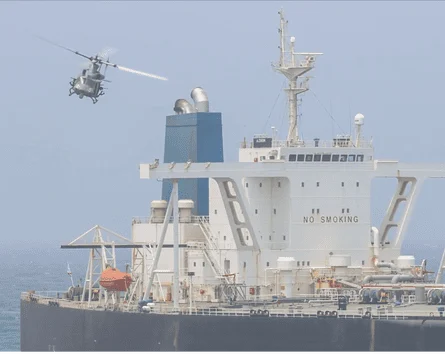
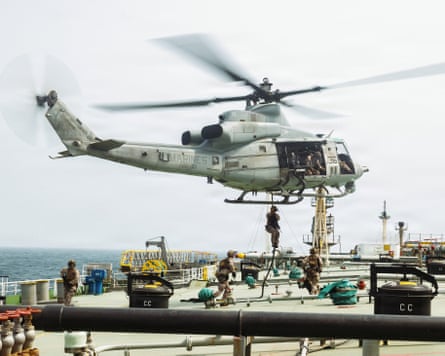
The current hostilities have effectively dismantled an interim memorandum of understanding that was intended to keep the strait open while negotiations for a permanent truce proceeded. That deal collapsed on Wednesday when Iran officially closed the strait to "hostile" traffic, prompting the U.S. to reimpose a total naval blockade of Iranian ports. U.S. Marines have already begun boarding vessels suspected of violating the blockade, including a high-profile seizure of the M/T Wen Yao in the Gulf of Oman.
Global Energy Markets and Economic Instability
The economic repercussions of the US launches seventh night of Iran strikes as Hormuz conflict escalates are being felt globally. The Strait of Hormuz is the world’s most important oil chokepoint, previously handling approximately 20% of the global petroleum supply. Since the escalation began, shipping volume through the waterway has plummeted. Data from Lloyd’s List Intelligence indicates that weekly cargo shipments dropped by nearly 25% at the start of the month, a figure that is expected to worsen as the blockade tightens.
To mitigate the risk of seizure or attack, some tankers are reportedly navigating the region with their Automatic Identification System (AIS) transponders turned off, effectively "going dark" to evade detection. However, many major shipping firms have ordered their fleets to remain at anchor outside the conflict zone, refusing to enter the Gulf until security guarantees are restored. While regional pipelines offer some alternative routes for oil export, they lack the capacity to compensate for the closure of the sea lanes.
The conflict also threatens to spill over into the Red Sea. Reuters has reported that Tehran has requested its Houthi allies in Yemen to prepare for attacks on the Bab el-Mandeb strait. Houthi leader Abdulmalik al-Houthi has issued a public warning that all Saudi Arabian energy infrastructure could be targeted if Riyadh continues to support the U.S. position. This follows a series of retaliatory strikes between Saudi forces and Houthi rebels that saw the targeting of Sana’a airport.
Diplomatic Efforts Amidst Escalation
Despite the heavy fighting, some back-channel diplomatic efforts remain active, though their effectiveness is in doubt. Pakistan’s foreign ministry confirmed on Thursday that it is attempting to facilitate a dialogue between Washington and Tehran. However, a spokesperson acknowledged that the "rapidly expanding theater of war" has made it nearly impossible to find common ground for a ceasefire.
International observers are closely watching the reactions of other global powers. The European Union has called for "maximum restraint," while China and Russia have criticized the U.S. blockade as a violation of international maritime law. Within the U.S., the administration remains defiant. In a televised address to the American public, President Trump characterized the military campaign as a success, asserting that the U.S. is "winning big" in its confrontation with Iran.
As the conflict enters its second week, the focus remains on the Strait of Hormuz. The U.S. military has signaled that the nightly strikes will continue until Iran demonstrates a "verifiable change in behavior." Conversely, the IRGC has warned of a "devastating price" for any country that continues to host U.S. bases used in the attacks. With both sides dug in, the risk of a broader regional war continues to overshadow the prospect of a diplomatic resolution.