New York City – The vibrant pulse of Argentinian passion for football resonates through New York City, as fans eagerly anticipate the nation’s potential appearance in the 2026 World Cup final, a dream that ignites communities from Queens to Brooklyn. The city, a melting pot of cultures and a long-standing haven for Argentinian immigrants, finds its unique identity amplified during the quadrennial football spectacle, transforming familiar neighborhoods into extensions of Buenos Aires.
"Little Argentina" in Elmhurst: A Fading Echo, a Resilient Spirit
Elmhurst, Queens, once a bustling epicenter for Argentinian immigrants, especially those who sought refuge during the tumultuous "dirty war" of the 1970s, now carries the echoes of its past. Christian Gimenez, a lifelong resident and owner of Rio de la Plata Bakery, observes the subtle shifts in his childhood neighborhood, where the once-prevalent Argentinian eateries and bakeries have dwindled to a select few. Yet, the spirit of his heritage endures, meticulously preserved through dedicated efforts.
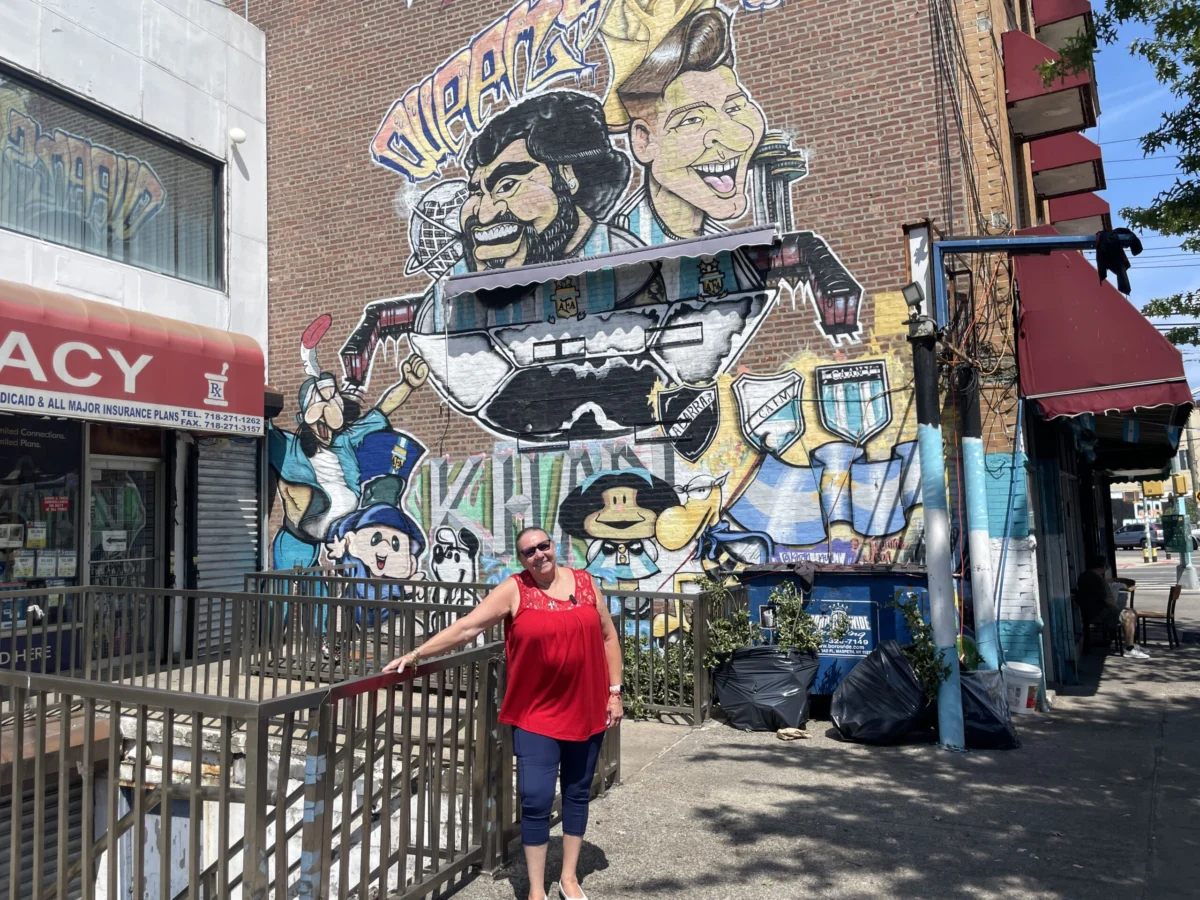
"Everywhere you would go, it was Argentinian," Gimenez recalled, reflecting on his youth. He now spearheads the transformation of his block into a temporary shrine to Argentinian football, a testament to his commitment to "keep it alive." During World Cup tournaments, this stretch of Elmhurst undergoes a vibrant metamorphosis, draped in the iconic white and sky blue of the national team. From the very asphalt to the humble fire hydrants, every surface becomes a canvas for national pride.

The commitment to the Argentinian national team, Gimenez emphasizes, transcends the month-long tournament. His bakery proudly displays a towering mural of football legends Lionel Messi and Diego Maradona, a permanent fixture serving as a constant reminder of the profound generational significance of Argentina’s football legacy. This shared passion has historically served as a powerful unifying force for Argentinians scattered across New York City, even as the community has become more dispersed over the years.
Echoes of Past Triumphs: Memory and Momentum
Beatriz Jaime, 74, vividly remembers the collective euphoria of Argentina’s 1978 World Cup victory over the Netherlands. She recounts watching the match broadcast at Madison Square Garden, followed by a jubilant return to her neighborhood, which was "loaded with people" celebrating deep into the night. Now residing on Long Island, Jaime remains deeply connected to her roots.
"The thing is that the roots are here, and they’re in Argentina," Jaime stated, her voice tinged with emotion. "You never forget that. I get goosebumps." These deeply ingrained memories fuel a fervent anticipation for future successes, underscoring the enduring emotional tether Argentinian fans maintain with their national team, regardless of their geographical distance.
For Henry Pachaco, 45, a Queens native, supporting Argentina is a deeply ingrained family tradition. He proudly donned the national team jersey, his mother beside him in a shirt referencing Maradona’s infamous "Hand of God" goal from the 1986 quarterfinal against England. Pachaco described his neighborhood block as the de facto "centre" for Argentinian football enthusiasts in the city, capable of replicating a stadium atmosphere on game days.

This communal celebration often involves street closures, lively music, outdoor television screenings, and the tantalizing aroma of street food, all without the prohibitive cost of attending a live match. The prospect of Argentina reaching the 2026 final, potentially featuring Lionel Messi in what could be his last national team appearance, and all of this unfolding so close to home, represents a remarkable confluence of events.
"It’s like bringing Argentina to New York… wherever you go, anywhere in the world, when Argentinians get together. That same passion is equal, no matter what," Pachaco explained. He conveyed a profound sense of belonging and acceptance within these gatherings, promising an unparalleled experience for all who partake.
Embracing Inclusivity: A Unified Fanbase
Gimenez echoed Pachaco’s sentiment, while also addressing recent controversies that have seen some Argentinian fans engage in unsportsmanlike conduct during the World Cup. He was quick to assert that such behavior does not reflect the broader fanbase.
"Whatever your race or whatever your ethnic background is, we don’t look into that," Gimenez declared firmly. "If you’re supporting us, we love you. Straight up, just like that." This inclusive ethos highlights a desire to foster a welcoming environment for all supporters, emphasizing unity and shared passion over any divisive characteristics.

"Little Bangladesh" in Brooklyn: A Growing Tide of Support
A borough away, in the Kensington neighborhood of Brooklyn, a burgeoning Argentinian football following is taking shape within the rapidly expanding Bangladeshi community. This area, now affectionately known as "Little Bangladesh," has witnessed a dramatic surge in its diaspora population over the past two decades, becoming one of the fastest-growing demographic groups in New York City. The community’s growing influence was underscored last year with the election of the first-ever Bangladeshi American to the New York City Council.
Shafiqul Alam, a resident of Kensington for 36 years, has observed the neighborhood’s transformation firsthand, noting the emergence of a passionate new base of support for Argentina’s national team. On match days, large screens are erected in pedestrian plazas, transforming public spaces into impromptu viewing parties. Alam’s own shop often becomes a haven for fans seeking shelter and a place to watch, especially when the weather turns inclement.
"Bangladeshi people love Argentina," Alam stated with conviction, "and Argentina loves Bangladesh." This reciprocal affection is fueled by a complex interplay of historical and contemporary factors.
Historical Roots and Modern Idols: The Allure of Argentinian Football
The widespread support for Argentina within South Asia, and particularly Bangladesh, has deep historical roots. A significant catalyst was the increased access to televisions in the 1980s, coinciding with the iconic Maradona-led team’s victory over England in the 1986 World Cup. This match held considerable political weight for nations still navigating the lingering effects of British colonialism.

However, for many younger fans, the primary draw is the unparalleled talent of Lionel Messi. "Knowing this could be Messi’s last match, everyone will want to watch," said Sajid Bhuyan, 31, a Kensington resident. He estimated that an overwhelming 90 percent of the local Bangladeshi community in Kensington backs Argentina.
Bhuyan observed a palpable connection between the passion displayed in "Little Bangladesh" and that found in "Little Argentina." He recounted the current tournament’s dramatic narrative, marked by Argentina’s resilience and ability to stage remarkable comebacks, most notably their stunning semifinal victory.
"I almost died when Argentina scored the two goals in just minutes," Bhuyan recounted, his voice still reflecting the intensity of the moment. "I couldn’t breathe, I couldn’t talk, I had to take five or six minutes to calm down." His fervent exclamation, "So if it happens again, we will enjoy!" encapsulates the shared anticipation and fervent hope that defines the Argentinian fanbase in New York City as they look towards the 2026 World Cup.