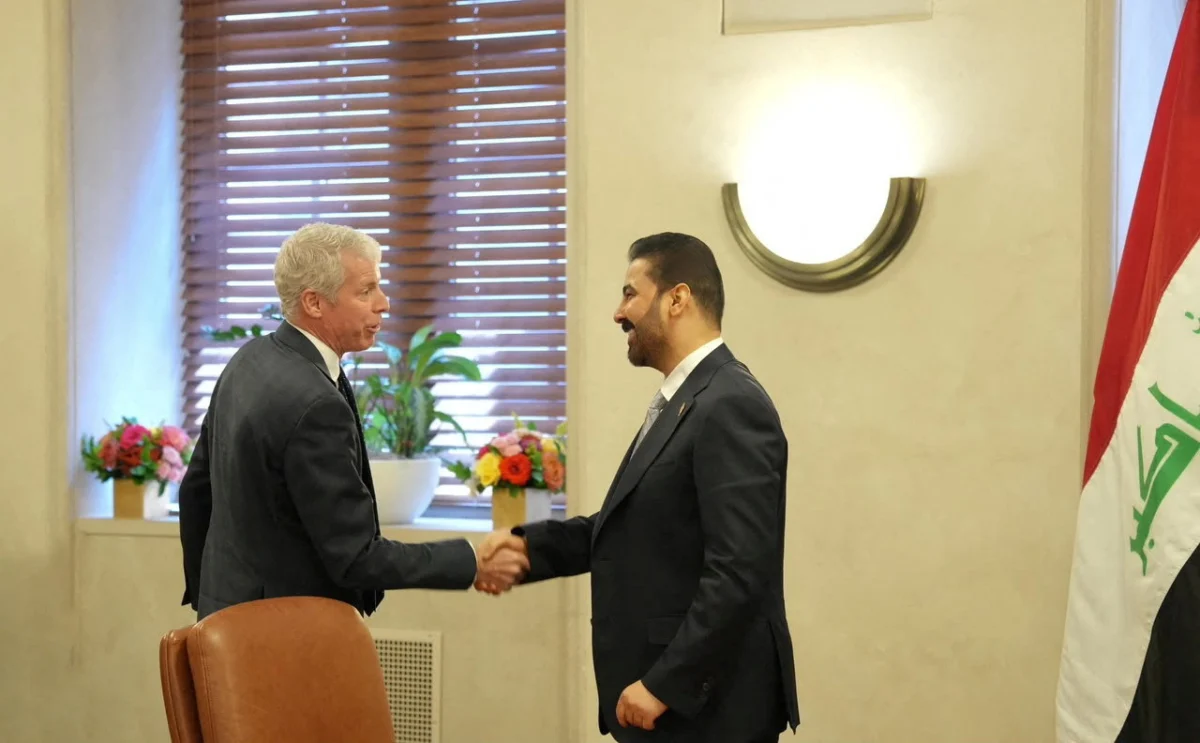
BAGHDAD – Iraqi Prime Minister Ali al-Zaidi has concluded a high-profile visit to Washington, securing an impressive array of 48 agreements and partnerships with American corporations, a significant development signaling a new era of economic cooperation and strategic infrastructure development. The comprehensive pacts, encompassing critical sectors such as energy, technology, and healthcare, underscore Baghdad’s commitment to diversifying its economy and bolstering its international ties. The bulk of these agreements are centered on the vital oil and electricity sectors, with major U.S. energy giants like ExxonMobil, KBR, GE Vernova, Shell, and Halliburton signing on for various projects.
This surge in bilateral economic activity comes at a pivotal moment for Iraq, as the nation seeks to reassert its economic independence and secure its energy export routes. The U.S. Chamber of Commerce hosted a dedicated business summit, where the formal signing ceremonies took place, highlighting the strong endorsement from both governments for enhanced private sector engagement. Prime Minister al-Zaidi articulated a clear vision for Iraq’s economic future, emphasizing an "open-door policy" to attract foreign investment and streamline business operations.
Rebuilding a Critical Energy Corridor: The Iraq-Syria Pipeline
A cornerstone of the newly inked deals involves the ambitious reconstruction of the long-defunct Iraq-Syria crude oil pipeline, a project that holds the potential to dramatically alter regional energy dynamics. This initiative, agreed upon through a cooperation accord between Iraq and Syria, aims to revive the vital artery that once stretched from the oil-rich Kirkuk region in northern Iraq to the Mediterranean port of Baniyas in Syria. The U.S. Department of State has officially welcomed this plan, announcing that a "U.S.-led international consortium" will spearhead the technical and financial execution of the pipeline’s rehabilitation.
The strategic significance of this revived pipeline cannot be overstated. Upon its completion, the pipeline is projected to boast an initial transport capacity of two million barrels of crude oil per day. This substantial volume positions it as a "critical energy corridor linking Iraqi oil production to Mediterranean export markets and beyond," according to the State Department. The potential to bypass traditional chokepoints in global oil transit is a key driver behind this project, offering Iraq greater flexibility and security in its export operations.
Strategic Imperatives: Diversifying Beyond the Strait of Hormuz
The renewed focus on the Iraq-Syria pipeline directly addresses Iraq’s strategic imperative to reduce its reliance on the Strait of Hormuz, a narrow waterway that has become a flashpoint for regional tensions. Recent geopolitical developments, including disruptions to shipping and oil exports stemming from heightened conflict, have underscored the vulnerability of this vital maritime passage. The U.S. ambassador to Turkey, Tom Barrack, commented on the transformative potential of these new pipeline agreements, suggesting they are part of a broader strategy that will "make the Strait of Hormuz an afterthought."
This strategic shift is not solely focused on oil exports but also encompasses enhancing Iraq’s domestic energy infrastructure. Agreements with GE Vernova, for instance, are poised to bolster the country’s electricity sector, a critical area for economic growth and public welfare. The inclusion of companies like KBR and Halliburton further signifies Iraq’s intent to leverage American expertise in infrastructure development and resource management.
Expanding Horizons: Technology and Beyond
Beyond the dominant energy sector, the wave of U.S.-Iraq agreements extends into other crucial domains. A notable deal has been struck with Starlink, the satellite communications company that has established a significant global presence. This partnership aims to introduce Starlink’s services to Iraq, promising to enhance connectivity across the country, particularly in areas where traditional infrastructure may be lacking. This move is expected to benefit various sectors, from telecommunications and education to remote business operations and emergency services.
The broader implications of these 48 agreements are substantial, with initial estimates from Reuters suggesting that the combined value of these preliminary deals with U.S. firms spans the energy, healthcare, and technology sectors and is worth upwards of $60 billion. This influx of investment and expertise is anticipated to catalyze economic growth, create new employment opportunities, and modernize Iraq’s industrial base. Prime Minister al-Zaidi’s proactive approach, characterized by his "open-door policy," aims to foster an environment conducive to sustained foreign investment and collaborative development.
A New Chapter in Bilateral Relations
The recent visit and the resulting cascade of agreements mark a significant new chapter in the economic and strategic relationship between Iraq and the United States. The emphasis on tangible infrastructure projects, particularly the Iraq-Syria pipeline, signals a long-term commitment to enhancing Iraq’s economic resilience and regional integration. The involvement of major American corporations underscores the confidence in Iraq’s economic potential and its commitment to reform.
The successful negotiation and signing of these 48 deals represent a tangible outcome of diplomatic efforts aimed at fostering stability and prosperity in Iraq. The U.S. government’s endorsement, as articulated by the State Department, suggests a strategic alignment with Iraq’s development goals. This multifaceted approach, addressing both energy security and technological advancement, positions Iraq for a more robust and diversified economic future.
The impact of these agreements is expected to resonate beyond the immediate economic sphere, potentially influencing regional stability and contributing to a broader shift in global energy trade routes. As Iraq embarks on these ambitious projects, the world will be watching to see how these partnerships translate into tangible progress and contribute to the nation’s long-term economic prosperity and security. The strategic revival of the Iraq-Syria pipeline, in particular, holds the promise of significantly reshaping the geopolitical landscape of energy transportation.