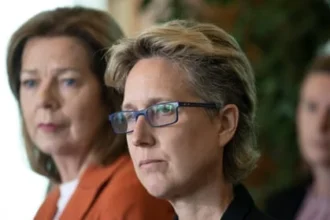
The Australian Liberal Party has issued a scathing rebuke of One Nation leader Pauline Hanson following a series of provocative statements regarding migration, multiculturalism, and transgender rights delivered at the Conservative Political Action Conference (CPAC) in London. Senior Liberal figures, including Deputy Leader Jane Hume and Senator Andrew Bragg, have publicly distanced the Coalition from Hanson’s rhetoric, labeling her commentary as "un-Australian" and "insane." The fallout from the London summit comes at a time of heightened political sensitivity in Canberra, as the nation grapples with complex debates over social cohesion and the legacy of its immigration policies.

Jane Hume, the deputy leader of the opposition, used a national television appearance to condemn Hanson’s suggestion that Australia should reconsider the merits of the "White Australia" policy, which was dismantled in the 1960s and 1970s. Speaking to Sky News, Hume characterized Hanson’s remarks as unnecessary and deeply divisive. "I think that they were unnecessary. They were divisive. They were inflammatory, and they were totally un-Australian," Hume said. She emphasized that Australia’s identity is inextricably linked to its success as a migrant nation, noting that the country’s prosperity depends on a migration program that drives productivity rather than returning to racial exclusion.
The criticism was echoed by Liberal Senator Andrew Bragg, who addressed Hanson’s claims regarding the transgender community during an interview on the ABC’s Insiders program. Hanson had reportedly told the CPAC audience that Australia’s stance on transgender rights was "stupid," suggesting the community posed a threat to the nation’s social fabric. Bragg dismissed these claims as detached from reality, stating that the idea of a "spectre of transgender people taking over Australia" was "insane." Bragg argued that public life should be dedicated to making life easier for minorities rather than marginalizing them for political gain.

Ideological Rifts Over Multiculturalism and Migration
The criticism of Hanson has also exposed internal friction within the Liberal Party itself. Former Prime Minister Tony Abbott, who currently serves as the president of the Liberal Party, recently suggested in a social media video that multiculturalism has "failed in Australia." This stance puts him at odds with the current parliamentary leadership and younger members of the party like Senator Bragg. Bragg stated he "strongly disagrees" with the former Prime Minister, arguing that the Liberal Party’s own history is defined by the promotion of multiculturalism.
Bragg cited the legacies of the Menzies, Holt, and Fraser governments as the architects of modern, diverse Australia. He noted that it was a Liberal-Country Party Coalition that began the process of abolishing the White Australia policy and later introduced the Special Broadcasting Service (SBS) to cater to a multilingual population. "Liberalism has actually created multiculturalism because it creates a framework for people to have freedom of religion, freedom of thought, freedom of conscience," Bragg said. The public disagreement highlights a growing debate within the center-right regarding how to balance traditional values with the realities of a pluralistic society.
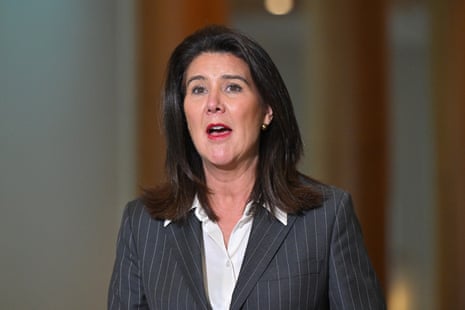
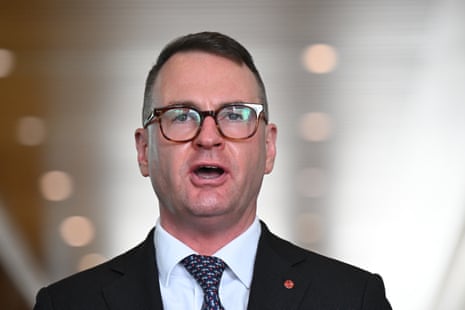
Labor frontbencher Andrew Charlton also weighed in on the controversy, accusing Hanson of being "incredibly divisive." Charlton, the assistant minister for science and technology, argued that Hanson’s focus on race and identity does nothing to address the practical challenges facing Australians, such as the cost-of-living crisis, housing shortages, or tax reform. According to Charlton, waves of migrants have historically strengthened the nation, and attempts to categorize which groups "belong" are counterproductive to the national interest.
Global Tensions Drive Surge in Fuel Prices
While the political debate simmered in London and Canberra, Australian consumers faced immediate economic pressure as global oil prices surged. Diesel prices at the pump rose by 15 cents per litre over a five-day period, a direct consequence of escalating tensions between the United States and Iran. Military strikes in the Strait of Hormuz have disrupted global supply chains, pushing Brent crude oil to $88 a barrel. This follows a brief period of stability after a mid-June peace attempt, but the renewed conflict has sent wholesale costs skyrocketing.

In Melbourne, diesel prices hit an average of 209.9 cents per litre, while Brisbane, Sydney, and Adelaide saw prices hover between 204 and 207 cents. Unleaded petrol has also seen a weekly increase of approximately seven cents per litre. Shane Oliver, the chief economist at AMP, warned that prices could climb another 10 cents as the full weight of the oil price rebound flows through to retailers. Oliver noted that if the Strait of Hormuz remains a conflict zone, oil could reach $150 a barrel, a level that would likely force the Reserve Bank of Australia (RBA) to consider further interest rate hikes to combat inflation.
The economic outlook is further complicated by the impending expiration of the federal government’s partial fuel excise relief on August 2. If the relief is not extended, motorists could face an additional 16-cent increase per litre. Market analysts on Friday increased the probability of a December interest rate hike to 65%, up from 50% just a week prior, citing the inflationary pressure of energy costs as a primary driver.
Climate Records and Environmental Concerns in the Australian Alps
Environmental concerns have also taken center stage as several ski fields in the Australian Alps recorded unprecedented July temperatures. Mount Hotham reached a high of 11.1°C (52°F), shattering the previous July record of 8.7°C set in 1994. Similarly, Falls Creek recorded 11.5°C, while Perisher in New South Wales hit 11.9°C. These temperatures are remarkably high for mid-winter, raising questions about the long-term viability of the Australian snow season.
Dr. Andrew Watkins, a research associate at Monash University, attributed the warmth to a combination of slow-moving high-pressure systems and climate change. These systems create large areas of descending, warming air that becomes trapped above the ground due to radiation inversions. The Bureau of Meteorology (BoM) had previously forecast a warmer and drier winter, but the margin by which these records were broken has surprised climate scientists. The lack of consistent cold weather is expected to impact snow quality and the regional tourism economies that depend on winter sports.

Corporate Accountability and Decarbonization Delays
The intersection of economics and climate policy has also placed mining giant BHP under the microscope. A briefing document circulated to investors this week warned that the federal government’s fuel tax breaks are inadvertently slowing the company’s transition to green energy. The document suggests that the financial incentives to continue using diesel act as a "handbrake" on the electrification of BHP’s mining fleet.
This investor warning follows reports that BHP has halted or delayed several key emissions reduction projects. While the company has described climate change as an "existential" threat, internal documents suggest that the lack of medium-term emissions targets has reduced the urgency of decarbonization efforts. A spokesperson for BHP defended the company’s record, stating they remain committed to long-term goals but are reliant on the development of third-party technologies to fully electrify heavy equipment.

Regional Health and Safety Developments
In the Northern Territory, a new community-led initiative is targeting the root causes of rheumatic heart disease (RHD). Health officials have identified a direct link between overcrowded housing, scabies, and the eventual development of RHD in Indigenous children. Up to 70% of children in remote communities contract scabies before the age of one. Left untreated, these infections can lead to acute rheumatic fever. To combat this, community laundries are being established to ensure residents have access to clean bedding and clothing, a simple but effective measure that was a key factor in eliminating the disease in urban centers decades ago.
Internationally, the investigation into the suspected methanol poisoning deaths of Australian teenagers Bianca Jones and Holly Morton-Bowles in Laos has hit a legal roadblock. Lao officials reportedly informed a closed briefing that they could not lay specific charges related to the deaths because autopsies were not performed. While a distillery owner has been charged with operating an illegal business and selling dangerous goods, officials have not explicitly linked those charges to the deaths of the five tourists involved. The Australian government has since updated its travel advice for Laos, urging citizens to exercise a high degree of caution.
Law Enforcement and Social Cohesion
In Melbourne’s southeast, Victoria Police have concluded a major operation targeting vehicle theft and the use of "cloned" license plates. The Frankston Crime Investigation Unit recovered over $1 million in stolen vehicles, including high-value SUVs and luxury sedans. Police arrested 79 individuals during the operation, noting that thieves frequently use cloned plates to match the make and model of stolen cars to avoid detection. Authorities have advised the public to blur license plates in online sale photos and install anti-theft screws to prevent plate theft.
On the cultural front, pianists Jayson Gillham and Iyad Sughayer performed a private concert in Melbourne for Palestinian refugee families. The event, hosted by Palestine Australia Relief and Action (PARA), was designed to provide a space for healing and reflection amid the ongoing conflict in Gaza. Gillham, who recently lost a federal court case against the Melbourne Symphony Orchestra regarding his public comments on the conflict, continues to use his platform to highlight the humanitarian crisis. PARA founder Rasha Abbas stated that such events are vital for communities carrying "grief and worry that most can barely imagine."
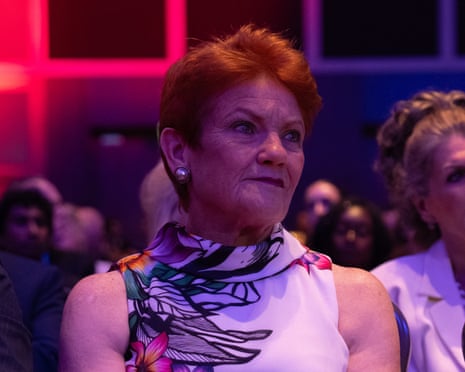
As Pauline Hanson’s comments continue to generate friction, the broader Australian political landscape remains focused on the balance between free speech and social responsibility. The criticism from both the Liberal and Labor parties suggests a rare moment of bipartisan agreement on the need to reject exclusionary rhetoric in favor of a unified national identity. However, with economic pressures rising and global conflicts impacting local costs, the debate over Australia’s future direction is far from settled.