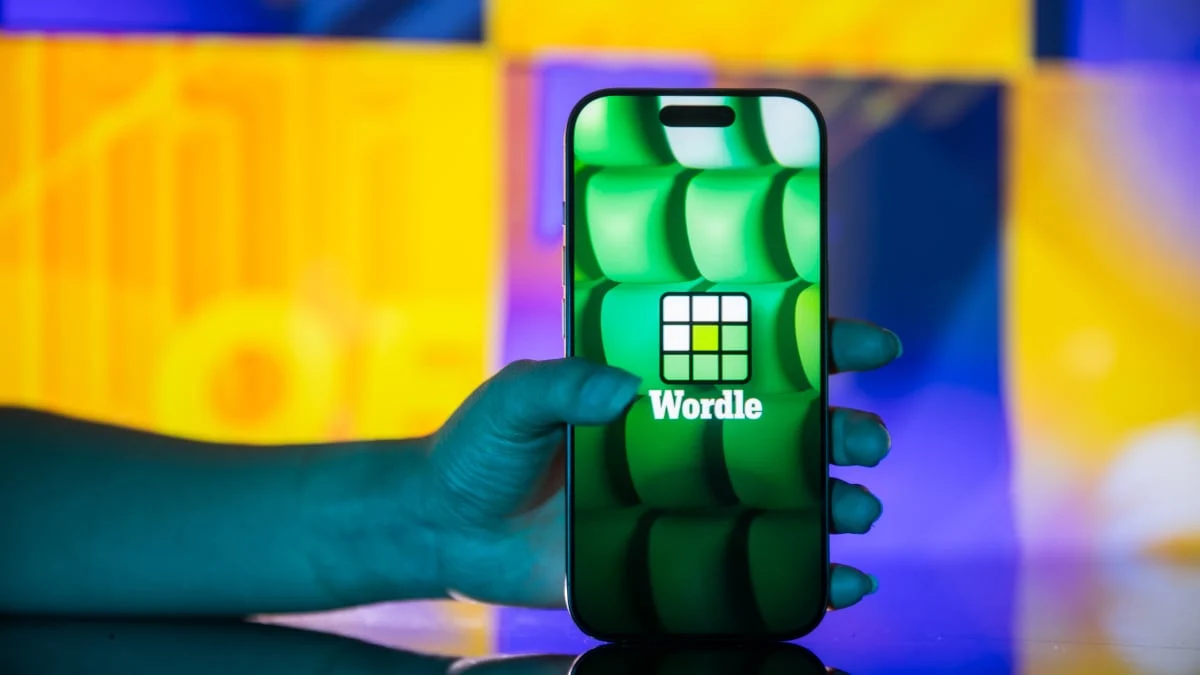
The daily digital puzzle known as Wordle continues to challenge millions of users globally, and the July 21, 2026, edition offers a specific linguistic test that revolves around a term often associated with deceptive marketing and covert promotion. As the New York Times-owned game enters another year of dominance in the casual gaming sector, players are finding that the difficulty curve remains consistent, even as the lexicon of five-letter words is slowly exhausted. Today’s puzzle requires a blend of phonetic intuition and a solid understanding of common consonant clusters.
For those navigating the grid this morning, the solution relies on identifying a word that serves as both a noun and a verb. In a modern context, the term is frequently used in digital spaces to describe someone who promotes a product or service without disclosing their financial interest. Identifying the Wordle answer today involves navigating a vowel-light structure and a repeating consonant that often catches players off guard during their final guesses.
The evolution of the Wordle phenomenon
The journey of Wordle from a private gift to a global staple is one of the most significant stories in digital media over the last decade. Originally developed by Brooklyn-based software engineer Josh Wardle, the game was designed as a personal project for his partner, Palak Shah, who enjoyed word puzzles. The simplicity of the interface—six tries to guess a five-letter word with color-coded feedback—proved to be its greatest strength.
By late 2021 and early 2022, the game had transitioned from a few dozen players to a viral sensation. The New York Times Company recognized the value of this engagement and acquired the game in early 2022 for a price "in the low seven figures." Since the acquisition, Wordle has become the cornerstone of the NYT Games app, driving a surge in digital subscriptions and anchoring a suite of daily puzzles that include Connections, Strands, and the venerable Crossword.
Strategic hints for the Wordle today puzzle
Players who prefer to solve the puzzle with minimal assistance can utilize a series of graduated hints to narrow down the possibilities for the July 21 challenge. The primary clue for today’s word is "a decoy." This refers to the historical use of the word in gambling and sales environments, where an accomplice would pretend to be a disinterested customer to encourage others to participate or buy.
The structural composition of the word is also a critical factor for success. The Wordle answer today begins with the letter "S," a common starting point that accounts for a significant percentage of five-letter words in the English language. However, the internal architecture of the word is more complex. It contains only one vowel, which is located in the third position. Furthermore, the word concludes with a double-letter consonant, a feature that often forces players to burn an extra attempt if they are not cautious with their elimination strategies.
Analyzing the Wordle answer today: SHILL
The solution to the Wordle puzzle for July 21, 2026, is SHILL. This term, while common in certain industries, may prove difficult for those who do not frequently engage with colloquialisms related to fraud or promotional tactics. A "shill" is defined as a person who acts as an enthusiastic customer or supporter of a business or person to entice others to join in.
In the current era of social media influencers and cryptocurrency marketing, the word "shill" has seen a resurgence in popular usage. It is often used as a derogatory verb to describe the act of aggressively promoting a product for personal gain. From a gameplay perspective, SHILL is a challenging solve because of the double "L" at the end. Many players tend to prioritize testing new consonants rather than repeating one they have already placed, which can lead to a "Hard Mode" trap where multiple words fit the same pattern (such as SKILL, SPILL, or STILL).
The importance of the starting word strategy
To consistently solve the daily Wordle, experts recommend a data-driven approach to the first guess. The objective of the opening move is to eliminate as many common letters as possible. Linguists and computer scientists have identified words like "ADIEU," "STARE," and "ARISE" as statistically optimal because they contain a high density of vowels and frequently used consonants.
For the July 21 puzzle, players who used "STARE" would have successfully identified the "S" in the correct position but would have been left with several gray tiles for the remaining letters. Those who follow up with words containing "I" and "L" would find themselves on the path to the solution much faster. The New York Times also offers a "WordleBot" tool that analyzes a player’s choices after the game is finished, providing a "luck" and "skill" score to help users refine their long-term strategies.
The New York Times Games ecosystem and the Wordle Archive
Since Wordle’s integration into the New York Times, the company has expanded the ways in which users can interact with the game. One of the most requested features was the ability to play past puzzles. Initially, independent developers created archives of previous games, but these were eventually shuttered following trademark requests from the Times.
In response, the New York Times launched its official Wordle Archive, which is available to subscribers of NYT Games. This archive allows players to go back and solve every puzzle since the game’s inception, providing a massive library of content for enthusiasts. This move was part of a broader strategy to monetize the game while keeping the daily puzzle free for the general public. The success of this model has allowed the Times to invest in other hits, such as "Strands," a word-search style game that has also developed a dedicated daily following.
Is Wordle getting harder in 2026?
A common sentiment among the player base is the perception that the game has become more difficult since the New York Times took over. However, analysis of the game’s original source code reveals that the word list was largely predetermined by Josh Wardle. While the Times has occasionally removed words that were deemed too obscure or offensive, the core list of five-letter solutions remains largely unchanged from the original version.
The perceived difficulty often stems from the psychological effect of "near-misses." When a player reaches their fifth or sixth guess and is faced with a "___ILL" pattern, the element of luck increases significantly. Today’s answer, SHILL, is a prime example of a word that exists in a "cluster," where many words differ by only a single letter. Navigating these clusters is the true test of a Wordle master, often requiring the use of a "filler" word to eliminate multiple consonants at once.
Cultural impact and the future of daily puzzles
Wordle’s impact on digital culture extends beyond the game itself. It pioneered the "once-a-day" gaming model that respects the user’s time, contrasting with the "infinite scroll" mechanics of most social media apps. This "appointment gaming" has created a shared experience where people across different time zones are all solving the same riddle at the same time.
The social sharing feature—the grid of green, yellow, and gray squares—became a visual shorthand for the game’s success. It allowed players to share their results without spoiling the answer for others, fostering a sense of community. As we move through 2026, the game remains a staple of morning routines for millions, proving that the appetite for simple, elegant puzzles remains strong in an increasingly complex digital landscape.
Final thoughts for the July 21 puzzle
For those who struggled with SHILL today, the experience serves as a reminder of the depth of the English language and the cleverness of the game’s design. Whether you solved it in two tries or six, the daily ritual provides a brief moment of cognitive exercise. Tomorrow will bring a new word and a new set of challenges, and the cycle of the daily Wordle will continue to turn, one five-letter word at a time.