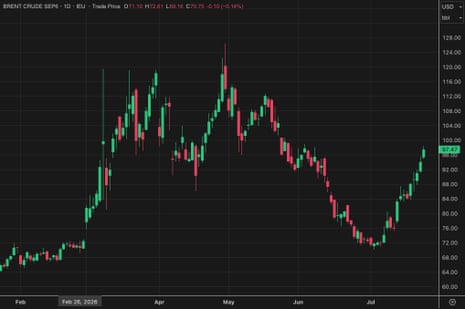
International energy markets are facing a period of intense volatility as Brent crude futures surged more than 3% Thursday, pushing oil prices near $100 a barrel for the first time since May. The price spike follows a 12th consecutive night of U.S. military strikes against targets in Iran, coupled with a series of Houthi rebel attacks on Saudi Arabian oil tankers in the Red Sea. These escalating conflicts have raised fears of a total shutdown of the world’s most critical maritime energy corridors, threatening to destabilize the global economy and drive inflation higher in Western nations.
The global benchmark, Brent crude, rose to a session high of $97.45 per barrel during morning trading, while the North American benchmark, West Texas Intermediate (WTI), jumped 4% to hit $89.85. Analysts warn that the confluence of military action in the Persian Gulf and the Red Sea has created a "two-chokepoint" crisis that could see prices exceed the $100 threshold if diplomatic solutions remain elusive. As the U.S.-led coalition continues its campaign against Iranian infrastructure, the retaliatory actions of Iran-aligned groups in Yemen have introduced a new level of risk for commercial shipping.

Geopolitical Instability and the Two-Chokepoint Crisis
The current market panic is rooted in the simultaneous threats to the Strait of Hormuz and the Bab el-Mandeb strait. The Strait of Hormuz, a narrow waterway between Oman and Iran, is the world’s most important oil transit point, through which approximately one-fifth of the world’s total oil consumption passes. Iran has effectively closed the strait in an attempt to exert economic pressure on the Trump administration, demanding a cessation of U.S. and Israeli military operations.
Simultaneously, the Bab el-Mandeb strait, located off the coast of Yemen, is under threat from Houthi militants. The group recently announced a naval blockade of Saudi Arabian ports, a move they enforced on Thursday by targeting Saudi-flagged tankers. This dual threat has forced many shipping companies to divert their vessels around the Cape of Good Hope, adding weeks to delivery times and significantly increasing freight costs.
Online trading firm Saxo noted that the redirection of traffic has created a logistical nightmare for the energy sector. By targeting Saudi vessels, the Houthis are attempting to isolate one of the world’s largest oil exporters. However, the blockade is also testing the resolve of other global powers. Shipping data showed two Chinese supertankers, the Singapore-flagged Xin Long Yang and the Chinese-flagged Cosnew Lake, attempting to exit the Red Sea via the Bab el-Mandeb strait on Thursday. These vessels, carrying a combined 4 million barrels of Saudi crude, are being closely watched by traders as a barometer of how strictly the Houthis will enforce their declared blockade against non-Western interests.
Domestic Economic Shifts and Policy Changes in the United Kingdom
While global oil prices near $100 a barrel, domestic policy shifts in the United Kingdom are reflecting a changing political and economic landscape. Prime Minister Andy Burnham has moved to address the struggles of the hospitality sector by announcing a 20% cut in business rates for pubs, clubs, and live music venues. The policy, which is expected to cost approximately £100 million (roughly $130 million) annually, is designed to revitalize local high streets that have been battered by high energy costs and shifting consumer habits.
To fund these tax breaks, the Burnham administration has signaled it will target "anti-social businesses," specifically singling out vape shops for higher tax burdens. The government also intends to close tax loopholes used by online marketplaces that put physical retailers at a disadvantage. Prime Minister Burnham stated that the move is intended to protect the "beating heart" of British communities, promising that further details will be unveiled in the upcoming autumn budget.
The Night Time Industries Association welcomed the relief, noting that the inclusion of nightclubs alongside pubs demonstrates a broader recognition of the night-time economy’s cultural and social value. However, the policy has drawn criticism from other segments of the hospitality industry. Lobbying groups representing restaurants, cafes, and hotels argued that they have been unfairly excluded from the relief despite facing the same inflationary pressures and rising labor costs as pubs and bars.
Corporate Turmoil and the Future of Energy Utilities
In the corporate sector, the owner of British Gas, Centrica, reported a massive surge in profits while simultaneously announcing significant job cuts. Centrica posted an operating profit of £710 million for the first half of 2026, a sharp reversal from the £69 million loss recorded during the same period the previous year. Despite this financial windfall, the company confirmed it would eliminate 1,300 roles in its customer operations department, representing a 14% reduction in that workforce.
Centrica executives attributed the layoffs to "changing customer behavior," suggesting that more consumers are using digital tools rather than calling service centers. This move has sparked backlash from consumer advocacy groups, given that British Gas has consistently ranked at the bottom of customer service surveys. The consumer group Which? recently rated the utility as the third worst out of 17 major energy providers. Critics argue that cutting staff while reporting hundreds of millions in profit will only further erode public trust in the energy sector.
The Automotive Industry’s Battle Over Carbon Mandates
The transition to green energy is also facing internal resistance within the automotive industry. Leaked documents revealed that major carmakers, including BMW, Ford, Nissan, and Toyota, have been privately lobbying the British government to revoke the 2035 ban on new petrol and diesel vehicles. In a joint letter sent to ministers, these companies, along with parts manufacturer Bosch, called for an "open technology approach" that would allow the sale of internal combustion engines and hybrids beyond the 2035 deadline.
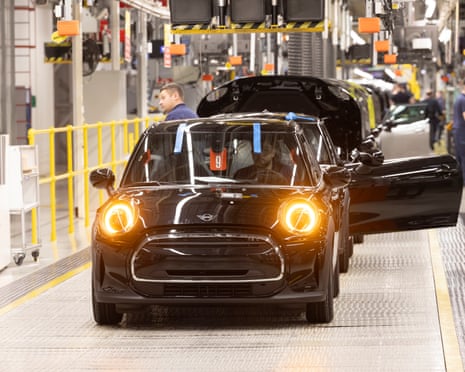
The companies argued that "highly efficient" engines utilizing sustainable fuels and green steel should be permitted to remain on the market. However, environmental groups point out that these technologies still produce carbon dioxide and other pollutants, potentially undermining the U.K.’s commitment to reaching net-zero emissions. The lobbying effort highlights a growing divide between government climate mandates and the industrial reality of manufacturing transition costs.
Market Consolidation and the Exit of U.K. Giants
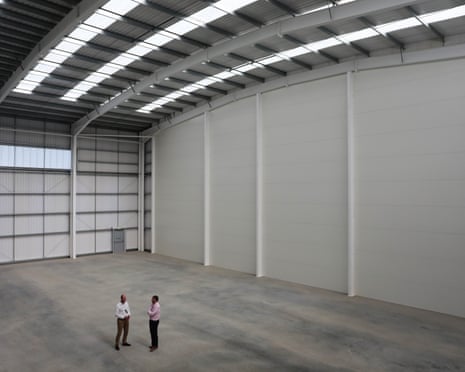
The U.K.’s financial markets are also witnessing a trend of consolidation and foreign acquisition. Segro, a major British warehouse and industrial property company, saw its share price jump 7% Thursday after its board indicated it would accept a £14 billion ($18 billion) takeover bid from its U.S. rival, Prologis. Segro had previously rejected three separate approaches, but the revised offer of 0.092 new Prologis shares for each Segro share proved too attractive for the board to ignore.
This potential deal is being viewed as another blow to the FTSE 100 index. In recent years, several high-profile British companies have been acquired by U.S. firms or have chosen to delist from London in favor of New York, where valuations are often higher. Analysts suggest that the loss of a major landlord like Segro further diminishes the depth of the London Stock Exchange, raising questions about the future of the U.K. as a global financial hub.
Impact of Heatwaves on the Hospitality Sector
Beyond the geopolitical and corporate shifts, environmental factors are also weighing on business performance. Mitchells & Butlers, the parent company of popular chains like Toby Carvery and All Bar One, reported that recent extreme heatwaves have negatively impacted food sales. While drink sales rose by 2.6% as consumers sought out beer gardens during the hot weather, food sales plummeted by 2.4%.
The company’s CEO, Phil Urban, stated that the business has remained resilient despite "unusual weather patterns." However, the data suggests that as global temperatures rise, the hospitality industry may have to adapt to a new reality where traditional dining patterns are disrupted by climate volatility.
As oil prices near $100 a barrel, the global community remains on edge. The combination of military conflict in the Middle East, aggressive corporate restructuring, and the ongoing struggle to balance economic growth with environmental mandates has created a high-stakes environment for policymakers and consumers alike. The coming weeks will be critical in determining whether the "two-chokepoint" crisis can be de-escalated or if the world is entering a new era of prolonged energy scarcity.