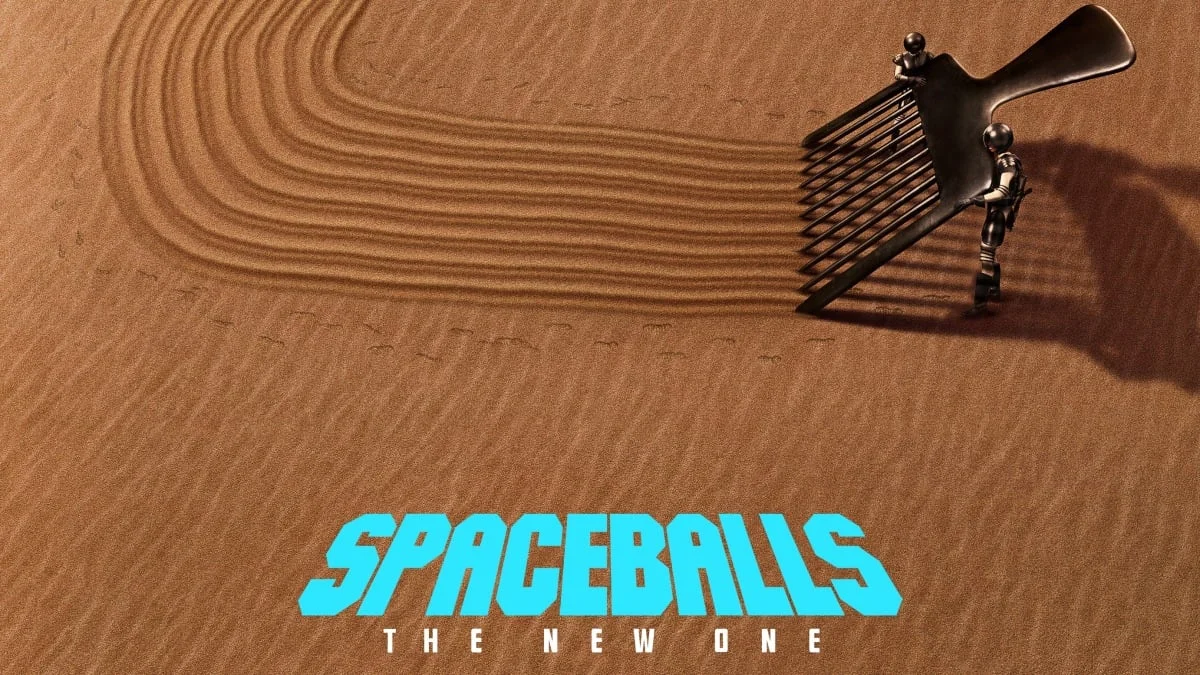
Director Josh Greenbaum confirmed during a presentation at San Diego Comic-Con that the upcoming sequel to the 1987 cult classic parody will be titled Spaceballs: The New One, officially moving away from the long-anticipated subtitle suggested in the original film’s dialogue. The announcement coincided with the Apple TV+ premiere of Greenbaum’s other current project, the pickleball-themed comedy The Dink, marking a significant moment in the director’s career as he balances contemporary sports satire with one of the most storied franchises in comedy history.
For nearly four decades, fans of Mel Brooks’ Star Wars spoof have operated under the assumption that a follow-up would bear the title Spaceballs 2: The Search for More Money. This expectation was set by the character Yogurt, the wise, Schwartz-wielding sage played by Brooks, who joked in the original film’s finale that the heroes would meet again in a sequel focused on financial gain. However, Greenbaum revealed that the creative team, which includes Brooks as a producer and writer, decided to pivot toward a title that leans into a different brand of meta-humor.
Why the new ‘Spaceballs’ sequel isn’t called ‘The Search for More Money’ and the role of Mel Brooks
The decision to abandon the "Search for More Money" subtitle was not made lightly, given its status as one of the most famous "phantom sequels" in cinema history. According to Greenbaum, the change was sanctioned by Mel Brooks himself, who remains an active participant in the development of the new film at the age of 98. Greenbaum noted that the joke about searching for money felt less relevant in the current landscape, humorously suggesting that Brooks had already "found the money" in his basement, rendering the original premise unnecessary.
The new title, Spaceballs: The New One, is designed to function as a commentary on the nature of modern reboots and late-arrival sequels. Greenbaum explained that the simplicity of the name serves its own comedic purpose, contrasting the "old" film with the "new" one in a way that aligns with Brooks’ signature style of breaking the fourth wall. The director emphasized that while the original joke was iconic, the internal logic of the new script demanded a title that reflected the current state of the film industry rather than a 37-year-old punchline.
In discussions with the creative team, including co-writer and star Josh Gad, it became clear that the sequel needed to establish its own identity while still honoring the legacy of the 1987 original. By choosing The New One, the production team aims to satirize the trend of "legacy sequels" that often struggle to find meaningful subtitles. This approach allows the film to mock the very concept of its own existence, a hallmark of the Brooksian tradition.
Directing the legacy of a comedy icon
Josh Greenbaum’s involvement in the project comes at a time when he is also promoting The Dink, a film that explores the burgeoning culture of pickleball. During interviews at San Diego Comic-Con, Greenbaum reflected on the weight of stepping into the director’s chair for a Mel Brooks property. He described the process of working with Brooks as a masterclass in comedy, noting that every decision, including the title change, was vetted by the legendary filmmaker to ensure it met the standards of the original’s irreverent spirit.
The director also took a moment to honor the late Lynne Marie Stewart, a comedy icon who appears in The Dink in what would become her final film role. Stewart, known for her work with The Groundlings and her long-standing role as Miss Yvonne on Pee-wee’s Playhouse, represents the kind of comedic pedigree that Greenbaum seeks to bring to Spaceballs: The New One. The connection between these two projects highlights Greenbaum’s focus on ensemble-driven humor and character-based satire.
Greenbaum’s transition from a niche sports comedy to a high-profile sci-fi parody marks a significant escalation in his directorial profile. Industry analysts suggest that his ability to secure Brooks’ blessing for a title change indicates a high level of trust between the veteran creator and the new generation of filmmakers. This partnership is seen as essential for modernizing the franchise without losing the "Schwartz" that made the original a staple of the 1980s.
Casting the next generation of Spaceballs
One of the most significant reveals regarding the sequel is the confirmation of returning cast members. Spaceballs: The New One is set to feature the return of Mel Brooks, Bill Pullman, Rick Moranis, Daphne Zuniga, and Michael Winslow. The return of Rick Moranis is particularly noteworthy, as the actor has been largely absent from live-action cinema for decades. His return as Dark Helmet is expected to be a central draw for the film, providing a direct link to the original’s most popular antagonist.
Joining the veteran cast are several high-profile additions, including Josh Gad, Keke Palmer, and Anthony Carrigan. Gad, who is also serving as a producer, has been a vocal advocate for the project, frequently citing Brooks as a primary influence on his career. The inclusion of Lewis Pullman, the son of original star Bill Pullman, adds a layer of generational continuity to the production, potentially mirroring the "legacy" themes the film intends to parody.
The new cast members are expected to play characters that satirize the modern era of science fiction, specifically the Disney-led Star Wars sequels and the proliferation of cinematic universes. While the original Spaceballs took aim at the merchandising-heavy culture of the 1980s, the sequel is positioned to critique the streaming era and the relentless cycle of content production. This shift in satirical focus further explains why the new ‘Spaceballs’ sequel isn’t called ‘The Search for More Money’, as the financial motivations of modern studios have become even more overt and ripe for parody.
The technological evolution of parody
The 1987 original was famous for its practical effects and its visual recreation of the Star Wars aesthetic on a fraction of the budget. For Spaceballs: The New One, the production will have to navigate a vastly different technical landscape. With the rise of high-end digital effects and the "Volume" technology used in shows like The Mandalorian, the sequel has the opportunity to parody the visual language of modern sci-fi with greater precision.
Greenbaum has indicated that the film will maintain a balance between modern production values and the lo-fi charm of the original. This includes the use of practical sets and puppetry where appropriate, ensuring that the film doesn’t lose the tactile feel of a Mel Brooks production. The goal is to make the film look "too good" for a parody, thereby heightening the comedic contrast when the characters inevitably break character or acknowledge the absurdity of their surroundings.
The technological shift also allows for new types of jokes. While the first film featured a "VHS" of itself, the new film is likely to incorporate jokes about 4K streaming, digital piracy, and AI-generated content. By evolving the medium of the jokes, the production team justifies the "New One" moniker, signaling to the audience that the film is not merely a nostalgia trip but a contemporary critique of the entertainment industry.
Industry impact and the 2027 release window
Amazon MGM Studios has slated Spaceballs: The New One for a U.S. theatrical release on April 23, 2027. This long lead time suggests a significant production window aimed at perfecting the visual effects and coordinating the schedules of its high-profile ensemble cast. The release date also places the film in a competitive spring window, indicating the studio’s confidence in the brand’s enduring appeal.
The decision to revive Spaceballs is part of a broader trend of studios mining established IP for theatrical releases. However, comedy sequels arriving decades after the original have a mixed track record at the box office. Success often depends on the involvement of the original creators and the ability to capture the zeitgeist of the current era. By keeping Mel Brooks at the center of the creative process, Amazon MGM is betting that the "Brooksian" brand of humor remains a viable commercial force.
The announcement has already generated significant social media engagement, with fans debating the merits of the title change. While some purists expressed disappointment that "The Search for More Money" was discarded, the general consensus among industry observers is that the meta-joke of The New One is a more sophisticated choice for a 2027 release. The title itself has become a marketing tool, sparking conversations about the film’s direction and its relationship to the original.
A new era for the Schwartz
As production continues, the focus remains on whether Spaceballs: The New One can recapture the lightning-in-a-bottle success of its predecessor. The landscape of comedy has shifted dramatically since 1987, with spoof movies largely disappearing from the theatrical mainstream in favor of "meta" action-comedies. Greenbaum and his team are tasked with proving that the classic parody format still has a place in the modern cinema-going experience.
The film’s success will likely hinge on its ability to appeal to both the original "Spaceballs" generation and a younger audience that grew up with the Star Wars prequels and sequels. By addressing why the new ‘Spaceballs’ sequel isn’t called ‘The Search for More Money’ through the lens of modern Hollywood economics, the filmmakers are signaling that they are aware of the challenges ahead.
With a cast that bridges the gap between comedy legends and modern stars, and a director who has shown a penchant for finding heart within absurdist premises, the sequel is one of the most anticipated comedy projects of the late 2020s. As Yogurt might say, the Schwartz is indeed returning, but it will be doing so under a new name and in a very different galaxy.