NEW DELHI — In a historic concession to a surging youth uprising, Indian Education Minister Dharmendra Pradhan submitted his resignation on Saturday following a week of relentless nationwide demonstrations led by the "Cockroach movement." The departure marks the first time in the twelve-year tenure of Prime Minister Narendra Modi’s government that a high-ranking cabinet loyalist has been forced out by public pressure, signaling a significant shift in the country’s political landscape.
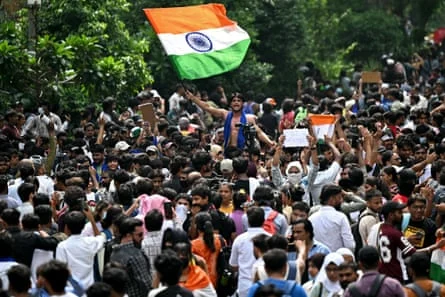
The resignation followed a week of escalating tension that saw millions of students and young professionals take to the streets, paralyzing major urban centers. Pradhan, a veteran politician and a key figure within the ruling Bharatiya Janata Party (BJP), announced his decision via social media, citing the need to prevent "anti-national forces" from exploiting the current unrest. The announcement was met with jubilant celebrations at Jantar Mantar, the iconic protest site in the capital, where thousands had camped out despite a heavy police presence.
The crisis stems from a series of high-profile examination leaks that have compromised the integrity of India’s competitive academic system. Since May, the Cockroach movement—formally known as the Cockroach Janata Party (CJP)—has spearheaded a campaign for accountability, alleging systemic corruption within the National Testing Agency. The scandal has affected the futures of millions of students vying for positions in medical, engineering, and civil service sectors, leading to a national outcry over the perceived "theft of merit."
The Fall of a Loyalist: Dharmendra Pradhan Resigns
Pradhan’s exit is viewed by political analysts as a rare moment of vulnerability for the Modi administration. For over a decade, the BJP government has maintained a reputation for legislative resolve, rarely backtracking on policy or personnel despite significant opposition. However, the sheer scale of the Cockroach movement’s mobilization proved impossible to ignore.
In his resignation letter addressed to the Prime Minister, Pradhan stated that he was stepping down to preserve the sanctity of the government’s mission. "Considering the situation that has arisen at Jantar Mantar and across the country, I have sent my resignation letter to the prime minister," Pradhan wrote. He added that his decision was intended to protect the country from instability while acknowledging the "legitimate expectations" of the nation’s youth.
The Cockroach movement had specifically targeted Pradhan, viewing him as the face of a bureaucratic machine that failed to protect student interests. For weeks, the government attempted to weather the storm, offering promises of internal inquiries and fast-tracked legal proceedings against those responsible for the leaks. These measures failed to satisfy the CJP leadership, who insisted that only a high-level resignation would serve as a sufficient admission of systemic failure.
Origins of the Cockroach Movement and the Exam Leak Scandal
The "Cockroach" moniker, which began as a derogatory term used by some online pro-government trolls to describe student activists as "pests," was quickly reclaimed by the youth. The movement adopted the insect as a symbol of resilience, arguing that like the cockroach, the Indian youth are survivors who can endure the harshest conditions and will eventually outlast a corrupt system.
The movement gained momentum following the revelation of widespread irregularities in several national-level entrance exams. These tests are the primary gateway to middle-class stability in India, and the leaks suggested that wealthy candidates could bypass the rigorous meritocracy by purchasing question papers. The fallout was devastating; at least a dozen students reportedly committed suicide in the wake of the cancellations and delays, turning a policy failure into a human rights crisis.
"We are not just fighting for a retake of an exam; we are fighting for the soul of our future," said one CJP organizer during a hunger strike in New Delhi. "When the government allows papers to be sold, they are selling our lives. We called ourselves cockroaches because we are the ones they try to crush, but we are the ones who will remain when the dust settles."
Nationwide Escalation and the Cockroach Movement Protests
While the protests began as localized student gatherings, they transformed into a nationwide uprising this past Monday. In Delhi, hundreds of thousands of young people marched toward the parliament, leading to violent clashes with law enforcement. Security forces deployed tear gas and baton charges to disperse the crowds, resulting in hundreds of injuries and thousands of arrests.

Rather than quelling the dissent, the police crackdown served as a catalyst for further mobilization. By mid-week, the Cockroach movement protests had spread to Mumbai, Kolkata, Bengaluru, and Chennai. In Kolkata, the city’s historic college street was flooded with students from various universities, while in Mumbai, protesters occupied major railway stations, demanding Pradhan’s immediate removal.
The rapid growth of the CJP has surprised veteran political observers. Unlike previous opposition movements that were often tied to established political parties or specific regional grievances, the Cockroach movement is decentralized and digitally savvy. Using encrypted messaging apps and social media memes, the group managed to coordinate simultaneous "sit-ins" and "blackout" strikes that effectively shut down educational institutions across several states.
A Turning Point for the Modi Administration
For Prime Minister Narendra Modi, the resignation of a trusted lieutenant represents a delicate balancing act. Pradhan has been a key architect of the government’s educational reforms and a loyal enforcer of party discipline. His departure suggests that the administration felt the political cost of retaining him had become too high, especially with several state elections on the horizon.
The government’s initial response—ignoring the protesters and labeling the movement as a distraction—backfired as the CJP’s narrative of "stolen dreams" resonated with parents and the broader middle class. The middle-class demographic, which has been a cornerstone of the BJP’s electoral success, appeared increasingly sympathetic to the students’ plight, forcing the government to change its strategy.
In the days leading up to the resignation, the Prime Minister’s Office had attempted to open a dialogue with CJP representatives. While Modi promised to reform the National Testing Agency and implement harsher penalties for paper leaks, the protesters remained steadfast in their demand for ministerial accountability. The resignation of Pradhan is now being hailed as a "peoples’ victory" by opposition leaders, who have been quick to align themselves with the student cause.
The Cockroach Movement: From Digital Meme to Political Force
The emergence of the Cockroach Janata Party (CJP) marks a new era in Indian activism. The movement’s ability to transcend caste, religious, and regional lines by focusing on the universal issue of educational integrity has provided a blueprint for future dissent. By utilizing the "Cockroach" identity, the movement created a brand that was both self-deprecating and defiant, making it difficult for the government to characterize them as traditional political enemies.
Sociologists note that the movement reflects a deeper anxiety among India’s Gen Z and Millennial populations regarding economic opportunity. With high youth unemployment and increasing competition for a limited number of government jobs, the integrity of competitive exams is seen as the last bastion of fairness. When that system was compromised, the resulting anger was not just about a single test, but about the viability of the "Indian Dream."
The CJP has indicated that Pradhan’s resignation is only the first step. Their list of demands includes a total overhaul of the examination system, the establishment of an independent student oversight committee, and financial compensation for the families of the students who took their lives during the crisis.
Looking Ahead: Educational Reform and Political Accountability
As the news of the resignation spread, the atmosphere at Jantar Mantar shifted from one of defiance to one of celebration. However, CJP leaders warned their supporters that the struggle for systemic change is far from over. "One minister leaving doesn’t fix a broken system," a CJP spokesperson told a cheering crowd. "We want a system where a poor student’s hard work is worth more than a rich man’s bribe."
The government now faces the challenge of appointing a successor who can regain the trust of the student community while managing the logistical nightmare of rescheduling multiple national exams. The integrity of the upcoming academic cycle remains in question, and any further irregularities could reignite the protests.
The Cockroach movement has successfully demonstrated that even a government with a massive parliamentary majority is not immune to the power of a focused, youth-led uprising. As India moves forward, the "cockroach" symbol will likely remain a potent reminder of the day the nation’s youth forced a change in the highest levels of power, proving that resilience and collective action can indeed challenge the status quo.