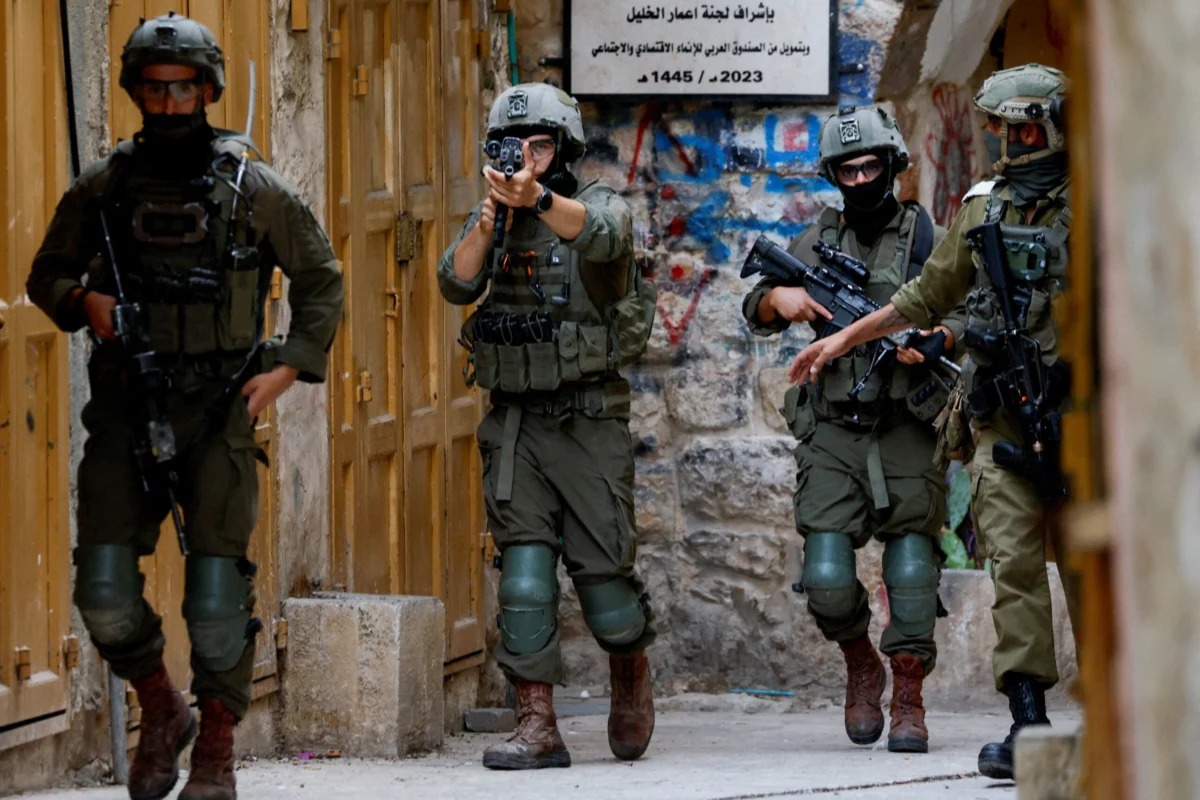
Israeli forces launched a significant raid in the occupied West Bank on July 26, 2026, resulting in the detention of dozens of Palestinians and escalating tensions in the region. The operation, which began in the early hours, targeted multiple locations across the West Bank, with a particular focus on areas around Nablus and Jenin. The Israeli military stated the detentions were part of ongoing efforts to dismantle what they described as terrorist infrastructure and apprehend individuals involved in recent attacks.
The pre-dawn raid saw a heavy contingent of Israeli soldiers, accompanied by armored vehicles, enter Palestinian towns and villages. Witnesses reported widespread disruption as Israeli forces conducted house-to-house searches, often employing forceful methods. The detentions, which Palestinian authorities characterized as arbitrary arrests, have further inflamed an already volatile situation.
Escalation in the West Bank: A Pattern of Raids
This latest incursion into the West Bank is part of a broader pattern of Israeli military operations that have intensified in recent months. The Israeli government has cited a surge in Palestinian attacks against Israeli citizens and soldiers as justification for its increased military presence and operations. These operations frequently involve raids on Palestinian communities, the demolition of homes, and the widespread detention of Palestinians, many of whom are held under administrative detention orders.
The occupied West Bank, under Israeli military control since 1967, has been a focal point of the Israeli-Palestinian conflict. The international community largely views the settlements and the ongoing military occupation as illegal under international law. Palestinian leadership has consistently condemned these raids as collective punishment and a violation of human rights, asserting that they undermine any prospects for a peaceful resolution.
Nablus Under Siege: Shootout and Tear Gas
Reports from Nablus indicated a particularly intense confrontation during the Israeli raid. During the operation, Israeli forces reportedly engaged in a shootout with Palestinian militants. The exchange of fire resulted in casualties on both sides, though precise numbers were not immediately available. In a disturbing development, journalists reporting on the Nablus shootout were allegedly targeted by Israeli forces, who deployed tear gas, hindering their ability to cover the events.
This alleged targeting of journalists raises serious concerns about press freedom and the transparency of Israeli military operations. Independent reporting is crucial for understanding the full scope of events and ensuring accountability. The use of tear gas against media personnel attempting to document the raid underscores the challenging and often dangerous environment in which journalists operate in the occupied territories.
Detentions and the Legal Framework
The dozens of Palestinians detained during the raid are being held for questioning, according to Israeli military spokespeople. The specific charges against the detainees have not been fully disclosed, but officials have broadly linked them to alleged involvement in militant activities and attacks. Many of those detained are expected to be processed under Israel’s administrative detention laws, which allow for individuals to be held for extended periods without trial or formal charges, based on what the Israeli security forces deem to be "secret evidence."
Palestinian human rights organizations have vociferously criticized the use of administrative detention, arguing it is a tool used to suppress Palestinian dissent and activism. They point to a lack of due process and the potential for abuse within this legal framework. The detentions during the July 26 raid are expected to be challenged by these organizations, though success rates in such legal battles have historically been low.
Broader Implications and International Scrutiny
The raid and subsequent detentions are likely to draw further international condemnation and scrutiny. The United Nations and various human rights organizations have repeatedly called on Israel to cease its settlement expansion, end the occupation, and respect international humanitarian law. The ongoing cycle of raids, detentions, and retaliatory actions perpetuates a climate of instability and violence, making a lasting peace agreement increasingly elusive.
The political implications of these operations are also significant. Within Israel, such actions are often supported by a political establishment that prioritizes security above all else. However, international pressure continues to mount, with many nations advocating for a de-escalation and a return to diplomatic efforts. The Biden administration, while generally supportive of Israel’s security needs, has also expressed concerns about Palestinian civilian casualties and the impact of Israeli policies on the viability of a two-state solution.
Impact on Palestinian Communities
For Palestinian communities in the West Bank, these raids are a regular and deeply disruptive reality. The fear of sudden military incursions, arbitrary arrests, and property destruction creates a pervasive sense of insecurity. Families are torn apart, livelihoods are threatened, and the psychological toll on individuals, particularly children, is immense. The economic impact is also substantial, as military operations often disrupt daily life, commerce, and agricultural activities.
The constant presence of Israeli military checkpoints and roadblocks further restricts movement and hampers economic development. The raids, therefore, are not isolated incidents but part of a larger system of control that significantly impacts the daily lives and future prospects of Palestinians in the West Bank.
Historical Context of Israeli Raids
The history of Israeli military operations in the West Bank is extensive. Since the occupation began in 1967, Israel has conducted numerous large-scale raids and military campaigns in Palestinian territories. These operations have often been in response to Palestinian attacks or perceived security threats. However, critics argue that the tactics employed, including mass detentions and the use of excessive force, often disproportionately affect the civilian population and violate fundamental human rights.
The current intensification of these raids can be seen as a response to a perceived uptick in Palestinian resistance and attacks, including stabbings, car ramming incidents, and shootings targeting Israeli soldiers and settlers. The Israeli security establishment views these operations as essential for maintaining order and preventing further violence.
Palestinian Response and International Law
Palestinian leadership and civil society have consistently condemned the Israeli raids and detentions, labeling them as war crimes and violations of international law. They argue that Israel, as the occupying power, has a responsibility to protect the civilian population and refrain from collective punishment. International bodies, including the International Criminal Court, have been investigating alleged war crimes committed by both Israeli and Palestinian actors, though progress has been slow and politically charged.
The international community’s response has been varied. While many countries express concern and call for de-escalation, concrete actions to hold Israel accountable for its actions have been limited. The ongoing settlement construction, a key point of contention, continues unabated, further complicating any potential for a peaceful resolution.
The Road Ahead: A Cycle of Violence?
The recent Israeli raid in the West Bank, resulting in dozens of detentions, underscores the persistent challenges in resolving the Israeli-Palestinian conflict. Without a fundamental shift in policy and a renewed commitment to diplomatic solutions, the cycle of raids, detentions, and retaliatory violence is likely to continue. The international community faces the critical task of applying consistent pressure for accountability and facilitating a path towards a just and lasting peace. The events of July 26 serve as a stark reminder of the ongoing human cost of this protracted conflict.