The Jackery FridgeGuard has entered the consumer electronics market as a specialized response to the increasing frequency of power grid failures, offering a dedicated backup solution designed specifically to prevent food spoilage. While traditional portable power stations often prioritize versatility and multiple ports for camping or outdoor activities, this new model focuses on a "set it and forget it" philosophy for the modern kitchen. By integrating a high-capacity battery into a slim, unobtrusive chassis, the device aims to bridge the gap between temporary portable power and expensive, whole-home standby generators.
The primary utility of the Jackery FridgeGuard centers on its ability to maintain refrigeration during extended blackouts, a common concern as extreme weather events continue to strain aging infrastructure across the United States. Food safety experts note that a standard refrigerator can only maintain a safe temperature for approximately four hours during a power loss, provided the door remains closed. Once that window passes, hundreds of dollars in groceries are at risk of reaching the "danger zone" for bacterial growth. The introduction of appliance-specific batteries like this one suggests a shift in how manufacturers view residential energy resilience.

Architectural Innovations of the Jackery FridgeGuard
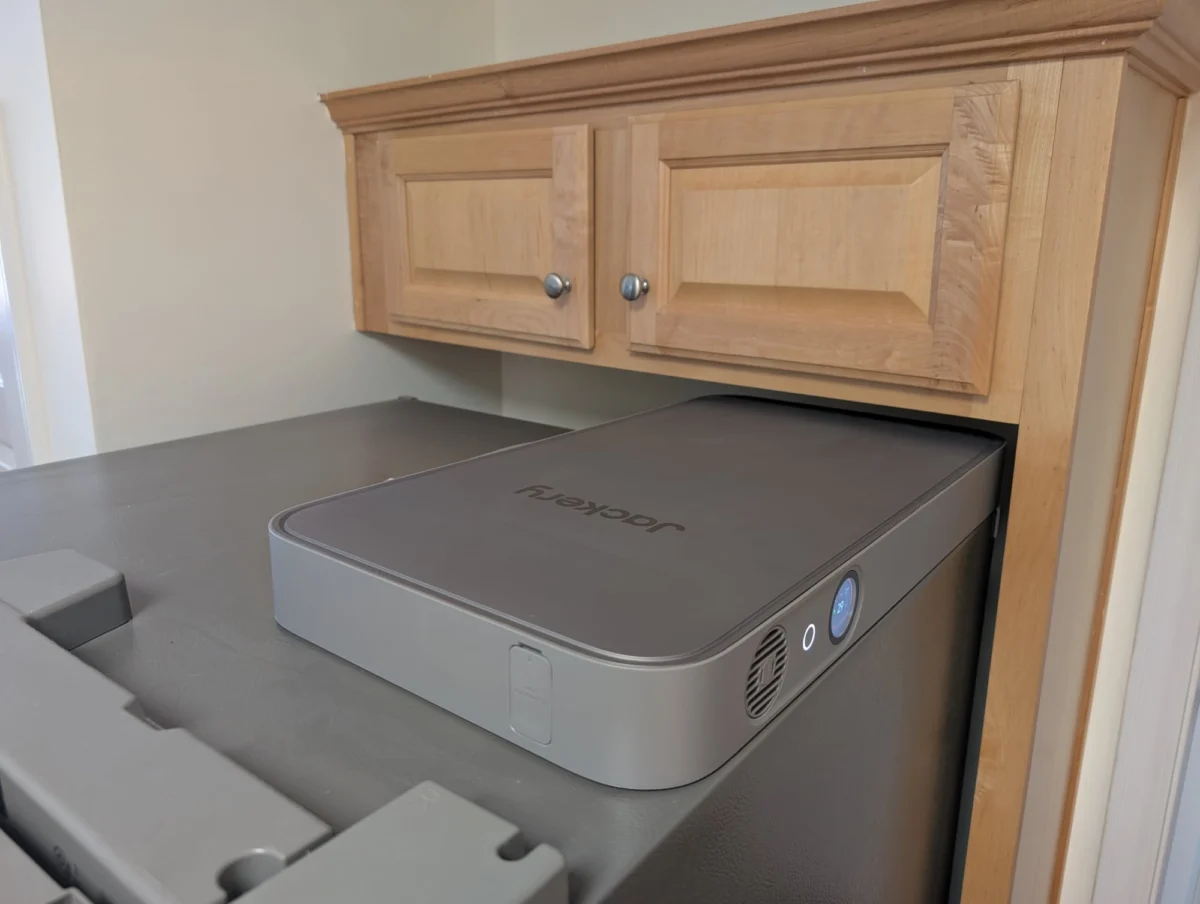
Unlike the rugged, "lunchbox" style common to most portable power stations, the Jackery FridgeGuard features a radical departure in industrial design. The unit is a slim, rectangular slab measuring just 2.63 inches in thickness, a profile specifically engineered to sit atop a standard refrigerator without obstructing nearby cabinetry or architectural features. This low-profile aesthetic allows the device to remain permanently installed in the kitchen, blending into the space rather than requiring storage in a garage or closet.
For households where the top of the refrigerator is inaccessible or used for storage, the manufacturer includes a pair of heavy-duty metal feet. These attachments allow the unit to stand vertically on the floor, occupying a narrow footprint beside the appliance. This flexibility in placement is complemented by a neutral gray finish intended to match stainless steel and modern kitchen finishes, moving away from the high-visibility orange accents traditionally associated with the Jackery brand.
Technical Performance and Capacity Analysis
Under the hood, the Jackery FridgeGuard houses a 1,024Wh lithium-ion battery. According to internal testing and manufacturer specifications, this capacity is sufficient to power a modern, energy-efficient refrigerator for approximately 15 hours. While the exact duration varies based on the appliance’s age, size, and ambient room temperature, the 15-hour benchmark covers the vast majority of standard residential power interruptions.

One of the most critical technical features of the Jackery FridgeGuard is its 10-millisecond Uninterruptible Power Supply (UPS) functionality. In the event of a grid failure, the device detects the loss of current and switches to battery power in less than one-hundredth of a second. This rapid transition is vital for modern "smart" refrigerators equipped with sensitive digital control boards and internal sensors, which can be prone to resetting or malfunctioning during sudden voltage drops.
The device functions through a pass-through charging system. Users plug the FridgeGuard into a standard wall outlet and then connect the refrigerator directly to the single AC port on the back of the battery. Under normal conditions, electricity passes through the battery to the appliance while keeping the internal cells at 100% charge. Once grid power is restored following an outage, the unit automatically begins recharging itself, ensuring it is ready for the next event without manual intervention.
Evaluating the Jackery FridgeGuard in Secondary Use Cases
While the branding emphasizes kitchen utility, field tests indicate that the Jackery FridgeGuard is a versatile backup for other critical home systems. The slim design makes it an ideal candidate for placement behind furniture or under beds, where traditional power stations would be too bulky. In testing scenarios involving home office equipment, the device successfully powered a workstation consisting of a laptop, external monitor, and networking equipment for a full workday.

The device also shows promise for medical and comfort applications. For individuals who rely on CPAP machines for sleep apnea, the silent operation of the FridgeGuard provides a reliable safety net. During testing, the internal cooling fans remained either completely silent or produced a barely audible hum, making it suitable for bedside use. Furthermore, it can support specialized bedroom technology, such as adjustable bed bases or advanced mattress cooling systems like the Eight Sleep Pod, which otherwise become non-functional during a blackout.
In a test involving a high-velocity air purifier drawing 17W of power, the unit maintained operation for over 27 hours. This suggests that for low-draw electronics like Wi-Fi routers and mesh nodes, the device could potentially keep a home’s internet connection active for several days during a localized utility failure.
Design Trade-offs and Market Limitations
The Jackery FridgeGuard is not without its compromises, particularly regarding its output ports. Most portable power stations in the 1,000Wh range feature a variety of AC outlets, USB-A ports, and high-speed USB-C ports. In contrast, the FridgeGuard features only a single AC outlet. This limitation reinforces its identity as a dedicated appliance backup rather than a general-purpose power hub. Users who need to charge multiple devices simultaneously will find themselves requiring a power strip, which may complicate the streamlined aesthetic the device aims to achieve.

From a value perspective, the pricing of the Jackery FridgeGuard places it in a competitive bracket. With an MSRP of $799, it shares a price point with more versatile models like the Jackery Explorer 1000 V2. The Explorer series offers 1,070Wh of capacity along with three AC ports and multiple USB connections. Consequently, consumers must decide whether the specialized form factor and UPS capabilities of the FridgeGuard outweigh the multi-port functionality of more traditional designs.
Competitive Landscape: Jackery FridgeGuard vs. Industry Rivals
The release of the Jackery FridgeGuard coincides with a broader industry trend toward appliance-specific backup solutions. Major competitors such as Anker and Bluetti have recently introduced their own interpretations of the "fridge-first" battery. The Anker Solix S2000, for instance, offers double the capacity at 2,010Wh and includes multiple ports on both the front and back of the unit. However, the Anker model retains a more traditional, boxy shape that may not fit as easily on top of a refrigerator as the Jackery.
Similarly, the Bluetti FridgePower offers a 2,016Wh capacity and a slim design comparable to Jackery’s. While the Bluetti provides longer runtimes, it is significantly heavier, weighing approximately 41 pounds. At 23 pounds, the Jackery FridgeGuard is notably more portable, allowing a single person to lift it onto a high refrigerator shelf without assistance—a factor that may influence purchasing decisions for senior citizens or single-person households.

Economic and Social Implications of Dedicated Backup Power
The rise of devices like the Jackery FridgeGuard reflects a growing consumer anxiety regarding the reliability of the American electrical grid. Data from the U.S. Energy Information Administration (EIA) indicates that the average American electricity customer experienced over seven hours of power interruptions in recent years, with that number rising significantly in regions prone to wildfires, hurricanes, or severe winter storms.
For the average household, the loss of a fully stocked refrigerator can result in an immediate financial loss of $200 to $500. For those with high-end meats, organic produce, or specialized medications like insulin that require refrigeration, the stakes are even higher. By providing a relatively affordable insurance policy against these losses, the FridgeGuard enters the market as a tool for economic preservation as much as a piece of consumer technology.
Purchasing and Availability Trends
The distribution strategy for the Jackery FridgeGuard has been targeted, with initial exclusivity through major retailers like Costco and the manufacturer’s direct website. This partnership suggests a focus on the suburban homeowner demographic that frequently shops for home improvement and bulk grocery items. At a promotional price point of $549.99 for Costco members, the device becomes a more attractive proposition, narrowing the price gap between specialized and general-purpose batteries.

Jackery also offers optional accessories, such as a $49 mounting bracket, which allows the unit to be bolted directly to a wall. This accessory highlights the manufacturer’s intent for the device to become a permanent fixture of the home’s electrical ecosystem rather than a piece of gear that is packed away after use.
Summary of the Residential Backup Evolution
The Jackery FridgeGuard represents a maturation of the portable power industry. As the market for general-purpose batteries becomes saturated, manufacturers are increasingly looking toward specialized applications to solve specific pain points for homeowners. By prioritizing a slim form factor and seamless UPS integration over port variety, the FridgeGuard addresses the very real fear of food spoilage with a solution that is both aesthetically pleasing and technically capable. While it may not be the ideal choice for a weekend camping trip, its role as a silent sentry in the kitchen marks a new chapter in personal energy security.