German authorities confirmed Sunday evening that police have shot and killed a 21-year-old man suspected of carrying out a deadly vehicle and knife attack during Berlin’s annual Pride festivities. The suspect, identified as Abdul Ballout, allegedly drove a minivan into a crowded pedestrian area in the Tiergarten park before embarking on a stabbing rampage that left one person dead and 29 others injured.
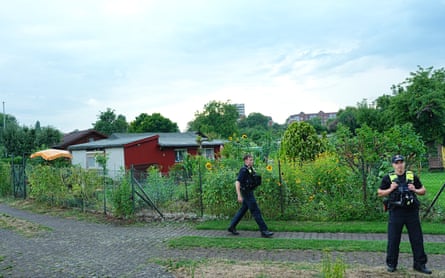
The fatal confrontation between law enforcement and the suspect occurred during a targeted police operation at an allotment garden complex in the city’s Spandau district. Officials stated that the suspect had been the subject of an intensive city-wide manhunt following the Saturday night violence, which has been classified by investigators as a suspected Islamist terror attack.

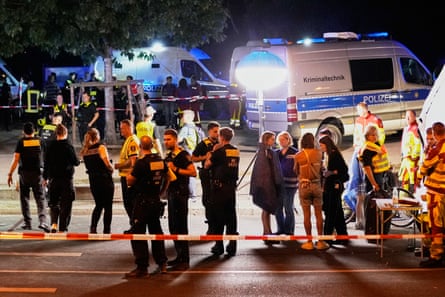
The violence began at approximately 10:00 p.m. local time on Saturday, just as the city’s LGBTQ+ community was celebrating one of Europe’s largest Pride events. Witnesses described a white minivan swerving violently into the Tiergarten park, a massive green space located near the iconic Brandenburg Gate. The vehicle struck several pedestrians on a crowded path before crashing into a tree.
Details of the Berlin Pride Van and Knife Rampage Suspect Investigation
According to police reports and witness testimony, the driver emerged from the crashed vehicle armed with what appeared to be a machete. He then began a secondary assault, attacking bystanders who were already reeling from the vehicle impact. The suspect fled the scene on foot, prompting a massive mobilization of emergency services and law enforcement.
Berlin Interior Minister Alexander Dobrindt identified the chief suspect as Abdul Ballout, a 21-year-old German national with Lebanese roots. During a press conference held near the site of the tragedy, Dobrindt revealed that Ballout was well-known to security services. The suspect had a documented history of radicalization and a high volume of previous criminal offenses.

"We are dealing here with a suspected perpetrator who had previously drawn attention to himself through a high volume of criminal offenses, radicalization, and affiliation with the Islamist scene," Dobrindt told reporters. The minister further disclosed that Ballout had a prior criminal conviction and had been sentenced to one year and 10 months in prison, though that sentence had been suspended by the court.
The Tiergarten Attack and the Pursuit of Abdul Ballout
The hunt for the Berlin Pride van and knife rampage suspect involved hundreds of officers, helicopters, and specialized units from several German states. In the early hours of Sunday, tactical teams raided an apartment in the Schöneberg district, a neighborhood traditionally known as a hub for the city’s LGBTQ+ community. While the apartment was linked to the suspect, police found it empty at the time of the search.
As the manhunt intensified, prosecutors issued a public warning, urging citizens to avoid any direct contact with Ballout, describing him as "armed and dangerous." The search eventually led authorities to the Spandau district, where the suspect was located in a garden colony. Details regarding the specific circumstances of the shooting have not been fully released, but officials confirmed the suspect was killed on-site.
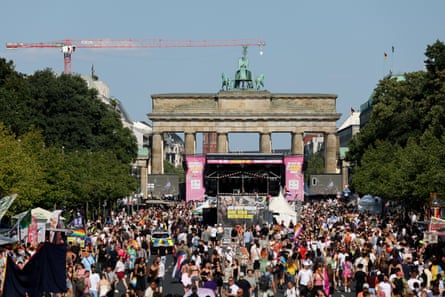
The attack took place during Christopher Street Day (CSD), the German name for the Pride parade. The event commemorates the 1969 Stonewall Inn riots in New York City and has been a staple of Berlin’s cultural calendar since 1979. This year, hundreds of thousands of people had gathered under the motto "Taking a stand is hot," a theme chosen by organizers to highlight the increasing hostility faced by the LGBTQ+ community in Germany.
Radicalization and the History of the Berlin Pride Van and Knife Rampage Suspect
New details regarding Ballout’s background have sparked a national debate over judicial leniency and surveillance. Reports from German news outlets, including Bild and Der Spiegel, indicate that Ballout was a known supporter of the Islamic State (ISIS). Last year, he reportedly attempted to travel to the Middle East to join the terrorist organization, but the attempt failed.
Upon his return or interception, he was convicted of "preparing a serious act of subversive violence." The fact that he was walking free on a suspended sentence at the time of the Tiergarten attack has drawn sharp criticism from political figures and the public alike. The tragedy has renewed concerns about the effectiveness of monitoring radicalized individuals who have already been flagged by the legal system.
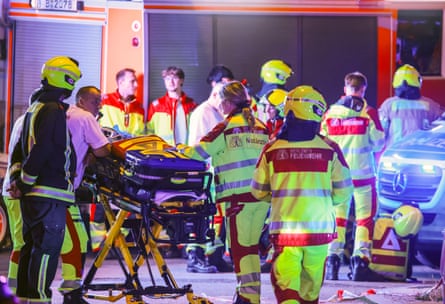
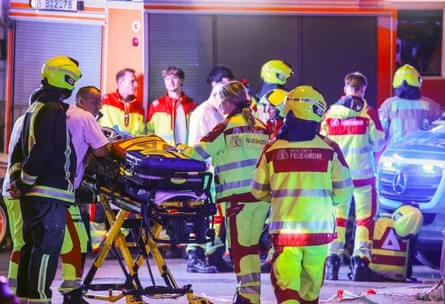
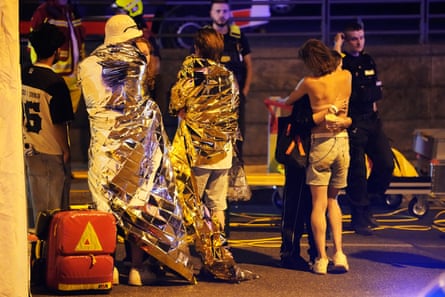
The casualty toll from Saturday’s incident remains high. One person was killed at the scene, and 29 others were transported to local hospitals with injuries ranging from minor to life-threatening. The sudden eruption of violence forced organizers to abruptly end the celebrations, which typically culminate in a massive rally at the Brandenburg Gate.
National Security Concerns and Political Fallout in Germany
Chancellor Friedrich Merz addressed the nation following the news that police had shot dead the Berlin Pride van and knife rampage suspect. Merz urged the public to remain united in the face of what he described as an "attack on our society." The Chancellor ordered the flag at the German Bundestag to be lowered to half-mast as a sign of mourning.
"We will think about consequences, we will defend our freedom," Merz stated during a news conference. He vowed that those responsible for fostering such extremism would be held accountable, describing the events in the Tiergarten as a "heinous act" designed to intimidate a free and cosmopolitan population.
Berlin’s Mayor, Kai Wegner, echoed these sentiments, emphasizing that the city would not be intimidated by extremist violence. "Berlin is the city of freedom—and our freedom has today been attacked in the most appalling way," Wegner said. He noted that the attack followed a "peaceful and colorful" day of celebration, making the subsequent brutality even more jarring.
The Impact on Berlin’s LGBTQ+ Community and Christopher Street Day
The LGBTQ+ community in Berlin has been on high alert for several months. Prior to the parade, various advocacy groups had warned of a "rise in attacks" and a general climate of increasing hostility. Activists have pointed to the growing influence of the far-right Alternative für Deutschland (AfD) party, which has seen a surge in national opinion polls, as well as the persistent threat of Islamist-inspired violence.
Julian Methig, a witness who attended the Pride event, spoke of the profound shock felt by participants. "It’s one of the worst days for the queer community and a day I personally hoped I’d never have to experience," he said. The fact that the attack occurred in the Tiergarten—a place of historical significance for the community—added a layer of symbolic trauma to the physical violence.
For the first time in its history, the CSD festivities had begun on a Friday with a pro-democracy rally, reflecting the political tensions currently gripping Germany. With state elections scheduled for September, the security of public events has become a central issue for voters and policymakers.
International Condemnation and Solidarity Following the Berlin Violence
The attack has resonated far beyond Germany’s borders, drawing messages of solidarity from leaders across Europe. French President Emmanuel Macron stated that "unity, freedom, and resolve" would be the collective response to such hatred. Italian Prime Minister Giorgia Meloni also condemned the violence, stating that Italy firmly opposes all forms of extremism and stands with the German people.
European Commission President Ursula von der Leyen expressed her deepest sympathy for the victims. She noted that the Christopher Street Day parade represents the fundamental values of the European Union: freedom, dignity, and equality. British Foreign Secretary Ed Miliband also conveyed the UK’s solidarity, describing the events as "appalling."
Even within the polarized landscape of German politics, there was a rare moment of consensus regarding the threat of religious extremism. Tino Chrupalla, co-leader of the AfD, stated that religious extremists must not be allowed to divide the country. Similarly, Jordan Bardella of France’s National Rally noted that the "Islamist threat" remains a major issue for European civilization.
As Berlin begins the process of mourning and recovery, the focus has shifted to the long-term implications for public safety and the integration of security measures at large-scale cultural events. The white Citroen van used in the attack was removed from the Tiergarten on Sunday, but the psychological scars on the city remain. Investigators continue to process evidence from the Spandau garden complex and the suspect’s known associates to determine if Ballout acted alone or as part of a larger network.