President Donald Trump on Monday reinforced his support for Defense Secretary Pete Hegseth, dismissing reports of internal friction regarding Hegseth’s advocacy for pre-emptive military action against Tehran. Speaking to reporters aboard Air Force One, the president expressed full confidence in his defense chief, stating that Hegseth has "done a great job" during a pivotal five-month period of escalating conflict in the Middle East. The endorsement comes as the administration balances a heavy air campaign with a sudden opening for diplomatic negotiations brokered by regional intermediaries.
The president’s public defense of Hegseth addresses mounting questions about the quality of intelligence and advice that led to the current war. Trump acknowledged that Hegseth, alongside other senior advisors, had convinced him that Iran was on the verge of launching a direct strike against American interests. This assessment led the administration to conclude that the situation was approaching a "point of no return," ultimately triggering the pre-emptive strikes that have defined the last several months of U.S. foreign policy.
Strategic Shifts and Diplomatic Openings
Despite the aggressive posture maintained by the Pentagon, President Trump revealed that he recently authorized a pause in military strikes to allow for a diplomatic window. The president noted that various intermediaries, including officials from Oman, Qatar, Pakistan, and Egypt, requested the cessation of bombing to facilitate high-level talks. Trump indicated that while Washington is currently engaged in "very deep talks" with Tehran, his patience for a diplomatic resolution remains limited, warning that the U.S. is prepared to return to "very strong military action" if negotiations stall.
The diplomatic push is reportedly centered on a new memorandum of understanding that would aim to reopen the Strait of Hormuz, a vital artery for global energy supplies that has been severely impacted by the hostilities. Envoys Steve Witkoff and Jared Kushner are said to be actively involved in these discussions. The administration’s pivot toward diplomacy follows reports that the U.S. military campaign may have reached a point of diminishing returns, with commanders suggesting that the list of viable tactical targets within Iran has been largely exhausted.
Trump Backs Pete Hegseth Amid Questions Over Ammunition Stockpiles
As the conflict persists, concerns have emerged regarding the sustainability of the U.S. military’s ordnance reserves. Critics and some defense analysts have pointed to the five-month duration of the air campaign as a significant drain on precision-guided munitions. When questioned about these potential shortages, the president dismissed the concerns, asserting that the U.S. is "building that up" and possesses a vast supply of "mid-level" weaponry.

However, Trump utilized the moment to pivot toward a familiar political grievance, blaming the previous administration for the state of the current stockpiles. He claimed that a significant portion of U.S. military resources had been diverted to Ukraine under the Biden administration, leaving the current Pentagon leadership to rebuild reserves while simultaneously conducting active operations against Iran. This rhetoric highlights the ongoing tension between the administration’s "America First" posture and the inherited international commitments of the previous four years.
Regional Casualties and Military Toll
The human and material cost of the war, titled Operation Epic Fury, continues to mount. The Pentagon recently updated its Defense Casualty Analysis System (DCAS), adding more than 140 wounded service members to the official tally. The updated database now confirms that 14 U.S. service members have been killed and over 400 have been wounded since the onset of the conflict.
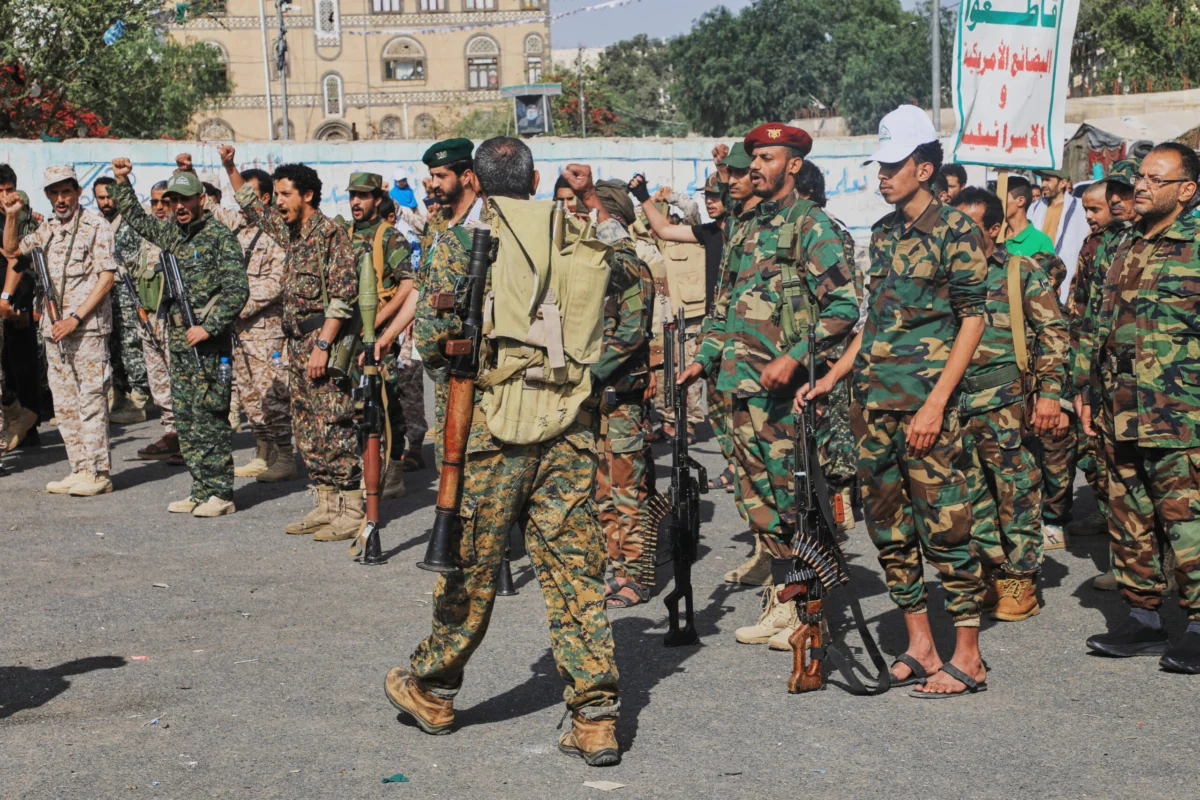
To accommodate the specific nature of the current hostilities, the Department of Defense introduced a new casualty category labeled "Overseas Operations" for all personnel affected starting July 7. This administrative change reflects the long-term nature of the engagement and the increasing frequency of skirmishes between U.S. forces and Iranian-backed surrogates across the region.
High-Stakes Diplomacy at a Capitol Funeral
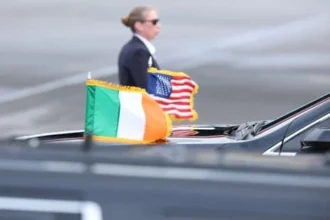
The intersection of war and domestic ceremony will be on full display Tuesday as world leaders arrive in Washington for the funeral of the late Senator Lindsey Graham. Israeli Prime Minister Benjamin Netanyahu and Ukrainian President Volodymyr Zelenskyy are both scheduled to attend the service for Graham, who died unexpectedly on July 11. Graham was a staunch ally of both leaders, and his passing has created a vacuum in the Senate’s foreign policy leadership.
Both Netanyahu and Zelenskyy are expected to hold private meetings with President Trump during their stay. For Netanyahu, the meeting will be the first face-to-face encounter with Trump since February. Tensions between the two have simmered as the war with Iran has drifted into an inconclusive phase. Netanyahu is reportedly concerned about U.S. diplomatic overtures to Tehran and a recent nuclear power agreement between the U.S. and Saudi Arabia, which some in the Israeli government view as a threat to the regional balance of power.
President Zelenskyy’s visit is equally critical, coming at a time when the Trump administration’s stance on the war in Ukraine appears to be shifting. Recent signals, including a visit to Kyiv by influential social media figure Laura Loomer, suggest the White House may be adopting a more supportive posture toward the Ukrainian cause. Zelenskyy has recently emphasized the link between the two conflicts, claiming that Ukrainian intelligence has documented Russian satellite surveillance of U.S. military facilities in the Gulf being shared with Iranian forces.

Domestic Political Friction and the Michigan Campaign
While the president manages international crises, he remains deeply engaged in the looming midterm elections. During a recent visit to Michigan, Trump held what functioned as a campaign rally at the General Motors Proving Ground in Milford. The trip was intended to shore up support for Republican candidates, including former Congressman Mike Rogers, who is seeking a seat in the U.S. Senate.
The event was not without disruption. Protesters interrupted the president’s speech on two fronts: some voiced opposition to the expansion of AI data centers in the state, while others demanded the full release of federal files related to the Jeffrey Epstein investigation. Despite the interruptions, Trump focused his remarks on his economic agenda, specifically his imposition of a 50% tariff on Canadian imports, which he argues is necessary to protect Michigan’s automotive and manufacturing jobs.
Voting Rights and Legal Battles
The administration is also escalating its efforts to overhaul federal voting regulations before the November elections. The Department of Justice has petitioned the U.S. Supreme Court to allow the nationwide implementation of an executive order that would tighten rules for mail-in voting. This move follows a lower court ruling by U.S. District Judge Indira Talwani, who deemed the order’s requirements—such as a barcode tracking system linked to citizenship data—unconstitutional.
Trump continues to advocate for the "Save America Act," which would mandate proof of citizenship for voter registration and photo ID for casting ballots. During his Michigan remarks, the president repeated claims that mail-in voting is "inherently corrupt," citing a recent software glitch in New Jersey that mistakenly registered 6,600 non-citizens. However, state officials in New Jersey clarified that the error was caught early and that fewer than 400 of those affected actually cast ballots, representing a minuscule fraction of the state’s total electorate.
The Michigan Senate Primary: A Democratic Proxy War
As Republicans unify behind Mike Rogers, the Democratic Party in Michigan is embroiled in a bitter primary to replace retiring Senator Gary Peters. The contest between Congresswoman Haley Stevens and former Detroit health official Abdul El-Sayed has become a national litmus test for the party’s direction. Stevens, backed by Governor Gretchen Whitmer and Senate leadership, has positioned herself as a "proud pro-Israel Democrat" and the more electable candidate for a general election.
El-Sayed, supported by Senator Bernie Sanders and Representative Alexandria Ocasio-Cortez, has tapped into progressive energy, calling for the abolition of ICE and labeling Israel’s actions in Gaza a "genocide." During a recent televised debate, the two clashed over campaign finance and personal rhetoric. El-Sayed was forced to clarify leaked audio in which he referred to someone as an "ogre on a pike," explaining that the comment was directed at Pennsylvania Senator John Fetterman rather than Stevens.

Personnel Changes and Legal Developments in Washington
In Washington, the Senate is moving toward the confirmation of Walter "Jay" Clayton as the next Director of National Intelligence (DNI). Clayton, a former Manhattan U.S. Attorney, passed a procedural vote 51-43 on Monday. If confirmed, he will replace Tulsi Gabbard, whose tenure was marked by frequent clashes with the intelligence community and congressional Democrats. Clayton’s nomination has faced scrutiny because he lacks the specific intelligence experience mandated by federal law, a point of contention that has become a recurring theme in the administration’s high-level appointments.
Simultaneously, a high-profile legal battle involving former FBI Director James Comey continues to unfold. Comey’s attorneys have asked a judge to dismiss federal charges stemming from a social media post featuring seashells arranged in the numbers "86 47"—a common political slogan meaning to "eject" the 47th president. The Justice Department argues the post constituted a threat, while Comey maintains it is protected political speech.
Finally, the Senate continues to operate without its Minority Leader. The office of Senator Mitch McConnell released an update stating that the 84-year-old lawmaker is not yet medically cleared to return to work following a fall in June. McConnell is currently undergoing intensive physical therapy to address mobility issues exacerbated by his childhood bout with polio. His absence leaves a significant gap in the Republican leadership as the chamber prepares for a series of contentious votes on the administration’s legislative and personnel agenda.