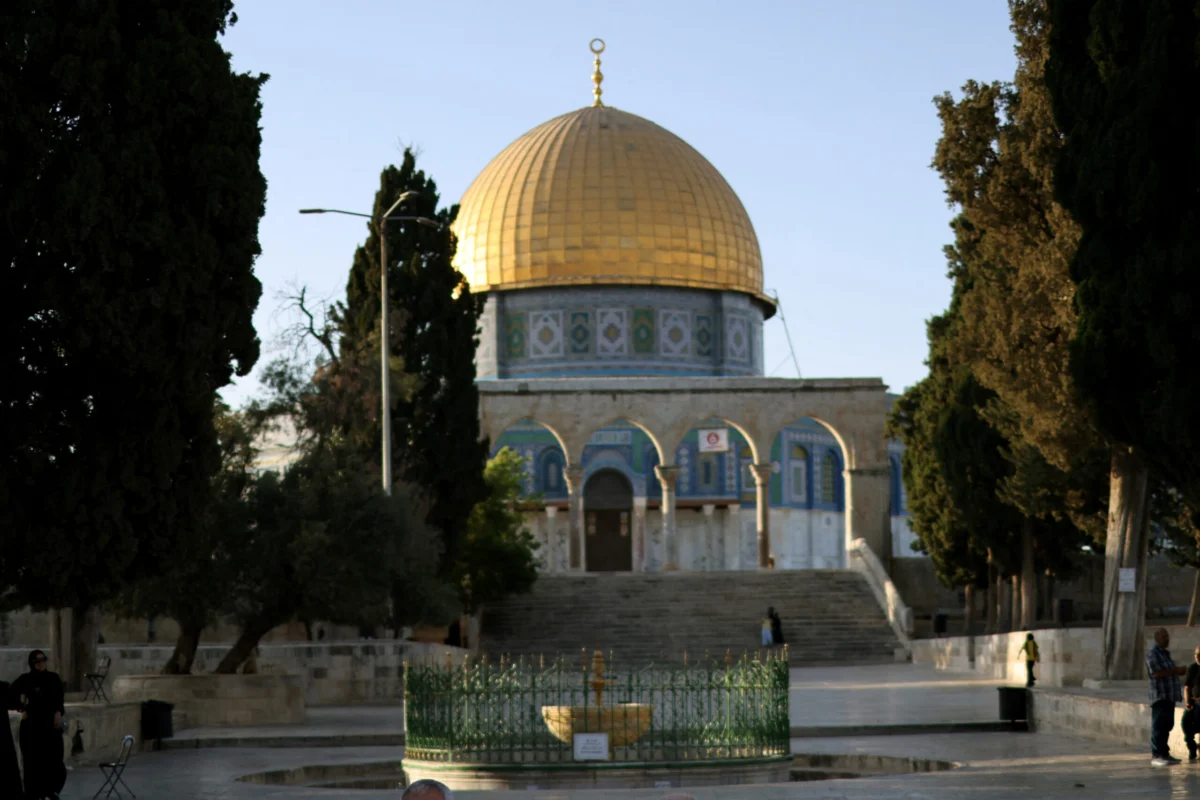
Sheikh Ekrima Sabri, a prominent Palestinian preacher and head of the Higher Islamic Council in Jerusalem, has been barred from Al-Aqsa Mosque for over two years, a restriction recently extended until April 2027. This ongoing exclusion order, the fifth against him, highlights a significant increase in Israeli restrictions targeting Palestinians at the religiously significant and symbolically vital site. Sabri, unable to pray or deliver sermons, describes the ban as unjust and a deliberate attempt to silence dissent regarding the mosque’s status.
The escalating measures at Al-Aqsa Mosque compound the long-standing tensions surrounding the site, which is holy to both Muslims and Jews. For Muslims, it is the third holiest site in Islam, while Jews refer to the area as the Temple Mount, believing it to be the site of their ancient Temples. The current situation reflects a complex and often volatile interplay between religious devotion, national symbolism, and political control.
Sabri’s latest exclusion order, issued on October 20, stems from a sermon he delivered mourning the assassination of Hamas political leader Ismail Haniyeh. This incident, occurring in August 2024, marked a turning point, leading to his initial detention and subsequent repeated bans. His experience is not isolated; it represents a broader pattern of Israeli authorities restricting Palestinian access and activities within the mosque complex and the surrounding Old City.
The Wadi Hilweh Information Center, a Palestinian human rights monitoring group, reports a dramatic surge in exclusion orders, with over 1,000 issued against Palestinians since the beginning of 2026. These orders affect a wide range of individuals, including religious figures, Islamic Waqf employees, and ordinary worshippers. The center documented a notable spike in these bans preceding Jewish holidays, with more than 40 orders issued within a single five-day period in early September.
Palestinian leaders and observers argue that these restrictions are part of a concerted campaign to diminish the Palestinian presence at Al-Aqsa. They contend that while Palestinians are increasingly barred, far-right Jewish religious activists are being permitted to pray at the site, often under Israeli police escort. This practice, they assert, violates a long-standing status quo agreement that generally permitted Jewish visitors to the site but prohibited Jewish prayer.
Ibrahim al-Natsheh, another Palestinian who has faced numerous exclusion orders, shared his experience of being arrested while attending funeral prayers for his cousin. He was subsequently handed a six-month ban from the Old City of East Jerusalem, with no specific charges brought against him. Al-Natsheh stated that these orders often cite "disturbing the peace" as the reason, despite his consistent presence for prayer alone.
Al-Natsheh’s exclusion orders began roughly nine years ago, following an Israeli crackdown on Islamic study circles at Al-Aqsa. He, along with other students, teachers, and activists associated with these circles, has faced arrests and subsequent bans. The difficulty of accessing the mosque is compounded by the visible presence of Israeli soldiers and settlers, creating an environment of intimidation and obstruction.
The impact of these restrictions extends to the administration and management of Al-Aqsa Mosque itself. The Islamic Waqf Department, the Jordanian-appointed body responsible for overseeing the mosque’s affairs, finds its authority increasingly curtailed. Ma’rouf al-Rifai, an adviser to the Palestinian Authority’s Jerusalem Governorate, detailed how Israeli police have prevented Waqf officials from accompanying Jewish groups, limited the authority of mosque guards, and arrested or barred Waqf employees.
This erosion of the Waqf’s role is starkly illustrated by the significant reduction in the number of guards on duty. Al-Rifai noted that the morning shift now typically has fewer than 15 guards, a dramatic decrease from the approximately 50 guards previously present. The 40-day closure of Al-Aqsa following the US and Israeli war on Iran in February 2026, which occurred without Waqf consultation, further underscored this diminished influence.
Escalation of Settler Activity and Religious Practices at Al-Aqsa
Concurrent with the tightening restrictions on Palestinians, there has been a noticeable increase in the number of visits by Israeli settlers to the Al-Aqsa compound. Between July and September 2026, the Jerusalem Governorate recorded nearly 28,000 such visits. During recent Jewish holidays, these visits were accompanied by intensified Israeli restrictions on Muslim worshippers, including temporary mosque closures and the prevention of noon prayers on at least one occasion.
Moreover, settler incursions have reportedly evolved. Al-Rifai observed a shift in recent years, with these visits now frequently incorporating Jewish prayers and religious rituals, the raising of Israeli flags, and attempts to bring sacrificial offerings onto the site. These actions directly challenge the established arrangements at the Haram al-Sharif/Temple Mount compound, where the Waqf traditionally manages Muslim religious affairs and Israeli police handle security and access.
Undermining the Status Quo and Future Implications
The current trajectory suggests a deliberate effort by Israeli authorities to alter the longstanding status quo at Al-Aqsa Mosque. Several proposals and developments point towards this intent, including demands to permit Jewish visitors on Saturdays, plans to divide access to parts of the site between Muslims and Jews, and Israeli police recruitment drives for volunteers tasked with escorting incursions.
These actions, according to al-Rifai, represent a further erosion of the Waqf’s authority and could fundamentally transform the arrangements governing worship and access at this sacred site. The implications extend beyond religious practice, touching upon Palestinian national identity and their connection to Jerusalem.
The prohibition of restoration work at the Bab al-Rahma prayer hall and restrictions on maintaining the mosque’s grounds further illustrate the challenges faced by those responsible for its upkeep. The committee tasked with restoration efforts has been largely unable to perform its duties for years, highlighting the systemic impediments to maintaining the site’s integrity.
The repeated interrogations and exclusion orders faced by figures like Sheikh Sabri underscore the precarious situation for Palestinian leaders and activists in East Jerusalem. Their efforts to defend Al-Aqsa and its Islamic character are met with administrative and legal measures designed to limit their influence and presence.
The Palestinian narrative, as articulated by Sabri and al-Natsheh, emphasizes the injustice and illegality of these measures, viewing them as a systematic attempt to diminish Palestinian presence and silence their voices. The alleged beatings and arbitrary arrests of worshippers further paint a picture of an increasingly hostile environment within the Old City and at the gates of Al-Aqsa.
The lack of response from Israeli authorities to Al Jazeera’s requests for comment leaves a void in understanding their stated justifications for these escalating measures. However, the consistent pattern of restrictions on Palestinians, coupled with the facilitation of settler activities and prayer, fuels Palestinian accusations of a deliberate policy to change the religious and demographic character of East Jerusalem and its holy sites.
The situation at Al-Aqsa Mosque remains a critical flashpoint, with profound implications for regional stability and the pursuit of peace. The ongoing restrictions and the perceived undermining of the Waqf’s authority risk exacerbating tensions and deepening the divide over access and control of one of the world’s most sacred and contested religious sites. The international community continues to monitor these developments closely, recognizing the potential for further conflict arising from the unresolved status of Jerusalem and its holy places.