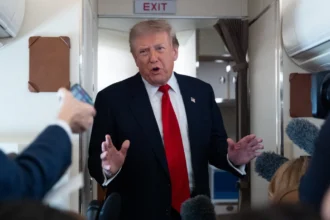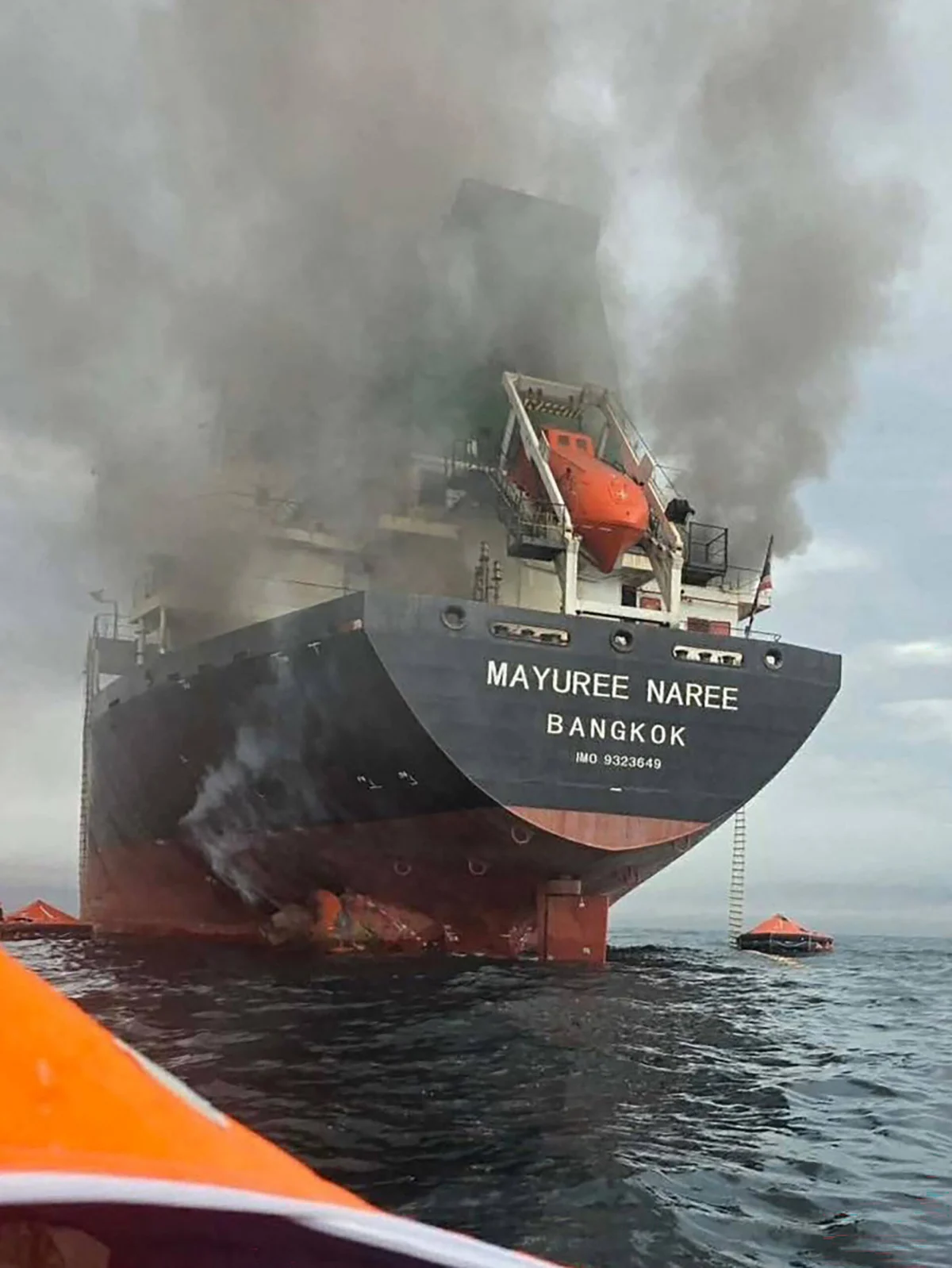
United States President Donald Trump declared Saturday that "many countries" are poised to dispatch warships to ensure the continued openness of the Strait of Hormuz, a critical global oil and gas chokepoint currently facing effective closure due to actions attributed to Iran. The announcement, made via his social media platform Truth Social, offered no specific details regarding which nations have committed to this international maritime operation.
The strategic waterway, vital for approximately one-fifth of the world’s oil and liquefied natural gas (LNG) shipments, has been effectively impassable for fifteen days amid escalating tensions between the United States and Iran. This situation has sent ripples through global energy markets and raised alarms about international trade security. The current crisis marks a significant escalation in the ongoing conflict, now in its fifteenth day of intensified U.S. and Israeli military campaigns against Iran.
President Trump’s statement on Truth Social outlined his expectation that nations "especially those affected by Iran’s attempted closure" of the strait would join the United States in deploying naval assets. He specifically named China, France, Japan, South Korea, and the United Kingdom as countries he anticipates will contribute to this coalition effort. The stated objective is to maintain the Strait of Hormuz as an open and secure passage for international commerce.
In a stark assessment of Iran’s military posture, Trump asserted that the U.S. had "already destroyed 100% of Iran’s Military capability." However, he immediately qualified this by acknowledging that Tehran could still pose a threat through actions such as deploying a "drone or two," dropping mines, or launching short-range missiles along the vital shipping lane. This dual assertion highlights the perceived asymmetrical threat posed by Iran, even as the U.S. claims overwhelming conventional superiority.
The President further pledged a robust American response, stating the U.S. would be "bombing the hell out of the shoreline, and continually shooting Iranian Boats and Ships out of the water," to ensure the strait is rendered "OPEN, SAFE, and FREE." This aggressive rhetoric signals a commitment to a forceful resolution if diplomatic efforts fail or if Iran continues its actions to disrupt maritime traffic.
Iran’s Response and Counterclaims
Responding directly to President Trump’s pronouncements, Alireza Tangsiri, the navy chief of Iran’s Islamic Revolutionary Guard Corps (IRGC), stated that the Strait of Hormuz has "not yet been militarily closed and is merely under control." This assertion suggests a more nuanced Iranian strategy, aiming to exert influence and control rather than a complete, overt shutdown of the waterway.
In a post on the social media platform X, Tangsiri directly challenged Trump’s claims, stating, "Americans falsely claimed the destruction of Iran’s navy. Then they falsely claimed the escorting of oil tankers. Now they’re even asking others for backup forces." This commentary points to Iran’s perception of American overstatement and an attempt to portray the U.S. as increasingly reliant on international support to manage the crisis.
U.S. Military Readiness and Diplomatic Nuances
The situation at the Strait of Hormuz has also brought into question the readiness and capacity of U.S. forces to unilaterally secure the waterway. Just last week, U.S. Energy Secretary Chris Wright informed CNBC that the U.S. was "not ready to do escorts for ships through the strait itself." This statement suggests a potential gap between presidential rhetoric and on-the-ground operational capabilities or preparedness for sustained escort missions.
Iran’s diplomatic stance has also been characterized by a degree of selectivity regarding the closure. Foreign Minister Abbas Araghchi clarified that the strait was only being restricted for "tankers and ships of enemies and their allies," implying that passage for neutral or allied vessels might still be permitted under specific conditions. This approach allows Iran to exert pressure on adversaries while potentially mitigating the immediate impact on global trade with friendly nations.
Mohsen Rezaee, a member of Iran’s influential Expediency Discernment Council, further emphasized this point, asserting that "No American ship has the right to enter the Gulf." This declaration underscores Iran’s broader geopolitical ambitions and its challenge to U.S. naval presence in the Persian Gulf region.
Navigational Exemptions and Diplomatic Maneuvers
Despite the heightened tensions, some maritime traffic has continued to transit the Strait of Hormuz, often through specific diplomatic arrangements. On Saturday morning, two Indian-flagged tankers carrying liquefied petroleum gas successfully crossed the strait, according to Rajesh Kumar Sinha, special secretary of India’s Ministry of Ports, Shipping and Waterways.
This passage was facilitated by a direct exemption granted by Iran, following diplomatic discussions between Indian Prime Minister Narendra Modi and Iranian President Masoud Pezeshkian. Similarly, a Turkish-owned vessel was permitted passage earlier in the week after Ankara negotiated directly with Tehran, with an additional 14 Turkish vessels reportedly awaiting similar clearance. These instances highlight a complex web of bilateral negotiations that are allowing limited, controlled transit through the strait.
U.S. Military Reinforcements in the Region
In response to the escalating situation, the United States is reinforcing its military presence in the Middle East. Approximately 2,500 Marines and the USS Tripoli, an amphibious assault ship, are en route to the region. This deployment was initiated following a request from U.S. Central Command (CENTCOM) and received approval from Defense Secretary Pete Hegseth. The reinforcement signals a commitment to projecting power and deterring further Iranian actions.
Kimberly Halkett, reporting from the White House for Al Jazeera, observed that Iran’s most potent weapon in this confrontation is not military but economic. The mere threat of damage to U.S. ships has been sufficient to create paralysis in the strait and disrupt the flow of goods. This economic leverage, she suggested, is the underlying reason for the U.S. president’s push for a broader international coalition to address the crisis.
Global Economic and Humanitarian Ramifications
The disruption at the Strait of Hormuz carries significant implications for global food security. The strait is a crucial conduit for LNG exports, which serve as the primary feedstock for nitrogen-based fertilizers. These fertilizers are essential for the cultivation of staple grains and cereals that provide over 40 percent of the global caloric intake. A prolonged disruption could have cascading effects on agricultural production and food prices worldwide.
India, for example, is already grappling with a critical cooking gas shortage and has invoked emergency powers to protect its 333 million LPG-dependent households. The United Nations humanitarian chief, Tom Fletcher, has issued a stark warning that "millions of people are at risk" if humanitarian cargo cannot pass safely through the strait, underscoring the dire consequences for vulnerable populations.
Defense Secretary’s Confidence Amidst Doubts
Despite concerns and observations about the U.S. being caught off guard, Defense Secretary Pete Hegseth dismissed such notions on Saturday. He stated, "We have been dealing with it, and don’t need to worry about it," projecting an image of control and preparedness. However, this confidence is met with skepticism from some analysts who view the situation as a complex challenge with no easy military solutions.
Humanitarian Costs and Expert Analysis
The broader conflict has already resulted in significant casualties. Since the war began on February 28, at least 1,444 people have been killed in Iran, with Lebanon also experiencing a mounting death toll. Gulf states have been subjected to sustained drone and missile fire, indicating a widespread regional destabilization.
Andreas Krieg, a researcher at King’s College London’s School of Security Studies, described President Trump’s call for a coalition as "a desperate move in an information campaign to calm markets." Krieg argued that there is no straightforward military solution to reopening the strait, as Iran’s strategy of occasional strikes is sufficient to deter insurers and disrupt shipping.
Krieg further elaborated that the U.S. appeared unprepared for the strait’s closure. He characterized the president’s public statements as an attempt to manage market perceptions and a hope for an unspecified "magical" resolution, rather than a concrete plan involving direct engagement with the Iranian regime. He cautioned that deploying naval vessels without a diplomatic agreement would expose expensive military assets to "very cheap but potentially very effective projectiles," raising concerns about the efficacy and risks of a purely military approach.