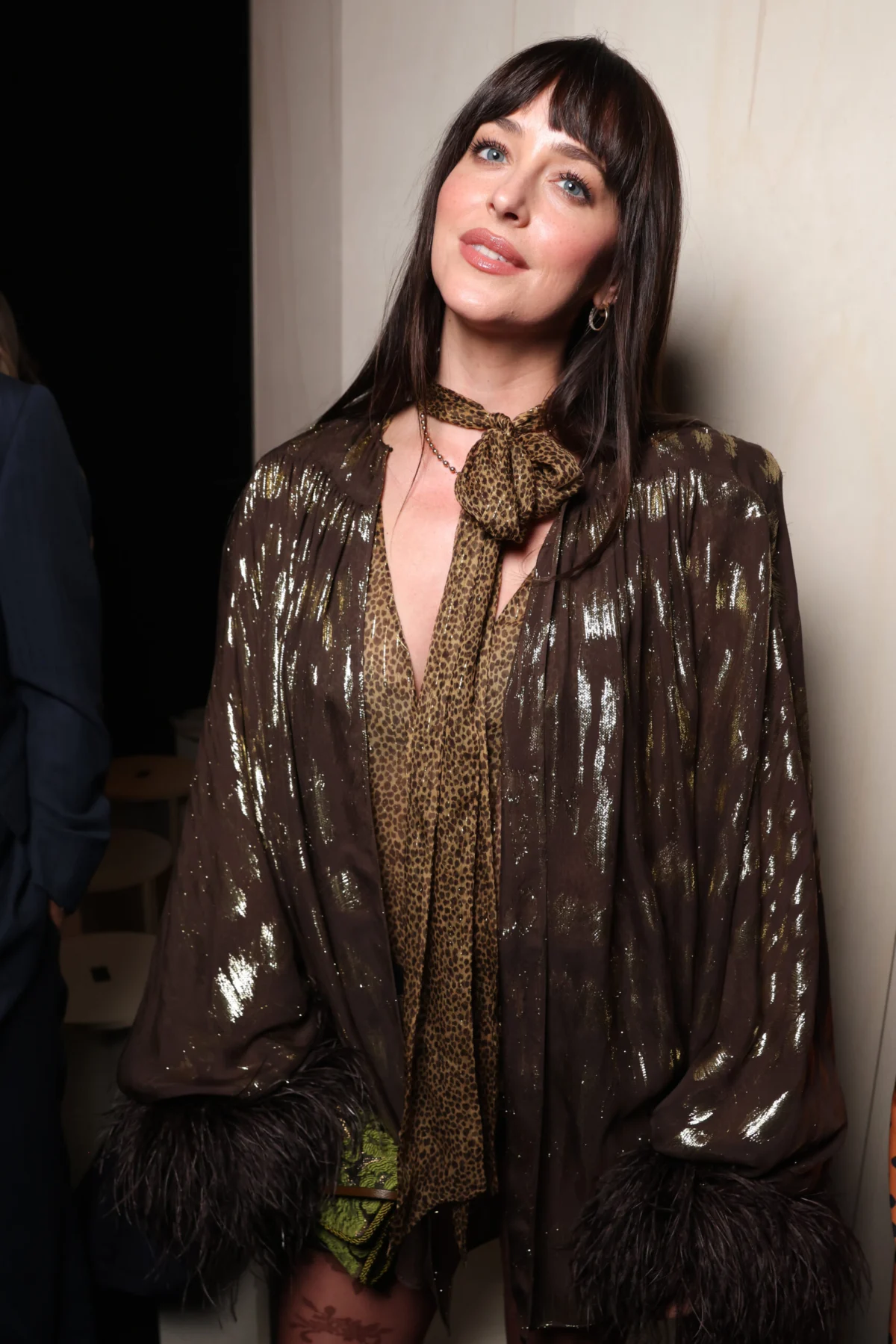
Maggie Gyllenhaal is slated to debut her 17-minute short film, Flesh Impact, at the Venice Film Festival this September, featuring Dakota Johnson and legendary actress Ellen Burstyn embodying distinct interpretations of the iconic Hollywood star, Marilyn Monroe. The project arrives as a poignant tribute, coinciding with what would have been Monroe’s 100th birthday this summer, reaffirming her enduring influence on cinematic and cultural narratives.
A Centenary Celebration and Enduring Legacy
Marilyn Monroe, born Norma Jeane Mortenson, remains one of the most compelling and enigmatic figures in entertainment history. Her life, marked by meteoric rise to fame, profound vulnerability, and a tragic early death at 36 in 1962, has fueled an unceasing fascination for generations of artists and audiences. This year would have celebrated her centennial, a milestone that continues to inspire new artistic interpretations and critical re-evaluations of her complex legacy. Flesh Impact is positioned as one such project, created with the explicit "blessings" of Monroe estate holders, Authentic Brands Group, underscoring its authorized and respectful approach to her story.
Reimagining an Icon: The Premise of ‘Flesh Impact’
The short film, described in official press materials as "a love letter to one of cinema’s most enduring icons," offers a dual portrayal of Monroe. Dakota Johnson, known for her roles in Fifty Shades of Grey and Suspiria, takes on the challenging task of depicting Monroe at the zenith of her fame, capturing the effervescent glamour and underlying fragility that defined her public persona. In a particularly intriguing casting choice, Oscar-winner Ellen Burstyn portrays an imagined version of Monroe in her later years, a speculative exploration of the life the star never lived. This conceptual framework allows the film to delve into the "what if" of Monroe’s existence, pondering how she might have evolved beyond her tragically curtailed career. Peter Sarsgaard and Sepideh Moafi, recognized for their work in The Pitt, round out the cast, adding further depth to the ensemble.
Maggie Gyllenhaal’s Directorial Vision
Maggie Gyllenhaal, a celebrated actress transitioning successfully into directing, brings a distinctive artistic sensibility to Flesh Impact. Her directorial debut, The Lost Daughter (2021), garnered critical acclaim and an Academy Award nomination for Best Adapted Screenplay, establishing her as a formidable voice behind the camera. Gyllenhaal has openly expressed her long-standing fascination with Marilyn Monroe, viewing the project as an opportunity to "reclaim her story" through a modern lens. She stated, "I’ve always been fascinated by Marilyn Monroe. So, when Genesis first came to me with the idea of a celebratory project for her centennial, I knew I wanted to work together on bringing this story to life. With Flesh Impact, we showcase the timeless icon we know and love through a modern lens that reclaims her story." This approach suggests a nuanced exploration beyond conventional biographical portrayals, focusing instead on the multifaceted nature of female stardom and identity.

The Creative Ensemble Behind the Camera
The production of Flesh Impact boasts a highly accomplished creative team, signaling a meticulous approach to crafting Monroe’s world. Production designer Karen Murphy, celebrated for her evocative work on Elvis, was responsible for the film’s visual environments. Casting director Mary Vernieu, whose credits include The Last of Us, oversaw the selection of the talent. Costume designer Jennifer Johnson, known for Bugonia, contributed to the authentic and symbolic wardrobe choices. The film was edited by Affonso Gonçalves, recognized for his work on Hamnet, ensuring a compelling narrative flow. Director of photography Lawrence Sher, celebrated for his cinematography in The Bride, captured the visual aesthetics, promising a visually rich and evocative experience. This collective expertise underscores the ambition and quality intended for Flesh Impact.
Casting Choices: Dakota Johnson and Ellen Burstyn as Marilyn Monroe
The decision to cast Dakota Johnson and Ellen Burstyn as Marilyn Monroe, albeit at different life stages, is central to the film’s conceptual ambition.
Dakota Johnson’s Portrayal of Marilyn Monroe
Dakota Johnson has built a career on roles that often explore complex female characters navigating public scrutiny and personal turmoil. Her casting as Monroe at the peak of her fame suggests an intention to delve into the pressures, expectations, and performative aspects of Monroe’s public life. Johnson’s ability to convey both vulnerability and a certain detached allure could provide a fresh perspective on Monroe’s highly scrutinized image during her most famous years. This portrayal is anticipated to capture the magnetic, yet often melancholic, essence of the star as she navigated the intense glare of Hollywood’s spotlight.
Ellen Burstyn’s Unique Take on Marilyn Monroe
Ellen Burstyn’s involvement is arguably one of the most compelling aspects of Flesh Impact. A living legend of American cinema, Burstyn’s career spans over six decades, marked by powerful performances in films such as The Exorcist, Alice Doesn’t Live Here Anymore (for which she won an Oscar), and Requiem for a Dream. Her portrayal of an imagined older Marilyn Monroe is a profound act of cinematic empathy and speculation. Given Burstyn’s own journey through Hollywood, her understanding of an actress’s life, and her profound dramatic capabilities, her interpretation offers a unique opportunity to envision Monroe with the wisdom and perspective of age. This speculative aspect allows the film to explore themes of longevity, identity, and the roads not taken, adding a layer of poignant depth to Monroe’s enduring mythos.
Venice Film Festival Platform
The Venice Film Festival provides a prestigious international platform for Flesh Impact. As one of the "Big Three" European film festivals, alongside Cannes and Berlin, Venice is renowned for its discerning taste and role in launching significant works. Maggie Gyllenhaal’s presence is further amplified by her appointment as the jury president for the festival, a distinguished honor that places her at the forefront of the cinematic world. The debut of her short film in this context not only ensures high visibility but also signifies critical validation for the project. Adding to the festival’s significance for the production, Ellen Burstyn is set to receive a Golden Lion for Lifetime Achievement at Venice, an accolade recognizing her monumental contributions to cinema. Burstyn also stars in Kornél Mundruczó’s Place to Be, an out-of-competition title, making her presence at the festival multifaceted and highly celebrated.

Corporate Backing and Artistic Integrity
The production of Flesh Impact is supported by a consortium of notable entities, including William Green for The Cut, Michelle Ross for Superprime, and Nicolette Spencer and Melissa Moore for INNOCEAN. The film is notably presented by the automotive brand Genesis. This partnership highlights a growing trend of corporate brands engaging with high-profile artistic projects. Amy Marentic, chief marketing officer at Genesis Motor America, articulated the brand’s motivation: "At Genesis, we believe the arts have a unique ability to inspire reflection, spark meaningful conversation, and connect people through stories that endure across generations. Our support of this film honoring Marilyn Monroe reflects our commitment to celebrating cultural icons whose influence extends far beyond their time." Such collaborations raise questions about the interplay between commercial interests and artistic freedom, yet in this instance, Genesis’s stated aim aligns with the film’s celebratory and reflective nature. Maddi Carlton, Brandon Boerner, Rebecca Skinner, David Webb, and Courtney Kivowitz serve as executive producers, overseeing the project’s execution.
Broader Implications: Monroe’s Image in Modern Culture
Flesh Impact contributes to an ongoing and evolving conversation surrounding Marilyn Monroe’s place in modern culture. Her image has been endlessly dissected, celebrated, and, at times, re-evaluated through various lenses, from historical biographies to dramatic portrayals like Andrew Dominik’s controversial Blonde. Gyllenhaal’s stated intention to "reclaim her story" suggests a move towards a more nuanced and perhaps empowering narrative, distancing itself from sensationalism or reductive interpretations. The film’s exploration of Monroe through the perspective of other actresses—both in character and through Gyllenhaal’s directorial gaze—serves as a commentary on the female experience within the often-demanding machinery of Hollywood. It invites audiences to reconsider Monroe not just as a symbol, but as a complex individual whose struggles and triumphs continue to resonate, especially in discussions about celebrity, mental health, and gender dynamics in the entertainment industry.
Anticipation and The Road Ahead
The first glimpses of Flesh Impact were initially reported by Vanity Fair, offering an early look at Johnson and Burstyn in character. Gyllenhaal shared additional insights with the magazine, stating, "This film is very much a mixture of Marilyn and my fantasy of her. In a lot of ways, this movie is about Marilyn and also about actresses in general and what it’s like to have that strange, very vulnerable, and, at the same time, very powerful job." This statement underscores the film’s dual purpose: a specific tribute to Monroe and a broader meditation on the acting profession itself. As the Venice Film Festival approaches, anticipation for Flesh Impact is building, with many eager to see how Gyllenhaal, Johnson, and Burstyn collectively reinterpret one of the 20th century’s most indelible figures. The short film’s premiere will undoubtedly spark new discussions about Monroe’s legacy and the enduring power of cinema to reinterpret history through a contemporary lens.