Five months after the United States and Israel initiated a military campaign against Iran that was originally projected to last only weeks, the conflict has settled into a grinding war of attrition with no clear resolution in sight. Despite the elimination of Iran’s Supreme Leader in the opening salvos and several attempts at negotiated ceasefires, the regional instability has created a ripple effect that is now being felt acutely within the domestic borders of the United States. From the fluctuating status of the Strait of Hormuz to the sudden deployment of National Guard units, the American public is increasingly vocal about the "pinch" of a war that many feel has overstayed its welcome and its strategic justification.
For many voters interviewed across the country, the war is no longer a distant news headline but a daily economic burden. The residual effects of the conflict have manifested at gas stations, in grocery aisles, and through the disruptive reality of military call-ups that have upended family lives. This new theater of war follows years of heavy American financial involvement in regional conflicts, particularly the war in Gaza, which has already cost billions in taxpayer funds. This cumulative spending has sparked a raw and intensifying national debate over the true purpose and limits of American power in the 21st century.
Economic Fallout and the Domestic Squeeze
The economic consequences of the prolonged engagement are perhaps most visible in the rural sectors of the American economy. In North York, Maine, 31-year-old Lydia Stone, who works in the logging industry while raising an 18-month-old daughter, describes a profession under siege from two fronts. As a direct result of the conflict’s impact on global energy markets, fuel costs for heavy machinery have surged, yet the market price for wood remains stagnant. Stone notes that the "huge jump in prices" has made maintaining a livelihood significantly more difficult for those in the primary resource sector.
This individual frustration is mirrored in national data. According to AAA, the average price of gasoline has pushed above $4 a gallon for the first time in several years, a direct consequence of the volatility in the Persian Gulf. Economic analysts have highlighted that this financial pain is not distributed evenly across the population. Lower- and middle-income households, which typically spend a larger percentage of their monthly budget on fuel and essential goods, are feeling the "pinch" of the continued Iran war far more severely than wealthier consumers. For these families, a 50-cent increase at the pump can mean the difference between financial stability and falling behind on utility bills.
Shifting Sentiments Among Independent and Progressive Voters
Beyond the immediate financial concerns, there is a growing moral and political objection to the war’s continuation. Stone, like many of her neighbors, expressed frustration that tax dollars are being diverted toward military strikes abroad while domestic social programs face significant cuts. In her community, the reduction in SNAP benefits (Supplemental Nutrition Assistance Program) has coincided with noticeably longer lines at local food pantries. The human cost of the war was further brought home when her best friend’s husband was deployed on extremely short notice, leaving a young family to navigate the crisis alone.
This sense of a war lacking clear justification is reverberating strongly among independent and progressive voters. In Cable, Wisconsin, 73-year-old Terrence Dahmen, a retired independent voter who typically leans toward the Democratic Party, characterized the American involvement as a "huge mistake." Dahmen argued that the U.S. was not directly provoked into the fight and questioned the underlying motives of the administration. "I saw no reason to go there other than possibly controlling oil somehow," Dahmen said, suggesting that the country should instead be prioritizing investments in renewable energy sources like solar, wind, and geothermal power to ensure long-term energy independence.
Political Backlash and the Memory of Previous Conflicts
The sentiment in the American Midwest reflects a broader disillusionment with foreign interventions that echo the early 2000s. Robert Edelstein, 62, who operates a window-tinting business in Douglas County, Wisconsin, was blunt in his assessment of the current geopolitical situation. Comparing the decision to strike Iran unfavorably with the 2003 invasion of Iraq under George W. Bush, Edelstein stated that he would prioritize voting for any candidate who opposes the ongoing war. "It’s screwed everything up, as we all know," he said, echoing a sentiment that the war has become an unnecessary distraction from domestic priorities.

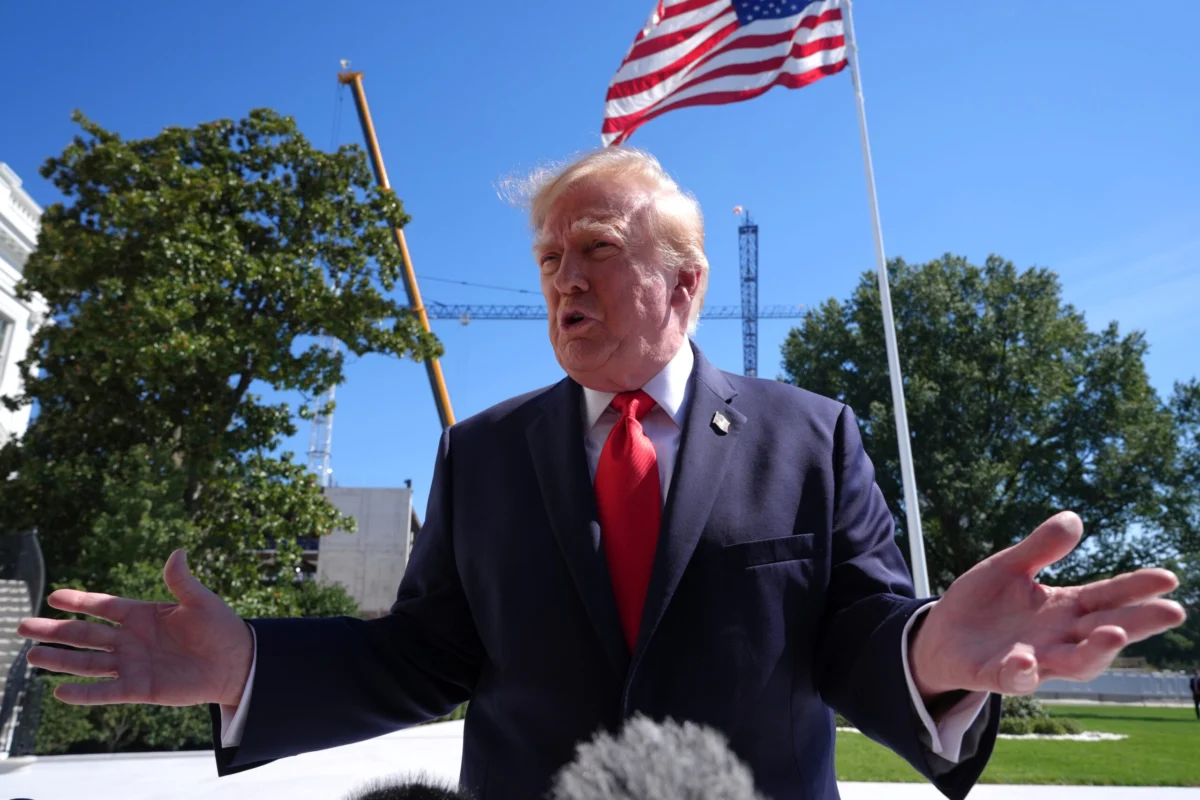
In the South, the criticism is equally sharp, even among those with deep roots in their communities. In Georgia, Jimmy Carter—a retired teacher with no relation to the former president—watched a recent presidential motorcade with a sense of disbelief. Carter noted that even his brother, a supporter of the current administration, has begun to question the wisdom of the Iranian campaign. The consensus among many in his circle is that the idea was poorly conceived and that the president may have been misled by hawkish advisors.
Military Families and the Search for an Exit Strategy
The perspectives of those with direct ties to the military are notably complex, ranging from support for the initial mission to deep concern over the lack of an exit strategy. Nick Marine, a retired sailor who attended a rally in Marietta, Georgia, offered his support for the administration’s approach, stating that he felt the confrontation with Iran was a long time coming. However, even Marine voiced a degree of caution, arguing for a gradualist approach rather than overwhelming force, citing the need for future commerce with the Iranian people once the fighting subsides.
Conversely, Richard Bradley, a retired Army major and combat engineer from Mableton, Georgia, finds himself in a difficult position. With both a son and a daughter currently serving in the military, Bradley supports the broader rationale for confronting the Iranian regime but is wary of the conflict turning into another "enduring war." His father fought in the Gulf War, and Bradley expressed a desire to see the current business finished so that the next generation does not have to inherit the same unresolved conflicts. "I’d rather fight bad guys in their land instead of mine," he said, while emphasizing the urgent need for a clear plan to "finish it up."
The Humanitarian Toll and Iranian Perspectives
The war has also drawn reactions from the Iranian-American community, where opinions on the U.S. intervention are sharply divided. Salman Majidi, a software developer from Atlanta and an immigrant from Iran, views the American campaign not as a war of choice but as a necessary rescue operation. A supporter of the exiled former crown prince, Reza Pahlavi, Majidi argued that the toll of the Iranian regime’s domestic violence against its own citizens far outweighs the impact of American strikes. He pointed to reports of thousands of civilians being killed by the regime in recent days as evidence that the status quo was unsustainable.
However, for the majority of Americans, the nuances of Iranian internal politics are secondary to the mounting costs of the war. The conflict has not replaced the national debate over the war in Gaza; instead, it has compounded it. The two conflicts have blurred into a single, large-scale grievance regarding the expenditure of American moral authority and financial resources. Voters are increasingly asking why a president who campaigned on an "America First" platform or a platform of ending "forever wars" is now presiding over a multi-front Middle Eastern conflict.
The Intersection of Foreign Policy and the National Legacy
Clay Harvison, a mixed martial artist from Marietta who previously voted for the president, expressed concern that the war is damaging the very legacy the administration sought to build. Harvison argued that the military engagement should have ended after the initial surgical strikes and blamed pressure from foreign allies for dragging the U.S. deeper into the quagmire. He noted that younger voters, in particular, are skeptical of a "military-industrial complex" that they perceive as laundering tax dollars for foreign wars instead of fixing domestic infrastructure like roads and bridges.
As the conflict enters its sixth month, the question of whether a lasting ceasefire can be achieved remains unanswered. What is certain, however, is that the American public’s patience is wearing thin. From the lake towns of Wisconsin to the suburbs of Georgia, voters are performing a grim set of calculations. They are tallying gas receipts, reading deployment orders, and watching casualty counts, all while asking what the ultimate objective of the war truly is. The "pinch" of the continued Iran war has become a defining feature of the American political landscape, forcing a reevaluation of the nation’s role on the global stage.