The United States military executed a "heavy wave" of retaliatory airstrikes across several Iranian provinces early Thursday, marking a definitive end to a brief lull in direct hostilities and signaling a significant escalation in the five-month conflict. U.S. Central Command confirmed that the operation targeted dozens of Islamic Revolutionary Guard Corps (IRGC) installations, including military command centers, missile and drone facilities, and coastal surveillance sites. The strikes were a direct response to an attempted Iranian ballistic missile attack on American military personnel stationed in Jordan earlier in the week.
The renewed combat operations follow a period of relative calm that mediators had hoped might lead to a sustainable de-escalation. Instead, the region has been thrust back into a cycle of high-intensity violence that now involves a broader coalition of regional actors. In a parallel development, Jordan’s military announced it had successfully intercepted an Iranian attempt to target the kingdom with five missiles, an act that has heightened fears of the war spilling over into previously stable neighboring territories.
The U.S. Response: A Heavy Wave of Strikes on Iran
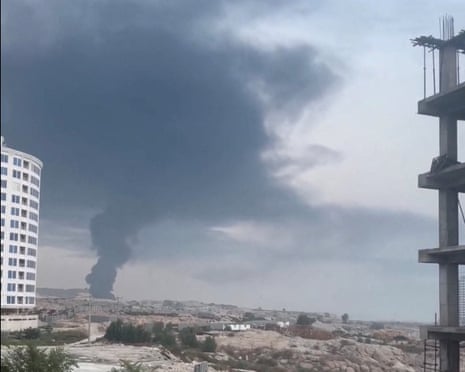
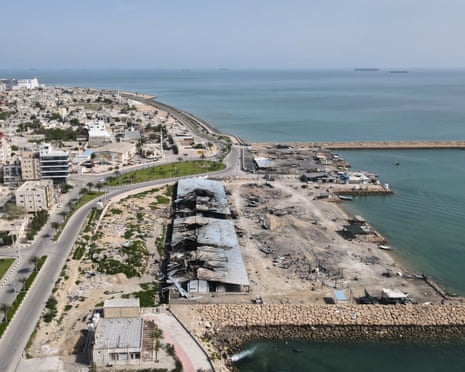
U.S. Central Command (CENTCOM) officials stated that the two-hour aerial campaign was designed to "further diminish threats" posed by the IRGC and its various regional proxies. The strikes targeted critical infrastructure used to threaten commercial shipping in the Gulf and to launch attacks against American forces. According to Iranian state media, explosions were reported in the southwestern Khuzestan province, specifically around the cities of Abadan, Shadegan, Arvandkenar, and Ahvaz.

Additional strikes were confirmed on Qeshm Island, a strategic landmass in the Strait of Hormuz that serves as a primary storage and launch site for Iranian attack craft, sea mines, and loitering munitions. The deputy governor of Hormozgan province told local media that the attacks occurred around 4:00 a.m. local time. While the U.S. military maintained that all targets were military in nature, Iranian agencies reported that at least one strike impacted a residential area on Qeshm, resulting in at least two injuries.
The decision to resume "heavy" strikes on Iran follows a directive from the Oval Office, where President Donald Trump had signaled a shift toward a more aggressive posture. Speaking to reporters on Wednesday, Trump warned that the U.S. would hit Tehran "very hard," asserting that the previous pause in violence had been met with renewed Iranian aggression. The President’s rhetoric suggests that the administration has moved away from the "tit-for-tat" strategy of limited responses in favor of a campaign intended to break the current military stalemate.
Jordan Foils Iranian Missile Attack Amid Regional Escalation
As the U.S. strikes were underway, the Jordanian military reported a narrow escape from a potentially devastating assault. The state news agency, quoting armed forces officials, confirmed that five Iranian missiles were intercepted before they could reach their targets within the kingdom. Jordanian authorities stated that "interception measures" were successfully carried out and that no casualties or significant property damage had been reported.
This attempted strike on Jordan represents a dangerous pivot in the Middle East crisis. Jordan has long served as a key Western ally and a buffer of stability in the region, hosting U.S. troops and participating in humanitarian efforts. By targeting the kingdom directly, Tehran appears to be signaling its willingness to widen the conflict to include any nation facilitating the U.S. military presence. The Jordanian military has since declared its highest level of readiness, vowing to deal firmly with any threat to its national security.
Analysts suggest that the failed attack on Jordan was likely a retaliatory move for the kingdom’s perceived role in supporting U.S. operations. However, the move has backfired diplomatically, further isolating Iran and pushing regional powers toward a more formal security alignment with Washington. The incident underscores the fragility of the current geopolitical landscape, where a single successful missile strike could drag a new sovereign nation into an all-out war.
Uncharted Territory: Saudi-U.S. Cooperation in Iraq
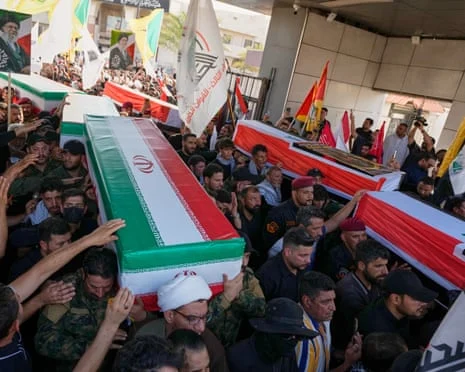
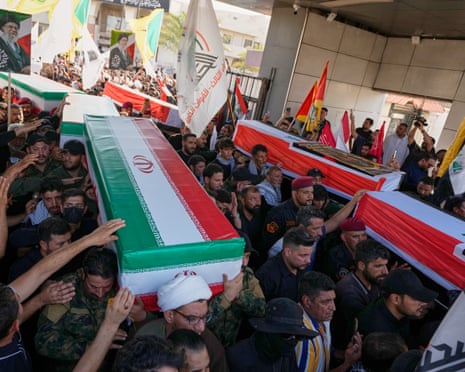
The escalation is not limited to direct U.S.-Iran exchanges. On Wednesday, Saudi Arabia took the unprecedented step of publicly joining the U.S. in conducting airstrikes against Iran-backed militias in Iraq. The joint operation targeted the Popular Mobilization Forces (PMF) in eastern Iraq, resulting in the deaths of at least 20 fighters and six Iranian military advisers. This move has been described by regional analysts as a transition into "uncharted territory," as Riyadh has traditionally preferred to keep its military involvement against Iranian proxies more discreet.
The Saudi decision to go public followed two days of drone attacks targeting crude oil facilities within the kingdom, which Riyadh attributed to Tehran-supported groups. The Iraqi presidency, led by Nizar Amidi, condemned the strikes as a "blatant violation of Iraq’s sovereignty." The involvement of Saudi Arabia in offensive operations within Iraqi territory complicates the diplomatic efforts of the Baghdad government, which has struggled to balance its relationships with both Washington and Tehran.
Sanam Vakil, director of the Middle East and North Africa program at Chatham House, noted that the era of "plausible deniability" regarding proxy warfare has ended. The intertwined nature of these relationships means that any strike on a proxy is now viewed as a direct strike on the patron’s interests. The overt participation of Saudi Arabia indicates that the Gulf monarchies are increasingly convinced that diplomacy alone will not secure their borders or the vital energy corridors of the Red Sea and the Persian Gulf.

The Trump-Netanyahu Summit and the Path to Force
The current wave of strikes was launched just hours after Israeli Prime Minister Benjamin Netanyahu concluded a high-stakes meeting with President Trump at the White House. According to senior Israeli officials, the two leaders discussed three primary paths to addressing the Iranian nuclear and conventional threat: a new negotiated deal, a continued economic blockade, or a "massive strike." While the official briefing stated that Netanyahu did not explicitly demand an immediate escalation, the subsequent U.S. military action suggests a high degree of strategic alignment.
During the meeting, Trump reportedly expressed frustration over leaked intelligence regarding "Pickaxe Mountain," a deep-underground nuclear facility in Iran. The President had previously threatened to bomb the site, and the public emergence of these plans was seen as a breach of operational security. Despite these tensions, the meeting reaffirmed the "senior partner, junior partner" relationship between the U.S. and Israel, with both nations agreeing that Iranian attempts at a surprise attack would be met with overwhelming force.
The White House meeting also touched upon the failure of previous mediation efforts. Despite optimism from regional intermediaries earlier in the week, the collapse of an interim agreement over shipping rights in the Strait of Hormuz has left little room for diplomatic maneuvering. Both leaders appeared to agree that Iran’s use of its proxies during the "pause" in direct U.S. strikes proved that Tehran was not acting in good faith, leading to the "heavy" response witnessed on Thursday.
Maritime Disruptions in the Strait of Hormuz and Egypt
The conflict continues to have a profound impact on global maritime security and energy transit. For the first time since July 11, ship-tracking data showed a QatarEnergy-controlled liquefied natural gas (LNG) tanker, the Al Areesh, exiting the Strait of Hormuz. The passage of the vessel is a critical indicator of the risks currently facing the energy industry; tankers have been largely stationary or rerouted since the Al Rekayyat was struck earlier this month.
While twelve commodity ships passed through the strait on Wednesday, the environment remains hostile. In Egypt, drone strikes recently ignited fires on two natural gas vessels at the port of Damietta. The targets included a U.S.-owned floating storage facility and a Greek-owned tanker. While no injuries were reported, the reach of these attacks into the Mediterranean coast of Egypt suggests that Iran-backed actors are capable of disrupting energy infrastructure far beyond the immediate Persian Gulf theater.
The Egyptian incident is particularly alarming to international observers, as it marks a significant widening of the geographic scope of the war. If Iran or its proxies are confirmed to be operating in the Eastern Mediterranean, it would pose a direct threat to European energy security and the Suez Canal’s operational viability. President Trump, when asked about the Egyptian strikes, characterized them as "more of the same," further cementing the administration’s view that Tehran is the central orchestrator of regional chaos.
Global Energy Markets React to Renewed Hostilities
The volatility of the Middle East crisis continues to dictate the movement of global oil prices. Following the news of the "heavy" U.S. strikes and the foiled attack in Jordan, Brent crude jumped 7.3%, surpassing $88 a barrel. This sharp spike reversed a brief downward trend that had occurred during the short-lived pause in fighting. Investors remain on edge, as any sustained closure of the Strait of Hormuz—through which roughly 20% of the world’s oil passes—could lead to a global economic shock.
However, market analysts at Rystad Energy noted that prices settled slightly after the initial spike as traders weighed the "actual supply flow" against the "geopolitical headlines." Despite the strikes, approximately 13 million barrels of oil per day are still reaching global markets from the Gulf. Some analysts have pointed to a pattern where rapid price increases are often short-lived unless a major production facility or a primary chokepoint is rendered permanently inoperable.
There is also a growing debate among market observers regarding the long-term effectiveness of U.S. military strategy. Adm. Brad Cooper, head of U.S. Central Command, has reportedly developed a "go big" plan involving 10 to 14 days of intensive airstrikes designed to permanently cripple Iran’s missile capabilities. Supporters of the plan argue it would reduce the need for expensive defensive munitions, which are currently in short supply. Critics, however, warn that such a campaign could lead to the very all-out war that the U.S. has spent months trying to avoid.
The current situation remains fluid, with the international community bracing for Iran’s next move. With the U.S. having completed its "heavy wave" of strikes and Jordan successfully defending its airspace, the focus now shifts to whether Tehran will choose to escalate further or return to the negotiating table under the weight of increased military and economic pressure. For now, the Middle East remains in a state of high-alert, with the prospect of a wider regional conflagration looming larger than at any point since the conflict began in February.