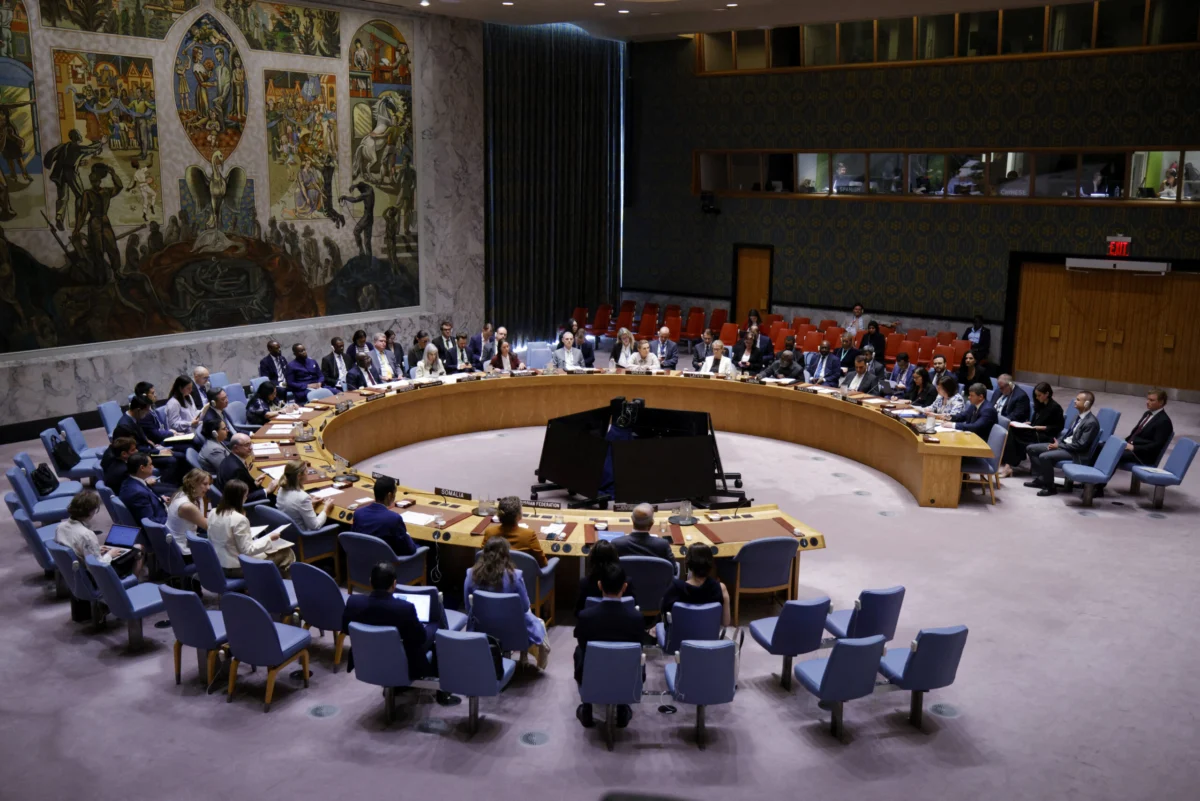
The initial informal poll conducted by the UN Security Council has signaled an early frontrunner, though the race remains fluid and open to considerable shifts. Former Costa Rican Vice President Rebeca Grynspan emerged as the leading candidate in this preliminary assessment, underscoring the complex dynamics at play as nations begin to weigh their preferences for the organization’s highest office.
The incoming secretary-general will inherit a mandate fraught with immense challenges, tasked with revitalizing an institution perceived by many as being in crisis. This successor to Antonio Guterres, who has led the UN for the past decade, will confront a world marked by escalating global conflicts, a surge in far-right populist movements challenging international cooperation, and a persistent demand for significant institutional reform. The weight of these responsibilities will fall upon the shoulders of the individual chosen to steer the UN through this turbulent period.
The Search for a New UN Chief: Early Indicators Emerge
In the first of what is expected to be a series of non-binding "straw polls," the 15 members of the UN Security Council cast their votes on Thursday. This initial ballot provided a glimpse into the early preferences of the council, with Rebeca Grynspan receiving a significant endorsement, garnering 10 "encourage" votes. This strong showing positions her as a notable contender from the outset of this crucial selection process.
Following closely behind Grynspan was former Guyanese Foreign Minister Carolyn Rodrigues Birkett, who secured nine "encourage" votes. The list of candidates also includes Rafael Grossi, the current head of the UN’s nuclear watchdog agency, the International Atomic Energy Agency. Grossi, from Argentina, was noted as a "surprise" third-place finisher among the seven candidates who participated in this initial round.
Understanding the Selection Mechanism for UN Leadership
The process for selecting a UN secretary-general is intricate, involving a delicate balance of influence between the Security Council and the General Assembly. The Security Council plays the dominant role, with its five permanent members—China, France, Russia, the United Kingdom, and the United States—holding veto power. Their consensus is paramount for any candidate to advance.
The straw polls serve as an informal mechanism for the Security Council members to gauge support for various candidates and to weed out those who lack sufficient backing. In these secret ballots, council members indicate whether they "encourage" a candidate, "discourage" them, or have "no opinion." The results of these polls, while not binding, provide crucial feedback that can shape the trajectory of the race.
Historical precedent suggests that this process can be lengthy, often extending through the summer months. Multiple rounds of polling are anticipated, with a final decision typically emerging in late September or early October. However, the timeline can be extended considerably if consensus among the permanent members of the Security Council proves elusive, necessitating further deliberation and negotiation.
A Diverse Field of Contenders for the UN’s Top Post
Beyond the early frontrunners, a notable roster of experienced international figures are vying for the position of UN secretary-general. The field includes former Senegalese President Macky Sall, a prominent African leader with extensive experience in regional and international diplomacy. Also in contention is former Chilean President Michelle Bachelet, a former UN High Commissioner for Human Rights, known for her advocacy on human rights and gender equality.
The candidacies extend to former Ecuadorean Foreign Minister Maria Fernanda Espinosa, who has a strong background in multilateral diplomacy and has previously served as President of the UN General Assembly. Adding to the diverse pool of applicants is Ugandan diplomat Olara Otunnu, a former UN Under-Secretary-General for Children and Armed Conflict, who entered the race in the final week. It is also important to note that the window for additional candidates to enter the contest remains open, potentially introducing new dynamics into the selection process.
Navigating a World in Flux: The Mandate of the Next UN Chief
The challenges facing the next UN secretary-general are profound and multifaceted. The organization is operating within a geopolitical landscape marked by intensifying conflicts, including ongoing proxy wars and regional instability that threaten to draw in major powers. The resurgence of nationalist sentiments and the rise of far-right populist movements in various parts of the world have also created a climate of skepticism towards multilateral institutions like the UN.
Critics argue that the UN has struggled to effectively address major global crises, leading to a decline in its perceived authority and efficacy. Issues such as the prevention of genocide, the management of refugee flows, and the enforcement of international law have exposed the limitations of the organization’s current structures and its reliance on the cooperation of member states, particularly the permanent members of the Security Council.
Therefore, a core task for the incoming secretary-general will be to spearhead a comprehensive revitalization of the United Nations. This will likely involve pushing for significant reforms to enhance the organization’s responsiveness, accountability, and effectiveness in dealing with contemporary global threats. The ability to build consensus among member states, bridge divides, and restore faith in the UN’s mission will be crucial for its future relevance.
The Weight of the World: Public Expectations and Institutional Pressure
The selection of a new secretary-general is more than just an internal UN affair; it carries significant implications for global governance and the well-being of billions of people. The public impact of the UN’s work, from peacekeeping operations to humanitarian aid and the promotion of sustainable development, is substantial. A strong and effective leader at its helm is essential to maximizing these positive contributions.
Conversely, a perceived weakening of the UN’s capacity or a lack of decisive leadership can exacerbate global challenges, leaving vulnerable populations more exposed and undermining efforts to achieve peace and security. The pressure for reform is not merely an internal administrative concern but a reflection of growing public demand for an international body that can deliver tangible results and uphold universal values.
The rising tide of criticism from populist movements often targets the perceived bureaucracy and ineffectiveness of international organizations. The next secretary-general will need to artfully navigate these critiques, demonstrating the UN’s value proposition while simultaneously addressing legitimate concerns about its operational efficiency and the need for greater transparency.
Historical Context and the Evolution of the UN Secretary-General Role
The role of the UN secretary-general has evolved significantly since the organization’s inception in 1945. Initially conceived as a chief administrative officer, the position has grown in stature and influence, often serving as a moral compass and a key diplomatic mediator in international crises. Secretaries-general have historically played a crucial role in de-escalating conflicts, advocating for human rights, and mobilizing international action on pressing global issues.
The selection process itself has also undergone changes, with a greater emphasis placed on transparency and inclusivity in recent decades. While the Security Council retains its decisive power, there has been a growing call for greater input from the broader UN membership, represented by the General Assembly. This push for a more democratic selection reflects a broader trend towards reforming global governance structures.
The legacy of past secretaries-general, from Dag Hammarskjöld’s courageous diplomacy during the Congo Crisis to Kofi Annan’s efforts to reform the UN and address issues like AIDS, provides a benchmark against which the performance of future leaders will be measured. The challenges of today, however, may be even more complex, demanding a unique blend of diplomatic skill, strategic vision, and unwavering commitment to the UN’s founding principles.
Looking Ahead: The Path to a Consensus Candidate
The coming weeks and months will be critical as the UN Security Council continues its deliberations. The process of informal consultations and formal straw polls will likely intensify, with candidates working to garner the necessary support from the permanent members. The ability of any candidate to demonstrate a clear vision for the UN’s future, coupled with a pragmatic approach to addressing its current challenges, will be key to their success.
The selection of the next UN secretary-general is a momentous occasion, holding the potential to reshape the trajectory of international cooperation. The individual chosen will have the immense responsibility of guiding one of the world’s most important institutions through a period of profound change and uncertainty, striving to uphold its core mission of promoting peace, security, and human dignity for all. The world watches, with a mixture of hope and apprehension, as the hunt for the UN’s next chief unfolds.