France has moved to immediately step up border controls with Spain as an estimated 49,000 migrants crossed into the Spanish enclave of Ceuta in a single 24-hour period, triggering a major diplomatic and security crisis across the European Union. The French government announced the mobilization of specialized forces to the Pyrenees border on Friday, citing the unprecedented scale of the breach at the Spanish-Moroccan frontier as a direct threat to regional stability.

French Interior Minister Laurent Nuñez confirmed the decision via social media, stating that instructions were issued overnight to fortify all transit points between France and Spain. The deployment includes the activation of the Rapid Intervention Border Force, a specialized unit designed to conduct in-depth checks and prevent the movement of irregular migrants into French territory.
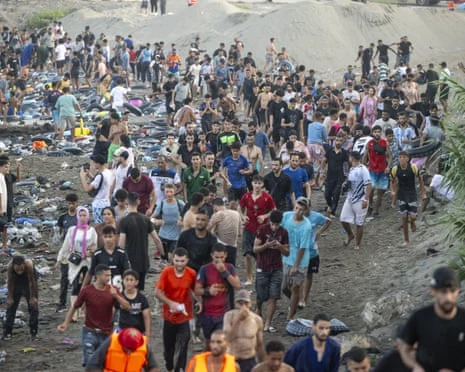
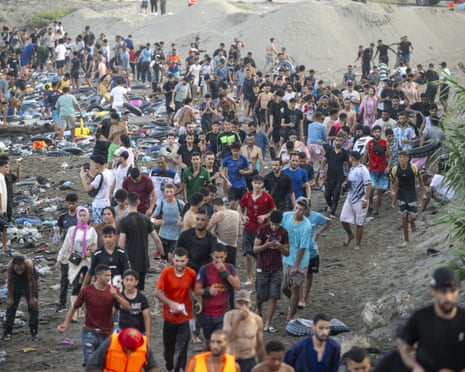
The crisis began on Thursday when thousands of people began swimming or walking around the Tarajal breakwater that separates Morocco from the tiny Spanish territory in North Africa. By Friday morning, the Spanish Interior Ministry released figures suggesting that nearly 50,000 people had successfully entered the city, a number that represents more than half of Ceuta’s total permanent population of 85,000.
The Magnitude of the Ceuta Border Breach
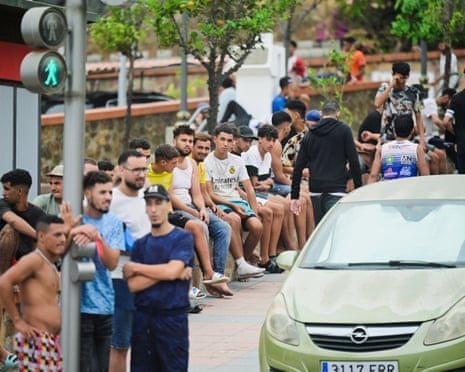
The scale of the current influx has stunned European officials, dwarfing the previous major border crisis in 2021 when approximately 10,000 people entered the territory. Local reports from Ceuta describe a city in a state of shock, with thousands of new arrivals lining up at supermarkets and gathering in public squares. While some migrants have reportedly begun to return to Morocco voluntarily, the vast majority remain within the enclave’s borders.
Spanish authorities have confirmed that at least 18 people died during the mass crossing. Most of the fatalities are attributed to drowning or exhaustion as individuals attempted to navigate the rocky coastline and heavy surf. The Guardia Civil, Spain’s paramilitary police force, described the situation as a "massive entry from the sea" and admitted that existing infrastructure was completely overwhelmed by the sheer volume of arrivals.
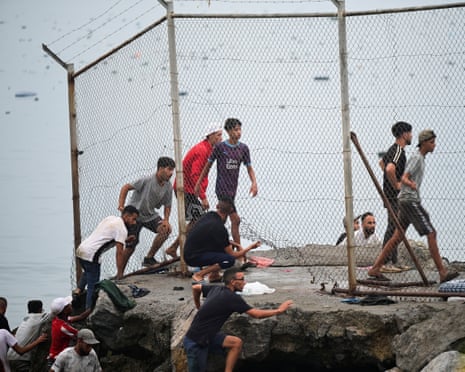
The Spanish government has responded by deploying additional military units and police reinforcements to the enclave. Prime Minister Pedro Sánchez canceled his scheduled agenda to fly directly to Ceuta, where he is expected to tour the Tarajal border zone and address the media. The Spanish Royal Household also confirmed that King Felipe VI has been in constant communication with the Prime Minister and Ceuta’s President, Juan Jesús Vivas, to monitor the unfolding emergency.
France to Step Up Border Controls with Spain as Estimated 49,000 Migrants Cross into Ceuta
The French decision to "step up border controls with Spain as an estimated 49,000 migrants cross into Ceuta" has significant implications for the Schengen Area, which typically allows for passport-free travel between EU member states. By reintroducing "in-depth checks," France is effectively signaling a lack of confidence in Spain’s ability to manage the EU’s external frontier.
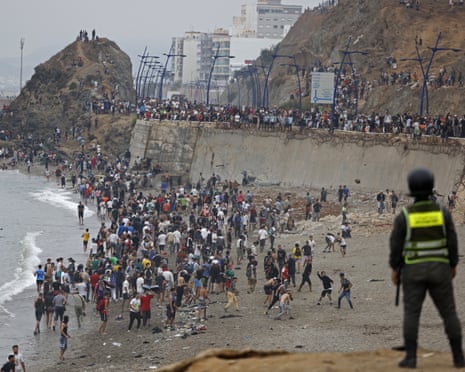
In Paris, the political reaction has been swift and divided. Far-right presidential candidate Marine Le Pen seized on the crisis to demand a permanent end to the current Schengen rules. She accused the Spanish government of encouraging "massive and coordinated" migration and insisted that France must protect its sovereignty by restricting free movement to EU nationals only.
Former French Prime Minister Michel Barnier echoed these concerns, though he focused more on the implementation of existing EU directives. Barnier argued that France cannot be expected to "suffer the consequences" of its neighbors’ migration policies. He called for the immediate application of the new EU return directive, insisting that any individual in an irregular situation who does not meet the criteria for asylum must be effectively and swiftly returned to their country of origin.

Italy Demands Spain’s Suspension from the Schengen Area
The crisis has also ignited a rare and vitriolic diplomatic clash between Madrid and Rome. Italian Prime Minister Giorgia Meloni reacted with fury to the images coming out of Ceuta, labeling the situation a "concrete threat" to European security. Meloni took the extraordinary step of demanding that Spain be suspended from the Schengen Area until order is fully restored at its borders.
"Italy will not stand by and watch," Meloni said in a public statement. She warned that her government is prepared to intervene with "extraordinary measures" to protect Italian citizens, including the potential suspension of open-border agreements with Spain. Italian Foreign Minister Antonio Tajani supported the Prime Minister’s stance, linking the current surge to the Spanish government’s recent decision to regularize the status of over 500,000 undocumented migrants already living in Spain.
The Spanish government has dismissed the Italian rhetoric as "partisan demagoguery." Foreign Minister José Manuel Albares stated that Tajani’s comments were "unbecoming" of a partner nation and announced that he would formally summon the Italian ambassador to Madrid to lodge a protest. Albares argued that the migration surge was not caused by domestic policy but was influenced by a recent Supreme Court ruling that limited the government’s ability to summarily return migrants intercepted at sea.
Political Pressure and Internal Stability in Spain
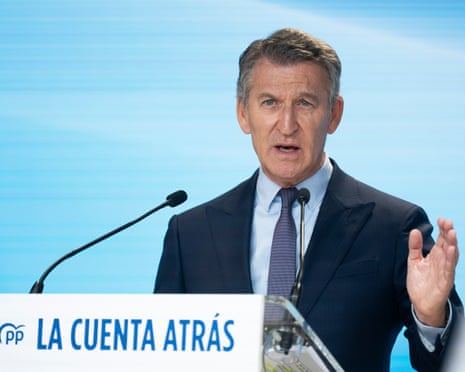
Within Spain, the political opposition is using the crisis to challenge the Sánchez administration’s competence. Alberto Núñez Feijóo, leader of the People’s Party (PP), described Ceuta as an "occupied city" and argued that the government’s response has been dangerously weak. He demanded that the Prime Minister use all available instruments to defend national security and territorial integrity.
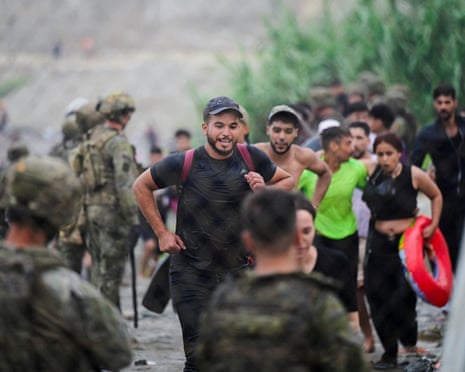
The far-right Vox party has gone further, labeling the influx an "invasion." This rhetoric has resonated with some segments of the public in Ceuta, where residents have reported feeling abandoned by the central government. The deployment of the Spanish military was intended to provide a sense of security, but the sheer numbers have made it difficult for authorities to process arrivals or maintain a visible presence in every neighborhood.
Adding to the tension are reports of "passivity" on the part of Moroccan security forces. Spanish media outlets have suggested that Moroccan police did little to prevent the mass departure from their side of the border. This has led to speculation that Rabat may be using migration as a geopolitical tool, a tactic that was widely alleged during the 2021 crisis when tensions were high over the Western Sahara conflict.

Regional Implications for the European Union
The crisis in Ceuta is being viewed in Brussels as a stress test for the European Union’s collective migration policy. The fact that France has chosen to "step up border controls with Spain as an estimated 49,000 migrants cross into Ceuta" highlights the fragility of the Schengen agreement during periods of acute pressure. If other nations follow France’s lead and reintroduce internal border checks, the principle of free movement—one of the cornerstones of the EU—could be jeopardized.
Humanitarian organizations are also raising alarms about the conditions within Ceuta. The enclave’s processing centers were already near capacity before Thursday’s surge. With tens of thousands of new arrivals, there are concerns about the availability of food, clean water, and medical care. The 18 confirmed deaths are feared to be only the beginning if the situation is not stabilized quickly.

The EU’s executive branch is reportedly in emergency talks with both Madrid and Rabat to seek a resolution. However, the diplomatic rift between Italy and Spain, combined with France’s unilateral border tightening, suggests that a unified European response remains elusive. The crisis has exposed deep-seated disagreements over how to share the burden of migration and how to manage the bloc’s borders in an era of increasing global instability.
Looking Ahead: Security and Sovereignty
As the day progresses, all eyes remain on Ceuta and the Pyrenean border. The arrival of Prime Minister Sánchez in the enclave is expected to bring more clarity to Spain’s immediate tactical response. Whether the military will be authorized to take more aggressive measures to seal the border or if a diplomatic breakthrough with Morocco is imminent remains to be seen.
In France, the "Rapid Intervention Border Force" is expected to remain in place for the foreseeable future. Security experts suggest that these "in-depth checks" will likely cause significant delays for commercial and private travel between the two nations. This move by Paris is not just a security measure but a political statement aimed at both a domestic audience and its European partners.
The events of the last 24 hours have fundamentally altered the conversation around European border security. With 49,000 people crossing a single point of entry in one day, the previous definitions of "manageable" migration have been shattered. The coming days will determine whether the European Union can move past internal bickering to address a humanitarian and security challenge that threatens to redefine the continent’s political landscape for years to come.