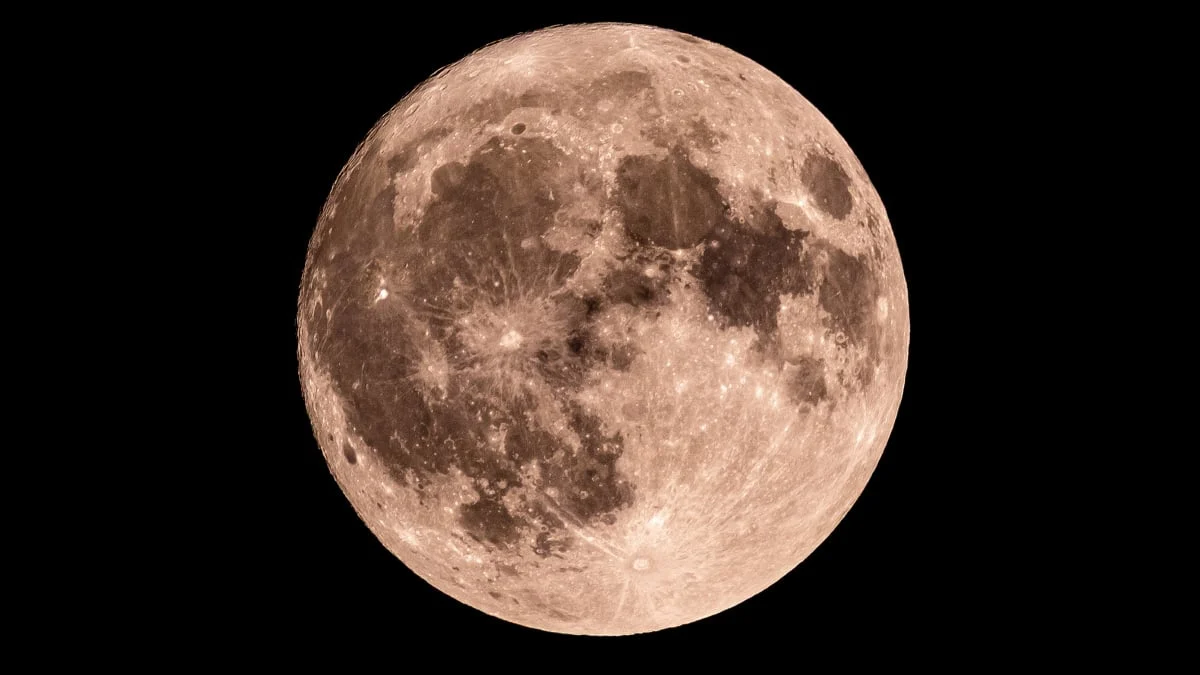
On Saturday, August 1, 2026, the Moon transitions into a waning gibbous phase, providing an expansive view of the lunar surface with approximately 93% of its disk illuminated by the sun. This specific phase occurs as the Moon begins its gradual journey back toward the New Moon, following the peak brightness of the previous full moon cycle. Astronomers and casual observers alike will find the lunar landscape particularly detailed during this period, as the slight angle of sunlight begins to cast longer shadows across craters and mountain ranges, highlighting the rugged topography of Earth’s only natural satellite.
The waning gibbous phase is characterized by a "shrinking" appearance from the perspective of the Northern Hemisphere, where the sliver of darkness begins to creep in from the right-hand side. According to data from NASA’s lunar tracking systems, the high percentage of visibility on August 1 makes it an ideal time for celestial observation, even in areas with moderate light pollution. While the Moon is no longer at its 100% "Full" state, the 93% illumination ensures that it remains the most dominant object in the night sky, reflecting significant solar radiation back to Earth.
Understanding the Waning Gibbous Phase on August 1, 2026
To understand what the Moon will look like on August 1, 2026, one must first grasp the mechanics of the waning gibbous stage. The term "gibbous" refers to the Moon appearing more than half-illuminated but less than fully round. The term "waning" indicates that the illuminated portion is decreasing in size. This phase is a critical bridge in the 29.5-day synodic month, marking the period of time between the Full Moon and the Third Quarter Moon.
During this phase, the Moon rises in the late evening and remains visible well into the following morning. For residents in the United States, the Moon will be positioned high in the sky during the pre-dawn hours of August 1, offering a crisp view for those using basic optical equipment. The high level of illumination means that the Moon’s "maria"—the large, dark basaltic plains formed by ancient volcanic eruptions—are clearly distinguishable against the brighter, cratered highlands.
Visible Surface Features and Lunar Geography
The high visibility of the moon phase today on August 1, 2026, allows for the identification of several major lunar landmarks without the need for sophisticated technology. To the naked eye, the Mare Tranquillitatis, or the Sea of Tranquility, remains one of the most prominent features. This vast lunar plain is historically significant as the site where humans first landed on the Moon during the Apollo 11 mission in 1969. Its dark, relatively smooth surface contrasts sharply with the surrounding rugged terrain.
Two major impact craters are also expected to be visible to the unaided eye under clear atmospheric conditions. The Copernicus Crater, often referred to as the "Monarch of the Moon," is located in the eastern Oceanus Procellarum. It is known for its prominent ray system—bright streaks of ejecta that radiate outward from the impact site. Similarly, the Tycho Crater in the southern highlands will be visible. Tycho is one of the most famous craters on the Moon, easily identifiable by the brilliant white rays that stretch across thousands of kilometers of the lunar surface, formed by a massive impact roughly 108 million years ago.
Enhanced Observation with Binoculars
For observers utilizing standard binoculars, the level of detail on August 1, 2026, increases substantially. The waning gibbous phase provides enough shadow along the "terminator"—the line dividing the light and dark sides of the Moon—to give craters a three-dimensional appearance. Binoculars will reveal the Alphonsus Crater, an ancient impact site featuring a central peak and a floor fractured by small rilles.
Additionally, the Endymion Crater, located near the northeastern limb of the Moon, becomes a point of interest. Its floor is covered in dark lava, making it stand out against the brighter lunar limb. Perhaps the most impressive sight through binoculars during this phase is the Clavius Crater. As one of the largest crater formations on the Moon, Clavius is notable for the chain of smaller craters that curve across its floor, decreasing in size in a mathematical-like progression.
Deep Space Views via Telescope
Those with access to a telescope on August 1, 2026, will be able to pinpoint specific historical and geological sites. The Apollo 14 landing spot, situated in the Fra Mauro highlands, becomes a focal point for space enthusiasts. While the lunar module descent stage is too small to be seen with backyard telescopes, the specific topography of the landing region—characterized by its hilly and furrowed terrain—is clearly visible.
Telescopic observation also brings the Rupes Altai into focus. This is a spectacular mountain range or "escarpment" that forms part of the rim of the Nectaris impact basin. On August 1, the shadows cast by these cliffs will be particularly sharp. Furthermore, the Linne Crater, a small but very bright crater in the Mare Serenitatis, can be seen. Linne is famous in the history of astronomy because 19th-century observers once mistakenly believed it had changed shape, sparking a long-running debate about active volcanic activity on the Moon.
The Science of the 29.5-Day Lunar Cycle
The moon phase today on August 1, 2026, is just one snapshot of a continuous orbital dance. The Moon does not produce its own light; instead, it reflects sunlight. As the Moon orbits the Earth every 27.3 days (the sidereal month), the relative positions of the Earth, Moon, and Sun change. However, because the Earth is also moving around the Sun, it takes approximately 29.5 days for the Moon to return to the same phase as seen from Earth (the synodic month).
The cycle begins with the New Moon, where the Moon is positioned between the Earth and the Sun, leaving the side facing us in total darkness. From there, it progresses through the Waxing Crescent, First Quarter, and Waxing Gibbous phases until it reaches the Full Moon. After the Full Moon, the cycle reverses through the Waning Gibbous, Third Quarter, and Waning Crescent phases. This predictable rhythm has served as the basis for human calendars for millennia, influencing agriculture, religious festivals, and maritime navigation.
Upcoming Lunar Milestones in August 2026
Following the waning gibbous phase on August 1, the lunar calendar for the remainder of the month will see a steady decrease in illumination. The Moon will reach its Third Quarter phase approximately one week later, appearing as a half-moon in the morning sky. This leads into the New Moon phase, which provides the darkest skies of the month—ideal for stargazers looking to observe distant galaxies and nebulae without lunar interference.
The next Full Moon is scheduled to occur on August 28, 2026. This event will see the Moon return to 100% illumination, rising at sunset and setting at sunrise. In many cultures, the full moon in August is known by various names, such as the "Sturgeon Moon" in North American tradition, named after the large fish that were traditionally caught in the Great Lakes during this time of year.
The Broader Impact of Lunar Observation
The study of moon phases like the one on August 1, 2026, remains vital for modern science and industry. For the aerospace sector, understanding the lunar cycle is essential for mission planning. NASA’s Artemis program, which aims to return humans to the lunar surface in the late 2020s, relies on precise lighting conditions for landing and solar power generation. The waning gibbous phase offers specific thermal and lighting data that helps engineers simulate the environment that astronauts will face in the lunar highlands.
Furthermore, the Moon’s phase directly impacts Earth’s tides. While the gravitational pull of the Sun also plays a role, the Moon is the primary driver of tidal movements. During the gibbous phases, the tidal range is moderate—not as extreme as the "spring tides" seen during New and Full Moons, but more pronounced than the "neap tides" of the quarter phases. This has direct implications for global shipping, coastal management, and marine biology.
Cultural and Psychological Connections to the Moon
Beyond the scientific and technical aspects, the appearance of the Moon on August 1, 2026, continues a long tradition of human fascination with the night sky. Psychologically, the lunar cycle has often been linked to human behavior and folklore, although modern scientific studies have largely debunked the "lunar effect" on human health or crime rates. Nevertheless, the Moon remains a powerful cultural symbol of change and renewal.
For many, the act of stepping outside to view a 93% illuminated waning gibbous moon provides a sense of perspective and a connection to the wider universe. In an era dominated by digital screens and artificial light, the predictable movement of the Moon serves as a reminder of the natural rhythms of the solar system.
Preparation for August 1 Skywatching
To get the best view of the moon phase today on August 1, 2026, observers are encouraged to find a location away from direct streetlights. While the Moon is bright enough to be seen from the center of a major city, the subtle details of the craters and maria are much clearer in darker environments. Checking local weather forecasts for cloud cover is also essential, as even thin cirrus clouds can obscure the finer details of the lunar surface.
As the Moon continues to wane throughout the first half of August, each night will offer a slightly different perspective as the "terminator" line moves across the landscape. The August 1 view, with its nearly full illumination, serves as an excellent starting point for anyone interested in beginning a month-long lunar observation project. By tracking the changes from the waning gibbous phase through to the New Moon and back to the Full Moon on August 28, observers can witness the celestial mechanics of our solar system in real-time.