The "Treehouse at the Wall," a ramshackle two-story structure and garden located on a small traffic island in Berlin’s Kreuzberg district, has become the center of a burgeoning preservation battle as city authorities raise concerns over public safety and structural integrity. Built by a Turkish immigrant in the early 1980s on a geopolitical loophole created by the Cold War, the site has survived the fall of the Berlin Wall, the reunification of Germany, and decades of urban development. Now, supporters argue that the structure is more than just a makeshift dwelling; it is a vital monument to the immigrant experience and a unique relic of Berlin’s divided past.
For nearly 40 years, the treehouse has stood at the intersection of Bethaniendamm and Marianneplatz, marking a spot where the currents of history literally converged. In 1983, Osman Kalin, a Turkish "guest worker" who had arrived in West Berlin during the late 1960s, was searching for a plot of land to cultivate a small garden. He found a triangle-shaped scrap of earth that had been abandoned and used as a dumping ground for furniture and debris. While the land sat geographically within the borders of West Berlin, a quirk in the border’s design meant the lot officially belonged to the communist East.
Because the Berlin Wall was built in a straight line to simplify surveillance, it often bypassed small curves in the road, leaving pockets of "no man’s land" on the western side of the concrete barrier. These orphaned lots were effectively inaccessible to East German authorities and technically off-limits to West Berlin police. Seeing an opportunity where others saw a wasteland, Kalin began clearing the site to plant onions, garlic, and cucumbers.

The Geopolitical Anomaly of the Treehouse at the Wall
The audacity of Kalin’s project cannot be overstated, as the plot sat directly adjacent to the concrete barrier patrolled by East German soldiers with shoot-to-kill orders. At first, the East German border guards viewed the activity with suspicion, fearing the garden might be a cover for an escape tunnel. However, after realizing Kalin was simply an immigrant looking to farm a small patch of earth, the authorities in the East granted him a rare, informal permission to stay.
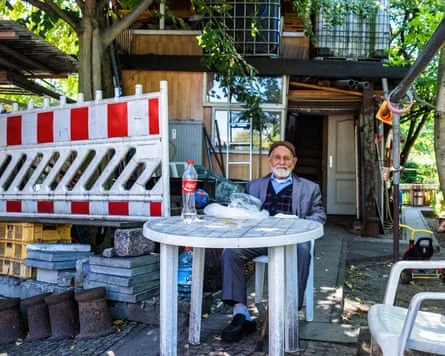
The only condition imposed by the East German government was that the structure Kalin built could not be taller than the wall itself, as that would have provided a vantage point for observers to look into the restricted death strip. Working with scavenged materials, mismatched planks, and discarded windows, Kalin constructed a small shed that eventually evolved into a two-story "treehouse." While the name suggests a structure high in the canopy, it is actually built around the trunk of a mature tree that grows through the center of the house.
Over time, the site became known as a "guerrilla garden," symbolizing a rebel spirit during the city’s darkest years. It represented the ingenuity of a migrant population that was often marginalized in West German society. For Kalin and his family, the garden was a sanctuary, a piece of the Anatolian countryside transplanted into the heart of a fractured metropolis.
A Symbol of Resistance and the Immigrant Legacy
The historical significance of the Treehouse at the Wall is deeply tied to the history of the Gastarbeiter, or guest workers, who were recruited by West Germany between 1955 and 1973 to address labor shortages during the postwar "Economic Miracle." While the program was intended to be temporary, millions of workers, particularly from Turkey, settled permanently in Germany. Today, nearly 3 million people of Turkish origin live in the country, with approximately 200,000 residing in Berlin.
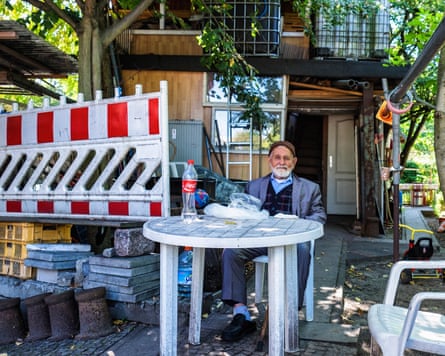
Suat Özkan, general secretary of a Turkish community group in Berlin, describes Kalin as a remarkable figure who created something artistic and unique out of a situation of extreme tension. Özkan argues that the house should serve as a central memorial to the foreign laborers who helped build modern Germany. "It’s a symbol of resistance as well as a symbol against racism, discrimination, and hostility," Özkan stated. He noted that while Germany has many memorials dedicated to the Cold War, there is a lack of central monuments honoring the contributions and the agency of the immigrant population.
Historians also point to the treehouse as a rare tangible legacy of the Turkish community’s impact on the Berlin cityscape. Stefan Zeppenfeld, a historian specializing in the history of Turkish laborers in West Berlin, noted that migrant workers were often relegated to neighborhoods abutting the Wall, such as Kreuzberg and Wedding. These areas, once considered undesirable and dangerous, became prime real estate after the Wall fell in 1989. The survival of the treehouse in such a high-value area is seen by many as a miracle of persistence.
Legal Challenges and the Fight for Preservation
The fall of the Berlin Wall in November 1989 brought immediate challenges to the treehouse’s existence. As the city began the process of reunification, the "no man’s land" status of the lot evaporated. Ownership of the land was disputed, and city authorities initially issued eviction orders to clear the site for road improvements and urban redevelopment.
However, Kalin found an unexpected ally in the neighboring St. Thomas Church. Church officials searched through 18th-century property records and discovered that the land had originally belonged to the parish before being caught up in the Cold War border realignments. The church asserted its ownership and granted Kalin permission to remain on the site, effectively shielding him from the city’s demolition plans.
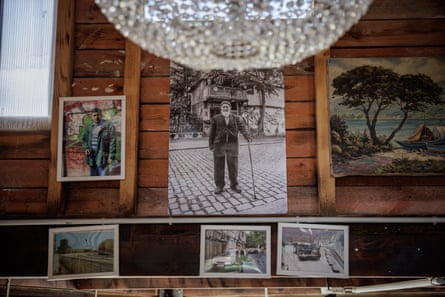
Osman Kalin passed away in 2018 at the age of 93, having become a local folk hero. Since his death, his son Mehmet has taken over the maintenance of the property, performing repairs and greeting the tourists who frequently stop to photograph the unusual structure. Despite these efforts, the treehouse now faces a new threat: the rigorous safety codes of modern Berlin.
District officials in Kreuzberg have expressed concerns that the building, constructed from salvaged materials and without formal blueprints, may be a public safety hazard. The wooden facade consists of listing planks, and the interior is a jumble of photographs, tools, and a donated chandelier. As Berlin approaches upcoming elections, the fate of the Treehouse at the Wall has become a political talking point, with supporters demanding that the city grant the necessary permits to ensure its survival.
Future Prospects: Memorializing the Treehouse at the Wall
Florian Schmidt, a district councillor for Kreuzberg, has indicated that his office is working with the Turkish community and Mehmet Kalin to find a legal path forward. Schmidt noted that because the site was originally a no-man’s land, it lacks standard planning permissions, and ownership rights are still being fully clarified. A temporary exemption has been granted to allow Mehmet to continue repairs, but a long-term solution remains elusive.
Supporters of the site are wary of any "renovation" that might strip the house of its scruffy, authentic character. They argue that the very nature of the Treehouse at the Wall—its improvised, DIY aesthetic—is what makes it a potent symbol of resistance. To bolster the case for preservation, Özkan is planning an open-air exhibition on the fence surrounding the garden, featuring archival photos and the story of Osman Kalin’s life.
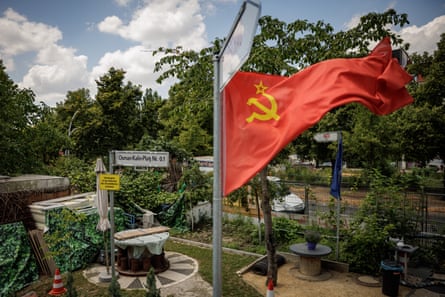
The struggle to save the treehouse reflects a broader debate in Berlin about whose history is preserved and whose is erased. As the city continues to gentrify, many of the makeshift spaces and subcultural landmarks that defined post-Wall Berlin are disappearing. For the residents of Kreuzberg and the wider Turkish-German community, the treehouse is a reminder that even in a city divided by iron and concrete, individuals can carve out a space for beauty and community.
Adrian Sampson, a guide for Alternative Berlin Tours, regularly brings visitors to the site to explain its history. He argues that the loss of the treehouse would be a significant blow to the city’s cultural identity. "His story is about three things: resistance, community spirit, and multiculture all together there," Sampson said. "It just makes a lot of people happy."
As city authorities and community leaders continue their negotiations, the Treehouse at the Wall remains a defiant fixture on its small traffic island. Whether it will be officially recognized as a historical monument or succumb to the pressures of urban bureaucracy remains to be seen. For now, the flags of NATO and the former Soviet Union continue to fly outside the mismatched wooden walls, a tongue-in-cheek tribute to the man who built a garden where the world’s superpowers once stood face to face.