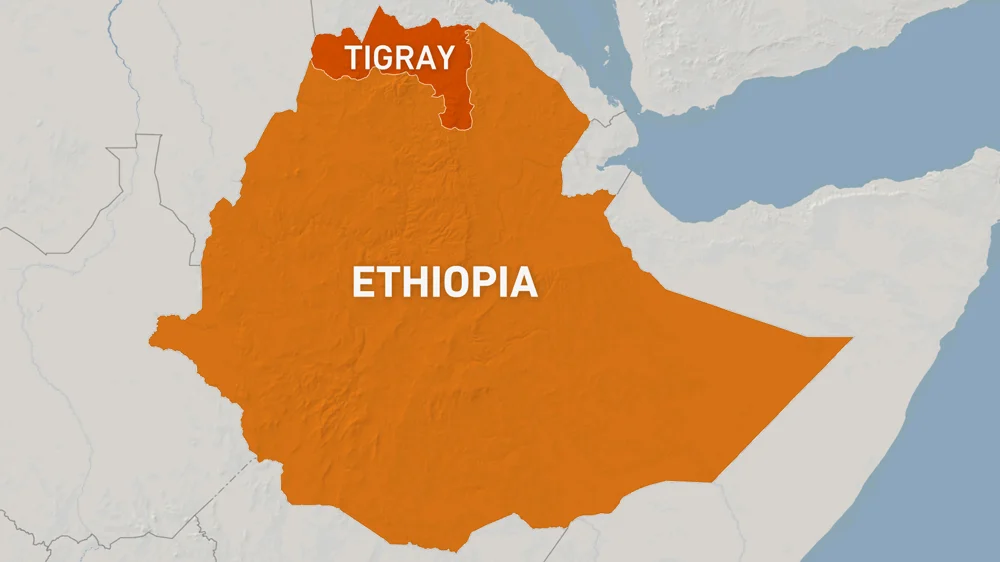
Clashes in western Tigray, near the town of Sheraro, have erupted, marking a significant threat to the fragile peace accord signed in Pretoria in November 2022, raising fears of a renewed large-scale conflict between Ethiopia’s federal government and the Tigray People’s Liberation Front (TPLF). The outbreak of hostilities represents one of the most serious violations of the three-year-old peace deal, which aimed to end a devastating war that claimed hundreds of thousands of lives.
Tigray’s regional government, based in the provincial capital of Mekelle, issued a statement asserting that federal forces launched the offensive at dawn on Saturday. The advance reportedly originated from the direction of Sheraro, a strategic location situated near the border with Sudan. This development has sent shockwaves through a region already weary from years of brutal conflict.
Abraham Belay, a federal minister who previously led Tigray’s transitional administration during the war, confirmed the engagements. However, he placed the blame squarely on the TPLF, specifically accusing its chairman, Debretsion Gebremichael, of initiating the fighting. In a post on social media platform Facebook, Belay stated, "Enough war! Let us resolve our differences through dialogue."
The renewed violence follows months of steadily deteriorating relations between the federal government in Addis Ababa and the TPLF. The TPLF was the dominant political force in Ethiopia for nearly three decades before Prime Minister Abiy Ahmed assumed power in 2018. The current friction underscores the deep-seated mistrust and unresolved grievances that continue to plague the region.
Both the federal government and the TPLF have leveled accusations against each other for failing to fully implement the terms of the 2022 Pretoria peace agreement. Tigrayan authorities contend that Ethiopia’s ruling Prosperity Party has maintained a sustained blockade and engaged in a drone campaign against the region. They argue that these actions have now escalated into a full-blown military confrontation.
In response to the escalating situation, Tigrayan authorities have called upon the region’s forces, civil society organizations, and religious institutions to prepare for what they are describing as a struggle for national survival. A potent slogan, "No to National Destruction," has been adopted to galvanize support and underscore the perceived existential threat.
Adding to the complexity, Getachew Reda, a former TPLF spokesperson who now serves as an advisor to Prime Minister Abiy Ahmed, issued a separate appeal. He urged commanders within the Tigray Defence Forces to disassociate themselves from Debretsion Gebremichael. Reda accused Gebremichael of attempting to regain power by relying on support from Eritrea and the Amhara region’s Fano militia.
Reda and Redwan Hussein, Ethiopia’s intelligence chief, played pivotal roles in the peace process. Hussein, representing the federal government, and Reda, signing for the TPLF, were signatories to the Pretoria deal in 2022. In a joint opinion piece published by Al Jazeera in June, they had warned of the imminent possibility of renewed conflict, foreshadowing the current crisis.
Escalating Tensions and the Fragility of Peace
Kjetil Tronvoll, a prominent Ethiopia specialist at Oslo New University College, characterized the recent fighting as the "most serious incident" since the signing of the 2022 peace deal. Tronvoll further elaborated that while the agreement successfully halted the immediate cessation of hostilities between the two parties, it left "the core reasons of conflict between Mekelle and Addis" unresolved. This suggests that the underlying issues driving the conflict were never fully addressed, creating fertile ground for future instability.
In the days leading up to the armed clashes, Ethiopian state media engaged in a concerted campaign, specifically naming Debretsion Gebremichael and accusing him of inciting Tigrayans toward war. This pre-conflict media blitz appears to have set a narrative that justified or perhaps even precipitated the subsequent military action.
The current outbreak of fighting marks the culmination of months of escalating confrontations since the Pretoria Agreement of November 2022. This agreement officially ended a war that commenced two years prior, a conflict that resulted in the tragic loss of hundreds of thousands of lives. However, the accord left deep-seated disputes over disarmament and the TPLF’s legal status unresolved, creating a persistent undercurrent of tension.
The international community has also expressed concern over the escalating situation. In June, the United States imposed visa restrictions on individuals it identified as TPLF "hardliners," whom it accused of obstructing peace efforts. The TPLF, in turn, described these sanctions as being based on an "incomplete and imbalanced" understanding of the complex standoff.
By mid-July, the TPLF had publicly declared the Pretoria agreement "effectively dead." This declaration came even as U.S. Ambassador Ervin Massinga undertook a diplomatic mission to Mekelle in an attempt to salvage the peace deal. The TPLF’s pronouncement signaled a significant erosion of confidence in the peace process and foreshadowed the current breakdown in relations.
Faisal Roble, a regional analyst, commented that the initiation of the fighting serves as a stark indicator that diplomatic efforts by the United States to resolve the dispute between the parties have not yielded the desired results. His assessment suggests a critical juncture where international intervention may be necessary to prevent further escalation.
"Without a powerful international intervention," Roble warned, "we could be heading to a much larger war." This statement underscores the gravity of the situation and the potential for a wider regional conflagration if the current trajectory is not altered through concerted diplomatic and peacebuilding efforts. The renewed fighting in western Tigray is a deeply concerning development for the stability of Ethiopia and the wider Horn of Africa.
Western Tigray: A Contested and Volatile Frontier
The specific focus on western Tigray is significant, as this region has been a flashpoint throughout the conflict. Its strategic importance, coupled with historical territorial claims and ethnic complexities, makes it a particularly volatile area. The presence of both federal forces and the TPLF, along with associated militias, in this zone heightens the risk of miscalculation and rapid escalation.
The geopolitical implications of renewed fighting in Tigray are far-reaching. Ethiopia is a key player in the Horn of Africa, and its internal stability has direct consequences for regional security, refugee flows, and economic development. A resurgence of large-scale conflict could destabilize neighboring countries and divert attention from other pressing regional challenges.
International actors, including the African Union and the United Nations, have consistently called for adherence to the peace agreement and for de-escalation. However, the effectiveness of these calls is now being tested by the tangible outbreak of hostilities. The ability of these bodies to mediate and enforce the peace accord will be crucial in determining the future course of events.
The humanitarian impact of a renewed conflict would be devastating. The previous war inflicted immense suffering, with widespread displacement, famine, and human rights abuses. A return to widespread fighting would exacerbate these existing humanitarian crises and create new ones, placing an unbearable burden on an already strained population.
The economic ramifications are also significant. Ethiopia’s economy, like many developing nations, is fragile. A prolonged period of conflict would disrupt agricultural production, hinder trade, and deter foreign investment, further pushing the country towards economic hardship. The loss of human capital due to displacement and death would also represent a severe blow to the nation’s long-term development prospects.
Broader Implications and the Path Forward
The breakdown of the peace process in Tigray has broader implications for Ethiopia’s internal political landscape. It raises questions about the commitment of all parties to peaceful resolution and the efficacy of negotiated settlements in deeply entrenched conflicts. The role of regional actors, such as Eritrea and Amhara militias, as mentioned by Getachew Reda, also points to the intricate web of alliances and rivalries that fuel the conflict.
The international community’s response will be critical. Diplomatic pressure, coupled with targeted aid and support for peacebuilding initiatives, may be necessary to de-escalate the situation. The focus needs to be on facilitating dialogue, rebuilding trust, and addressing the root causes of the conflict, rather than simply managing the symptoms.
The involvement of the United States and other international partners in mediating the initial peace deal highlights the global interest in Ethiopia’s stability. The current resurgence of fighting casts doubt on the long-term success of these diplomatic interventions and underscores the need for sustained and nuanced engagement.
Ultimately, the responsibility for lasting peace lies with the Ethiopian people and their leaders. However, the international community has a role to play in supporting these efforts and ensuring that the hard-won gains of the peace process are not lost. The coming days and weeks will be crucial in determining whether the Pretoria agreement can be salvaged or if Ethiopia is indeed heading towards another devastating chapter of war.