Spider-Man: Brand New Day has shattered box office expectations, securing the highest-grossing domestic opening weekend in cinematic history and effectively combating the persistent industry concern of superhero fatigue. The Sony-Marvel collaboration launched with an unprecedented $360 million domestically, contributing to a massive $932 million global debut alongside its $572 million international haul. This extraordinary financial performance establishes a new benchmark for blockbuster releases, demonstrating a formidable resurgence in audience engagement for the superhero genre.
The film’s spectacular opening weekend represents a significant milestone, especially considering that the previous domestic record holder was 2019’s Avengers: Endgame. Endgame had marked a triumphant, albeit conclusive, peak for the Marvel Cinematic Universe’s "golden age." In the years that followed, particularly after the onset of the global pandemic, the landscape for comic book films at the box office shifted dramatically, with many observers pointing to a growing audience disinterest widely termed "superhero fatigue." This ailment, characterized by oversaturation and diminishing returns, seemed to cast a shadow over even the most anticipated releases.
While the post-Endgame era saw various attempts to revitalize the genre, with mixed results, Spider-Man: Brand New Day has defied these trends. DC Comics properties, for instance, experienced successful reboots with 2022’s The Batman and 2025’s Superman, signaling a potential shift in narrative focus. Marvel Studios itself had notable successes like 2022’s Black Panther: Wakanda Forever, 2023’s Guardians of the Galaxy Vol. 3, and 2024’s Deadpool & Wolverine—the latter being the only non-Spider-Man Marvel title to surpass the billion-dollar mark globally since Endgame. However, the pervasive conversation around "superhero fatigue," which has arguably mutated into broader "franchise fatigue" for numerous properties, continued to loom large over Hollywood.
Industry analysts and studio executives had increasingly questioned whether the kind of record-breaking opening weekends once commonplace for superhero epics would ever materialize again. The discourse surrounding the causes of this fatigue has been extensive, ranging from perceived narrative staleness and an over-reliance on interconnected universes to a general burnout from constant spectacle. Yet, Brand New Day has unequivocally broken through these doldrums, delivering a performance that compels a deeper examination of its specific successes. Its unprecedented launch suggests that rather than a universal disinterest in the genre, audiences may be more discerning about the quality and approach of the content being offered.
Deconstructing Brand New Day‘s Triumph Over Superhero Fatigue
The resounding success of Spider-Man: Brand New Day can be attributed to several critical factors that differentiate it from other recent superhero offerings. These elements collectively resonated with both critics and the broader movie-going public, proving that strategic storytelling, consistent character development, and star power remain potent forces in the entertainment industry. The film’s ability to navigate and overcome the prevalent industry skepticism highlights a potential roadmap for future blockbusters seeking to rekindle widespread enthusiasm.
1. Consistent Character Stewardship and Audience Connection
One of the primary drivers behind Brand New Day‘s triumph is the meticulously managed trajectory of Tom Holland’s portrayal of Spider-Man. Every film featuring Holland as the titular web-slinger leading up to this installment has been met with both critical acclaim and widespread audience adoration. From Spider-Man: Homecoming (2017) to Spider-Man: Far From Home (2019) and Spider-Man: No Way Home (2021), the character’s narrative "chain of custody" has been impeccably maintained, fostering a deep and continuous connection with viewers.
Holland’s integral appearances in major MCU crossovers such as Captain America: Civil War (2016), Avengers: Infinity War (2018), and Avengers: Endgame further solidified his interpretation of Peter Parker as a beloved and central figure. While the wider Marvel Cinematic Universe has, at times, faced criticism for an perceived lack of cohesive direction and awkward attempts to introduce or discard characters and storylines post-Endgame, the stewardship of the Spider-Man brand under Sony and Marvel has remained remarkably consistent and focused. This unwavering dedication to character integrity and narrative quality built a foundation of trust and anticipation that directly contributed to Brand New Day‘s overwhelming opening.
2. Embracing a Grounded Narrative and Authentic Drama
In an era often dominated by cosmic threats and multiversal stakes, Brand New Day distinguished itself through a more grounded, street-level narrative. This approach appears to have struck a chord with contemporary audiences, who are increasingly drawn to storytelling that emphasizes realism and character-driven conflict, even within fantastical genres. The shift is reflective of a broader cultural appetite for more tangible and relatable experiences, as evidenced by the success of diverse properties ranging from intimate, low-fidelity hits like Obsession and Backrooms to grander epics like Project Hail Mary and The Odyssey, which heavily lean on practical storytelling and authentic character arcs.
While describing a superhero film as "grounded" or "realistic" might seem an exaggeration—Brand New Day is not, for instance, a gritty independent drama—its distinction within the Marvel cinematic framework is notable. Directed by Destin Daniel Cretton, the film offers a refreshingly non-manic pace, allowing for moments of "Actual Drama" that resonate deeply. Unlike some recent superhero films, such as the space-centric Supergirl or the largely CG-reliant Fantastic Four, Brand New Day minimizes its dependence on otherworldly visual effects, instead prioritizing emotional stakes and character interactions. The film’s weakest narrative point, a lengthy and somewhat superfluous boss fight between Spider-Man and the Hulk, ironically highlights this strength by being the most "Marvel-y" and least essential sequence.
3. The Absence of the MacGuffin Trope
A compelling argument for Brand New Day‘s success comes from veteran Spider-Man comic book writer J. Michael Straczynski, who posited on Substack that the film’s strength lies in its character-driven narrative rather than reliance on a "MacGuffin." A MacGuffin, a plot device that drives the story by being something the characters are seeking, has become a pervasive element in many modern blockbusters, particularly within the superhero genre. Straczynski suggested that this overuse has led to "MacGuffin fatigue," where audiences grow weary of predictable plot structures centered around the acquisition of a magical artifact or powerful object.
"The worst thing any film, in any genre, can do is to fail to surprise the audience, by virtue of showing them something they’ve already seen many times in various forms," Straczynski wrote. He argued that MacGuffin-centric stories often reduce characters to mere subsets of a quest for an external object—be it a stone, an orb, a tesseract, or a godkiller sword. In contrast, a character-driven narrative, like that of Brand New Day, can initiate and resolve itself in myriad ways, with solutions stemming intrinsically from the protagonists’ internal struggles, decisions, and relationships rather than the fate of an inanimate object. Straczynski further noted that many of the most acclaimed superhero films, including 1978’s Superman, Iron Man, Logan, and The Dark Knight, are notably free from this specific narrative device, underscoring its potential limitation on creative storytelling.
4. The Enduring Star Power of Tom Holland and Zendaya
In an industry increasingly driven by intellectual property, the undeniable star power of Tom Holland and Zendaya played a pivotal role in Brand New Day‘s box office triumph. Both actors are at the zenith of their careers, commanding significant audience appeal and critical recognition. Their real-life relationship, which has captured public imagination and garnered widespread fan affection, subtly enhances their on-screen chemistry and the emotional investment audiences have in their characters, Peter Parker and MJ.
The central narrative of Brand New Day revolves around the complex and aching void left by Doctor Strange’s spell, which erased the world’s memory of Peter Parker. This directly impacts his relationship—or lack thereof—with MJ. Holland and Zendaya deliver several potent and emotionally resonant moments throughout the film, leveraging their established dynamic and the audience’s awareness of their real-world connection. This confluence of exceptional acting, genuine chemistry, and a highly publicized off-screen romance translates into a compelling on-screen draw, proving that charismatic lead actors remain a crucial component of blockbuster success.
5. Unquestionable Critical and Audience Acclaim
Fundamentally, Brand New Day‘s record-breaking performance is rooted in its exceptional quality as a film. Many critics have hailed it as arguably the strongest Spider-Man film of the Tom Holland era, with some even declaring it the best live-action Spider-Man movie to date. This sentiment is powerfully echoed by audiences, who awarded the film an astounding 98 percent Rotten Tomatoes audience score—the highest for any live-action Spider-Man installment.
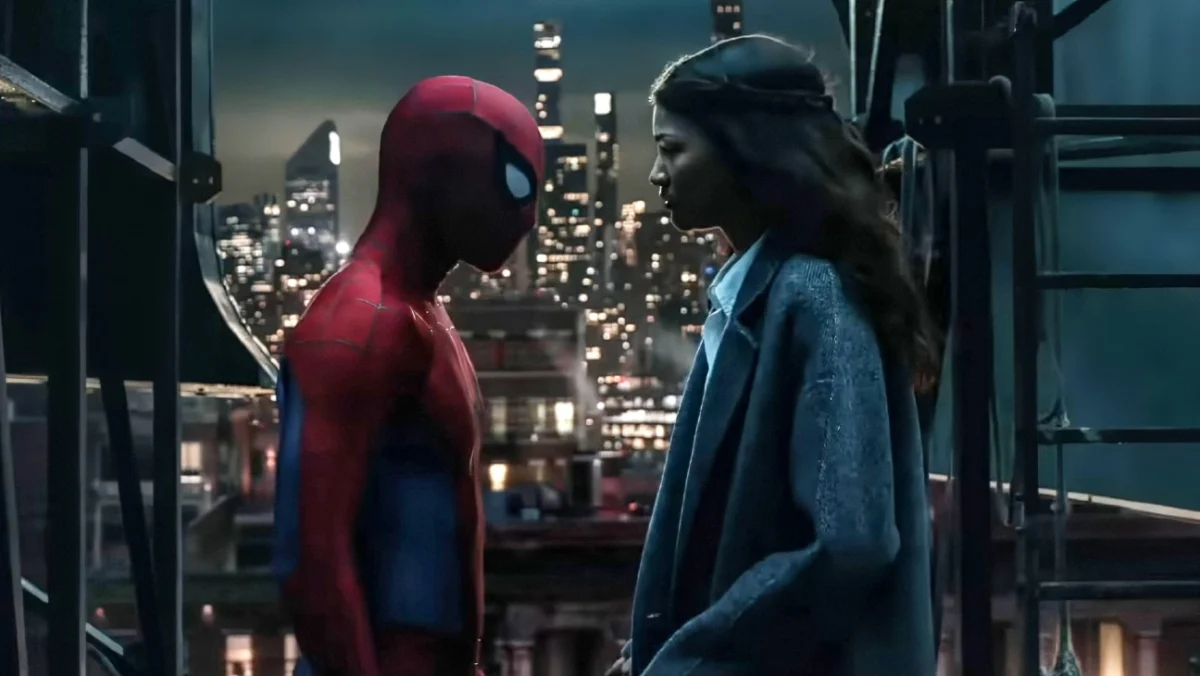
Holland’s performance in Brand New Day has been widely praised as his most nuanced and powerful yet, showcasing significant growth in his portrayal of the character. Despite the inclusion of cameos, unexpected twists, and necessary setup for future installments, the film maintains a laser-like focus on Holland’s dual mission: confronting a mysterious new adversary and grappling with the profound, aching loss of his relationship with MJ. The narrative skillfully crafts moments of deep emotional impact, particularly a devastating rooftop scene between Peter and MJ that elicits a genuine sense of emotional surrender from both the hero and the audience. This potent blend of compelling storytelling, strong performances, and emotional resonance cemented Brand New Day as not just a commercial success, but a definitive cinematic achievement.
Broader Implications: Reshaping the Superhero Genre
The monumental success of Spider-Man: Brand New Day carries significant implications for the future trajectory of the superhero genre. It challenges the prevailing notion that audiences are inherently tired of caped crusaders, suggesting instead that they are simply weary of formulaic or uninspired storytelling. The film’s emphasis on grounded narratives, character-driven plots, and authentic emotional stakes could catalyze a shift in creative direction for Marvel Studios, Sony, and rival studios like DC. This paradigm shift might encourage a move away from overly complex, continuity-heavy sagas in favor of more self-contained, emotionally resonant stories that prioritize individual character arcs over sprawling multiversal conflicts.
The film’s performance also underscores the enduring value of consistent brand management and the cultivation of a loyal fan base through quality releases. Studios may now be more inclined to invest in meticulous character stewardship and thoughtful narrative progression, rather than relying solely on the power of an established intellectual property. This success story offers a blueprint for how to reinvigorate audience interest, demonstrating that innovation in storytelling and a commitment to emotional depth can overcome even widespread industry fatigue.
Reactions and Future Trajectories
The entertainment industry has reacted with a mix of surprise and renewed optimism to Brand New Day‘s record-shattering opening. The film has not only set a new financial benchmark but has also reignited discussions about the creative potential and commercial viability of superhero cinema. For the Spider-Man franchise specifically, the path forward presents both immense opportunity and a significant challenge. Brand New Day has set an exceptionally high bar, both in terms of box office performance and critical reception.
The question of "where the franchise goes from here" is now paramount. Future installments will face the formidable task of maintaining the intricate balance of character depth, grounded storytelling, and emotional resonance that made Brand New Day such a resounding success. This achievement forces creators to consider how to innovate and elevate the narrative without resorting to the very tropes that have contributed to superhero fatigue. Spider-Man: Brand New Day has definitively proven that the appetite for compelling superhero stories remains robust, provided they are told with creativity, emotional intelligence, and an unwavering focus on the characters at their core.