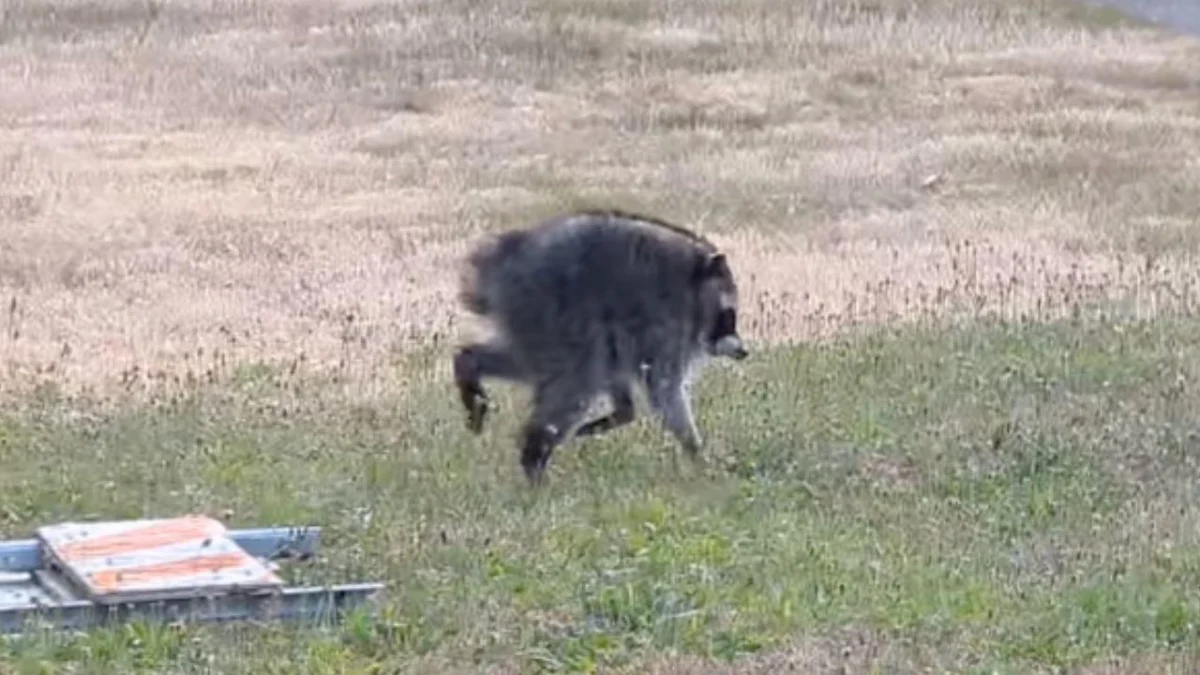
Jimothy the Raccoon, a distinctively compact creature whose unique gait first captured global attention through a viral video, has become the unwitting protagonist in a rapidly unfolding saga illustrating the internet’s complex relationship with authenticity and artificial intelligence. While the real Jimothy the Raccoon is a bona fide resident of Seattle, his online persona has transcended reality, with countless AI-generated videos placing him in fantastical scenarios, blurring the lines between genuine digital content and sophisticated fabrication for millions of unwitting viewers. This phenomenon highlights a growing challenge in the digital age: distinguishing factual events from algorithmically created narratives.
The journey of Jimothy the Raccoon from an ordinary urban animal to an international internet sensation began subtly. On July 13, Kiana Hall, a 33-year-old marketing specialist, spotted the unusually proportioned raccoon near a Goodwill store in Seattle’s Ballard neighborhood. Intrigued by his distinctive appearance and locomotion, Hall filmed the animal, uploading the clip to Instagram the following day and affectionately christening him "Jimothy." The video quickly resonated with online audiences, initiating a cascade of shares and comments that catapulted the raccoon into an unexpected spotlight.
The Genesis of a Viral Sensation
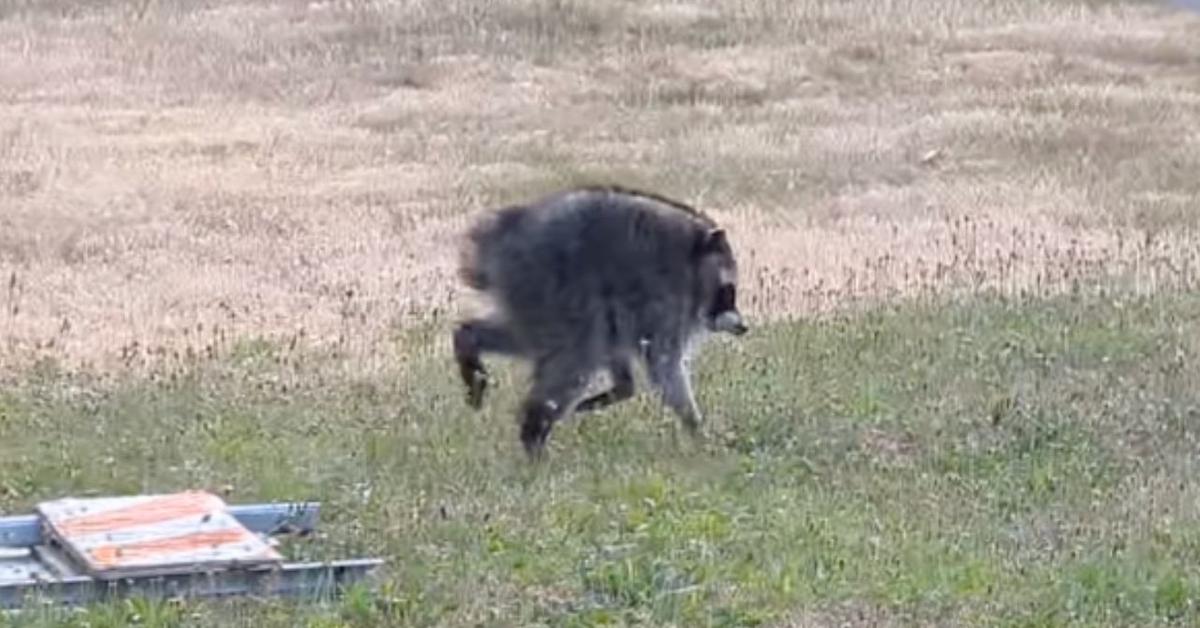
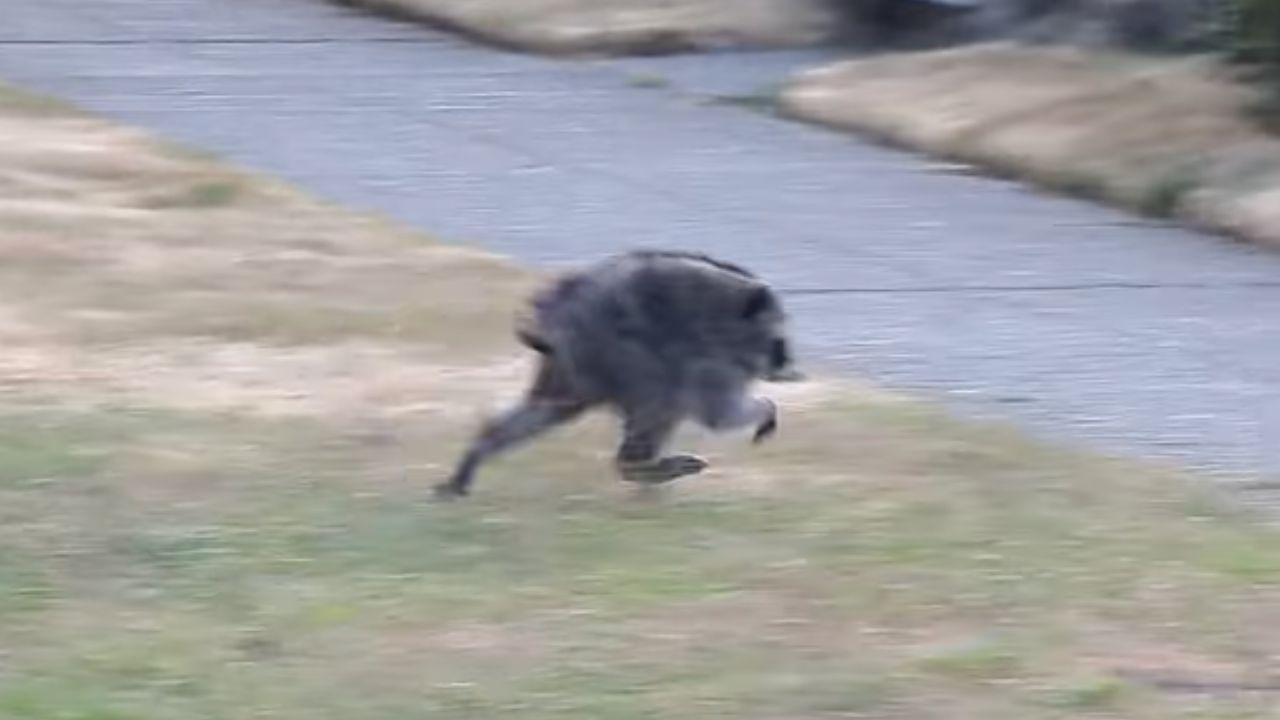
Within days of its initial posting, the original video showcasing Jimothy’s peculiar amble had amassed more than seven million views by July 18. The immediate fascination stemmed from the raccoon’s unusual physical characteristics. Wildlife experts soon weighed in, theorizing that Jimothy likely suffers from short spine syndrome, a rare congenital condition affecting the vertebrae, causing a compressed torso and an altered gait. This medical explanation only added to the public’s intrigue and empathy, solidifying Jimothy’s status as a creature of unique charm rather than merely an oddity.
Short spine syndrome is a genetic anomaly that results in a shortening and fusion of the vertebrae in the spinal column. This condition, while rare, can affect various animal species, including domestic pets and wild animals like raccoons. For Jimothy, it manifests as a noticeably compact body and a distinctive, almost waddling walk that contributed significantly to his meme-worthiness. Despite the physical challenges implied by his condition, Jimothy appeared to navigate his urban environment with resilience, further endearing him to a global audience.
From Reality to Digital Canvas
The internet’s remix culture swiftly embraced Jimothy. His unusual shape and gait made him an ideal subject for creative interpretation, initially spawning a wave of human-generated fan content. Murals depicting Jimothy appeared in Seattle, individuals got tattoos inspired by his image, and a dedicated following emerged on Reddit’s r/Seattle, where discussions and new content related to the raccoon flourished. This early phase of his virality showcased the internet’s capacity for collective creativity and community building around an endearing figure.
Mainstream institutions and brands quickly capitalized on Jimothy’s burgeoning popularity. The Seattle Mariners baseball team introduced a Jimothy mascot to their popular Salmon Run race at T-Mobile Park. Tech giant Google incorporated an interactive Easter egg into its search engine, allowing an animated Jimothy to scurry across users’ screens when his name was searched. Even academic and governmental bodies acknowledged his fame, with the University of Washington granting him an honorary degree, the Seattle City Council recognizing his cultural impact, and the White House issuing a playful shout-out.
The Rise of AI-Generated Adventures
However, the trajectory of Jimothy’s digital life soon took a significant turn. As his image permeated online spaces, sophisticated artificial intelligence tools began to generate new content featuring the raccoon. These AI-generated videos placed Jimothy in increasingly elaborate and fictionalized adventures, far removed from his real-world scavenging near the Ballard Goodwill. Users encountered clips of Jimothy piloting spaceships, battling mythical creatures in fantasy realms, or navigating complex video game landscapes, all rendered with surprising realism.
These AI-generated narratives swiftly multiplied, blending seamlessly with genuine footage and human-made fan art. The proliferation of such content introduced a new layer of complexity to Jimothy’s fame: the challenge of discerning authentic imagery from algorithmic creations. This trend exemplifies a broader societal issue concerning the rapid advancements in AI and its capacity to create compelling, yet entirely fabricated, visual media.

Erosion of Digital Trust
The phenomenon of Jimothy the Raccoon serves as a stark case study in the "trust problem" currently confronting the digital sphere. Amore Philip, founder of Apples and Oranges Public Relations, articulated this concern, stating, "A cute raccoon clip spiraling into a wave of AI remixes is a perfect small-scale case study for the trust problem coming for all of us." Philip elaborated on the implications, noting that "when a single real moment can be infinitely reskinned by AI, audiences stop asking ‘is this funny’ and start asking ‘is this even real,’ and that erosion of default trust is the real story."
This sentiment underscores a critical shift in how individuals consume and interpret online content. The ease with which AI can manipulate or invent scenarios means that visual evidence, once considered a reliable source of truth, is now subject to intense scrutiny. The Jimothy narrative, while seemingly innocuous, highlights the broader implications for news, public discourse, and individual perception in an increasingly synthetic media environment.
Industry’s Embrace and Ethical Considerations
The entertainment industry, particularly gaming companies, quickly integrated AI-generated Jimothy content into their marketing and fan engagement strategies. Blizzard Entertainment rendered Jimothy in the distinctive art style of World of Warcraft, reimagining him as a character within their fantasy universe. Jagex, creators of Old School RuneScape, followed suit with their own stylized version. D&D Beyond, a digital toolset for Dungeons & Dragons, even released a detailed stat block for a tabletop version of Jimothy, allowing players to incorporate him into their campaigns. Beyond gaming, a digital Jimothy made an appearance in Roku City, the popular screensaver for Roku devices.
While these instances were often presented with a playful nod to their fabricated nature, they contribute to the normalization of AI-generated content. Experts caution that brands and creators engaging with viral trends through AI must uphold transparency. Philip advised that "the trick is participating with a wink and clear labeling, so you ride the trend without becoming the cautionary tale about what viewers can no longer trust." Without explicit disclaimers, such content can inadvertently contribute to the broader problem of digital misinformation, even if the initial intent is purely for entertainment.
Cultivating Digital Literacy
Navigating this evolving digital landscape requires a heightened sense of media literacy. Marva Bailer, founder and CEO of AI-first leadership community Qualaix and author of Be Unexpected, emphasized the shift in essential skills. "AI makes it easier than ever to create. It makes critical thinking more valuable than ever," Bailer stated. She highlighted that "the skill has shifted from how to create to how to evaluate. Taking a few seconds to ask where a video came from, whether it has been edited, and why it was created is becoming part of digital literacy."
For the average internet user, this means developing habits of skepticism and verification. Before accepting content at face value, especially that which seems extraordinary or too perfectly aligned with a current trend, individuals are encouraged to seek original sources, check for disclaimers, and be aware of common tells for AI-generated visuals, such as unusual lighting, distorted backgrounds, or inconsistent details. The Jimothy the Raccoon phenomenon underscores that even seemingly innocent viral trends can serve as a training ground for the more insidious forms of digital deception.
The Enduring Legacy of Jimothy
As Jimothy the Raccoon continues his genuine existence in Seattle, his digital doppelgängers multiply across the internet, serving as both a source of amusement and a poignant symbol of the challenges posed by advanced AI. His story encapsulates the dual nature of our interconnected world: a place where an endearing creature can spontaneously unite millions, and simultaneously, where the very fabric of visual reality can be effortlessly rewoven by algorithms. The ongoing narrative of Jimothy will likely continue to evolve, reflecting our collective struggle to reconcile the authentic with the artificial in an increasingly digital future. The tale of Jimothy is not just about a raccoon; it’s a mirror reflecting the evolving landscape of digital media and the critical need for an informed, discerning audience.