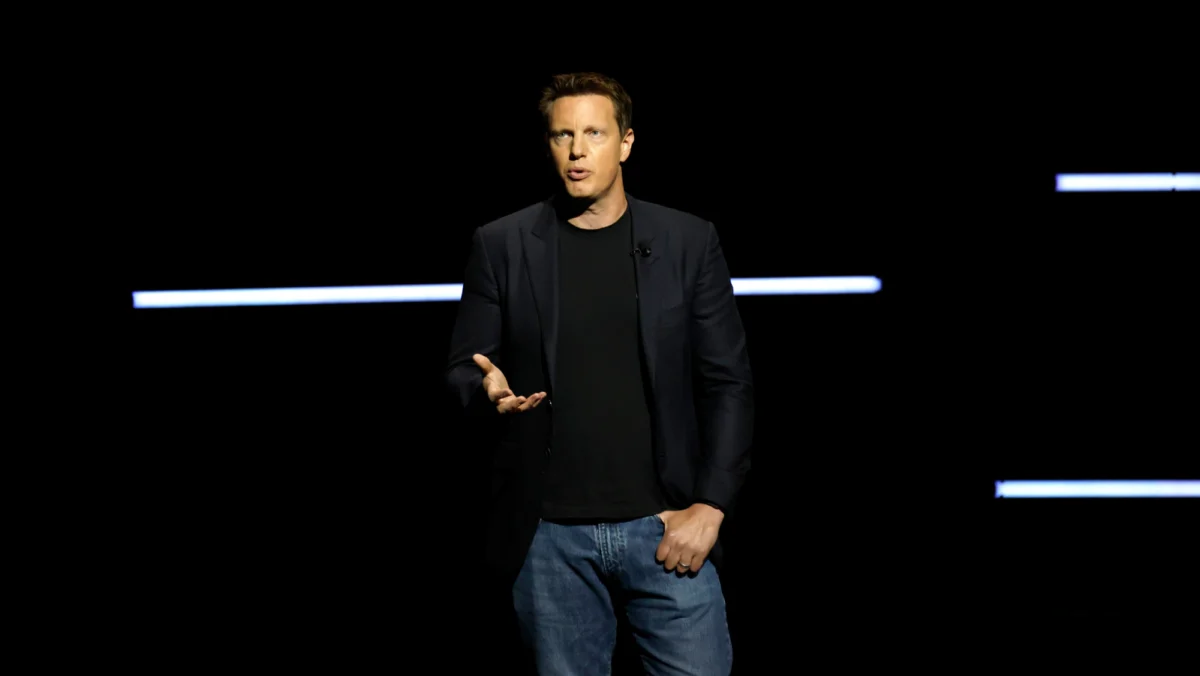
David Ellison, CEO of Skydance Media, has publicly addressed the sweeping antitrust lawsuit seeking to block his company’s proposed acquisition of Warner Bros. Discovery, asserting in a recent New York Times op-ed that the fundamental challenge to the deal is not about market share, but rather concerns over his impending stewardship of CNN. Ellison, whose Skydance Media is currently pursuing a complex transaction to merge with and gain control of the media giant, stated that the intense scrutiny and legal challenges are rooted in political apprehensions about the future of the influential news network under his ownership.
Ellison’s public commentary marks a significant shift from his previous silence, which he described as a costly restraint. He elaborated that he initially withheld comment when California’s Attorney General, joined by 11 other state attorneys general and subsequently the Writers Guild of America, filed suit to halt the deal. This period of quiet, he explained, allowed others to define the narrative around the acquisition, prompting him to finally articulate his perspective. The high-stakes legal battle could reshape a significant portion of the global entertainment and news landscape, determining the fate of assets ranging from Hollywood studios to major cable news outlets.
Ellison’s Defense: A Battle Over CNN
In his op-ed, Ellison explicitly stated his conviction that the core of the legal opposition centers on his potential ownership of CNN. He highlighted that speculation about his political leanings, loyalties, and intentions as a media proprietor has fueled the controversy. While acknowledging that he cannot offer a direct window into his personal beliefs, Ellison sought to reassure critics by emphasizing his history of voting for candidates across both major political parties. He described his own political views as a blend of conservative and liberal positions, mirroring the diverse perspectives found among many Americans.
Ellison adamantly pledged that his objective is not to steer the newsrooms of his companies, including CNN, toward his personal viewpoints. He stressed a commitment to factual reporting and truth, principles he has also championed in his current capacity as chief executive of Paramount, which owns the CBS news division. He reiterated his long-held belief that news divisions must maintain fairness, present a balanced spectrum of viewpoints, and operate with complete independence. Journalists, he insisted, should answer solely to facts and the public they serve, rather than to any specific party or cause.
The Anatomy of the Antitrust Lawsuit
The antitrust lawsuit filed by a coalition of state attorneys general and the Writers Guild of America aims to prevent Skydance Media from acquiring Warner Bros. Discovery. Such lawsuits typically scrutinize mergers and acquisitions for potential violations of antitrust laws, which are designed to promote competition and prevent monopolies or undue market concentration that could harm consumers. In this instance, the legal challenge suggests that the proposed deal could lead to reduced competition in various sectors of the media industry, potentially affecting content creation, distribution, and pricing.
The involvement of California’s Attorney General, a prominent figure in consumer protection and competition enforcement, alongside 11 other state attorneys general, signals a broad-based concern among state regulators. Their collective action underscores a belief that the Skydance-WBD merger could have significant negative impacts across multiple states. Separately, the Writers Guild of America’s decision to join the lawsuit introduces a crucial labor dimension, reflecting concerns among creative professionals about how such consolidation might affect their employment terms, compensation, and overall bargaining power within a shrinking pool of major employers.
Stakeholders and Their Concerns
The state attorneys general are primarily focused on the potential for market concentration. A combined Skydance-WBD entity would control a vast array of film and television studios, streaming services, and broadcast networks. Regulators often worry that such large mergers could lead to less choice for consumers, higher prices for content, or a reduction in innovative programming. They may also consider the impact on advertisers and other industry players who rely on a competitive media landscape.
The Writers Guild of America, representing thousands of screenwriters, television writers, and new media writers, views media consolidation through the lens of labor rights and economic equity. The WGA has historically been vigilant about mergers that concentrate power in the hands of fewer companies, fearing that such moves can diminish writers’ leverage in negotiations over contracts, residuals, and working conditions. Their participation in the antitrust lawsuit highlights a broader concern within the creative community about the long-term health and fairness of the entertainment industry.
The Broader Media Landscape and Consolidation
The proposed Skydance-Warner Bros. Discovery deal unfolds against a backdrop of unprecedented change and financial pressure within the global media industry. Legacy Hollywood studios and traditional media conglomerates face intense competition from tech giants like Apple, Amazon, and Netflix, which have invested heavily in original content and direct-to-consumer streaming services. This shift has fundamentally altered business models, driven up content costs, and fragmented audiences, leading many traditional players to pursue consolidation as a strategy for survival and scale.
Ellison himself alluded to these industry dynamics in his op-ed, referencing the fierce competition from tech giants that has significantly battered established Hollywood studios. He emphasized that the proposed acquisition, beyond its financial and operational merits, is also a response to these market realities. The argument often made for such mergers is that they create stronger, more diversified companies better equipped to compete in a rapidly evolving and capital-intensive environment. However, this push for scale frequently collides with regulatory concerns about antitrust implications and market concentration.
Navigating Political Scrutiny and Media Independence
The unique aspect of this particular antitrust lawsuit, as framed by Ellison, is the explicit link to CNN. As one of the most recognized and influential news brands globally, CNN’s ownership is inherently sensitive, particularly in a politically polarized United States. The network has frequently been a target of criticism from various political factions, including repeated mentions by former President Donald Trump when discussing media deals, although Ellison notably refrained from naming Trump in his column. This context elevates the merger beyond a typical business transaction, embedding it deeply within the ongoing national debate about media bias, journalistic integrity, and political influence.
Ellison’s pledges of journalistic independence and commitment to factual reporting are direct responses to these political undercurrents. The historical precedent of media owners attempting to influence news coverage, or being perceived as doing so, makes any acquisition involving a major news outlet subject to intense public and political scrutiny. His statements about balancing diverse viewpoints and ensuring journalists answer to facts, not causes, are designed to counter fears that CNN could become a partisan instrument under his control. This aspect of the debate underscores the critical role that media outlets play in shaping public discourse and the democratic process.
Industry Implications and the Road Ahead
The outcome of the antitrust lawsuit against the Skydance-Warner Bros. Discovery deal carries significant implications not just for the parties directly involved but for the entire media and entertainment industry. If the merger is blocked, it could signal a more aggressive stance by state and potentially federal regulators against large-scale media consolidation, potentially chilling future acquisition attempts. Conversely, if the deal proceeds, it could embolden other companies to pursue similar strategies for growth and market dominance, albeit under the shadow of heightened regulatory scrutiny.
For Warner Bros. Discovery, a company formed from a previous mega-merger, the lawsuit creates further uncertainty regarding its future trajectory. The company has been navigating substantial debt and strategic shifts in a challenging market. For Skydance and David Ellison, the legal battle represents a critical juncture in their ambition to become a more powerful force in Hollywood. Ellison’s written commitments, which he noted are "in writing" and will be evident in the "work on screens," are an attempt to stake his reputation on the integrity of the deal and his future stewardship. The legal proceedings will now move forward, likely involving extensive discovery and potentially a trial, with the fate of a media empire hanging in the balance, entangled in a complex web of business, regulatory, and political considerations.