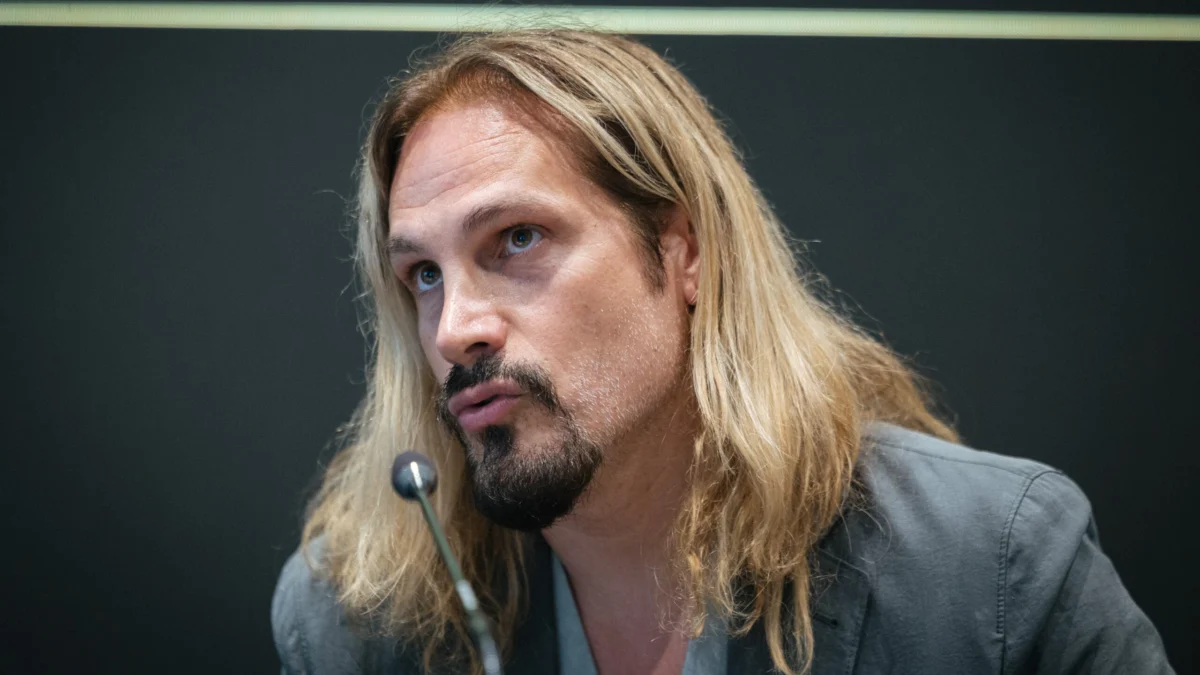
Producer Marco Perego delivered a provocative keynote at Locarno Pro, the industry arm of the prestigious Locarno Film Festival, asserting that the independent film sector is no place for those solely driven by financial gain. His stark message, delivered with his wife, Oscar-winning actress Zoe Saldaña, in attendance, underscored a philosophy prioritizing artistic vision and risk-taking over commercial returns, challenging conventional wisdom within a notoriously challenging industry. Perego, an Italian conceptual artist turned filmmaker, minced no words, suggesting that if profit is the primary motivator, individuals should "go [work for] a bank" rather than venture into independent film production.
The Philosophy Behind Independent Cinema
Perego’s journey into the cinematic world is as unconventional as his outspoken views on its economics. Known initially for his work as a conceptual artist, he transitioned to filmmaking, making his feature directorial debut in 2023 with The Absence of Eden. The film, a poignant drama exploring themes of survival and sacrifice, notably starred his wife, Zoe Saldaña, bringing a significant artistic and personal dimension to his inaugural project. This debut signaled Perego’s deep commitment to storytelling that often lies outside mainstream commercial interests, setting the stage for his current endeavors.
Following his directorial debut, Perego co-founded Leaf Entertainment with Michael Cerenzie, a production company established with a clear mission: to champion and support global auteurs, facilitating the realization of their cinematic projects. This venture reflects a deliberate move to foster environments where creative freedom is paramount, aiming to provide a vital lifeline to filmmakers whose visions might otherwise struggle to find backing within more commercially-driven production models. The company’s ethos is firmly rooted in the belief that compelling narratives and unique artistic perspectives should not be compromised by the pressures of immediate financial success.
The Locarno Film Festival, now in its 79th edition, serves as an ideal platform for such discussions. Nestled in the picturesque Swiss town of Locarno, the festival has long been celebrated for its commitment to independent and art-house cinema, often highlighting daring and innovative works that push the boundaries of storytelling. Locarno Pro, its dedicated industry section, annually gathers producers, distributors, sales agents, and filmmakers from across the globe, offering a crucial forum for networking, project development, and critical dialogue on the future of independent film. Perego’s address resonated deeply within this community, which often grapples with the delicate balance between artistic ambition and economic sustainability.
Perego’s Prolific Year and Cannes Success
Perego’s outspoken stance at Locarno Pro followed a remarkably prolific year, marked by significant recognition at the Cannes Film Festival. Earlier this year, three films produced or co-produced by Perego were featured in competition at Cannes, an extraordinary achievement that cemented his reputation as a formidable presence in international independent cinema. These included Cristian Mungiu’s Palme d’Or winner Fjord, a powerful exploration of contemporary societal issues; Andrey Zvyagintsev’s highly anticipated Minotaur, known for its intricate narrative and profound social commentary; and James Gray’s Paper Tiger, a film that further showcased Gray’s distinctive authorial voice and intricate character studies.
These selections at Cannes underline Perego’s discerning eye for compelling narratives and his commitment to backing directors with distinct artistic visions. Mungiu, a Romanian New Wave luminary, and Zvyagintsev, a Russian director known for his stark realism, represent the pinnacle of contemporary auteur cinema. James Gray, an American filmmaker celebrated for his deeply personal and often melancholic dramas, further exemplifies the kind of visionary talent Perego seeks to support. Their presence in the Cannes competition not only brought critical acclaim but also amplified the conversation around the viability and importance of artistically driven filmmaking.
Just prior to his Locarno Pro keynote, Perego had also appeared on stage at the Locarno Film Festival alongside James Gray. Gray was honored with the prestigious Career Leopard award, a testament to his enduring impact on cinema, ahead of a major outdoor screening of Paper Tiger. This public appearance, celebrating a director Perego had championed, provided a symbolic backdrop to his subsequent industry address. The keynote itself, held at Locarno Pro, drew a substantial audience despite the busy festival schedule, signaling widespread interest in his unconventional perspective. Among those present, offering visible support, was Zoe Saldaña, underscoring the personal conviction behind Perego’s professional message.
Artistic Vision Versus Financial Returns
The core of Perego’s address revolved around a fundamental principle: "Independent film is for people who take risk." This statement encapsulates the inherent challenges and unique rewards of operating outside the traditional studio system. Unlike major productions, which often prioritize marketability, star power, and predictable box office returns, independent films frequently venture into uncharted thematic territory, employ experimental narrative structures, and feature lesser-known talents. Such projects carry a higher degree of financial uncertainty, yet they are often the birthplace of groundbreaking cinematic art.
Perego emphasized the critical importance of "respecting the vision" of the filmmaker, asserting that the producer’s role is not to impose their will but to facilitate the director’s creative process. "The vision is not yours," he declared, urging producers to "just let [directors] do what they want." This hands-off approach, he explained, allows creatives the freedom to explore their ideas authentically, fostering an environment where artistic integrity can truly flourish. While offering occasional suggestions may be helpful, the overarching directive is to "step back and let the creatives do the magic," ensuring that the filmmaker’s unique voice remains unadulterated.
This philosophy stands in stark contrast to the often interventionist models prevalent in larger studio productions, where producers might exert significant influence over script changes, casting, and even editing, often driven by commercial considerations. Perego’s stance champions a more symbiotic relationship, where the producer acts as a guardian of the artistic process. He highlighted the "significance and importance of ensuring and maintaining artistic integrity," stressing, "We need to be sure that we really protect the filmmaker." This protection extends beyond financial backing to safeguarding creative autonomy, a scarce commodity in a highly commercialized industry. For Perego, the investment is not just monetary but an investment in the purity of artistic expression.
Disrupting Traditional Investment Models
In a candid moment, Perego acknowledged the financial commitment his philosophy entails, stating, "I invest quite a lot." However, he quickly clarified that these investments are not bound by rigid financial metrics or strict rules regarding size. This flexible approach to funding underscores his belief that the artistic merit of a project, rather than its projected return on investment, should be the primary determinant for backing. It challenges the conventional wisdom of film financing, which typically relies on detailed financial projections, market analyses, and collateral. Perego’s model appears to be more akin to patronage, where the value is derived from the creation of art itself.
Identifying himself as a "disruptor" and a "radical," Perego articulated a willingness to embrace failure as an intrinsic part of the creative and entrepreneurial process. "I’m going to fail. I’m going to fail so many times," he openly admitted to the Locarno crowd, "but I promise, I will stand up." This audacious outlook is a hallmark of true independent spirit, recognizing that innovation often comes at the cost of missteps and setbacks. It’s a powerful message for aspiring filmmakers and producers alike, suggesting that resilience and an unwavering commitment to one’s vision are more valuable than a guaranteed path to success.
His approach directly confronts the prevailing anxieties within the independent film sector regarding sustainability. Many independent producers struggle to secure funding, navigate complex distribution landscapes, and achieve profitability. By openly embracing risk and prioritizing artistic freedom, Perego offers an alternative paradigm—one where the passion for cinema is the driving force, and financial success, if it comes, is a welcome byproduct rather than the sole objective. This model, while potentially riskier in traditional financial terms, aims to foster a more vibrant and creatively uninhibited cinematic landscape.
The Enduring Appeal of Independent Voices
Perego’s impassioned plea resonates deeply within the independent film community, a sector that often feels marginalized by the blockbuster mentality of major studios. His words serve as a rallying cry for those who believe in the transformative power of cinema and the importance of diverse, unconventional narratives. In an era dominated by franchise films and algorithmic content creation, the commitment to artistic integrity and the protection of unique directorial visions become ever more crucial. Film festivals like Locarno provide vital platforms for these independent voices, offering visibility and a sense of community to projects that might otherwise struggle to find an audience.
The presence of a high-profile figure like Zoe Saldaña, a star known globally for her roles in major Hollywood productions, adds significant weight to Perego’s message. Her silent but visible support underscores the credibility of his stance and bridges the gap between the commercial and independent worlds. It suggests that even within the mainstream, there is a profound respect for the values Perego champions: the artistic risks, the pursuit of original stories, and the unwavering dedication to the filmmaker’s craft. This cross-pollination of influence helps elevate the conversation, bringing broader attention to the often-overlooked struggles and triumphs of independent cinema.
The ongoing debate about the financial viability of independent film is complex, involving myriad factors from evolving audience habits to the shifting landscape of distribution platforms. Perego’s perspective, while seemingly idealistic, offers a potent reminder of the fundamental purpose of art: to challenge, to inspire, and to reflect the human condition without the constraints of commercial mandates. His "disruptor" mentality, therefore, is not just about changing financial models but about re-centering the conversation on the intrinsic value of cinematic art itself.
A Future Defined by Passion, Not Profit
Marco Perego’s address at Locarno Pro marks a significant moment in the ongoing discourse surrounding independent film production. His unwavering commitment to artistic integrity, his willingness to embrace financial risk, and his radical approach to supporting filmmakers challenge the very foundations of how independent cinema is perceived and funded. By emphasizing passion over profit, and by acting as a protector of creative vision, Perego is not just building a production company; he is advocating for a different future for film.
His candid admission of inevitable failures, coupled with a resolute promise to "stand up" each time, serves as a powerful testament to the resilience required in the independent film world. It’s a philosophy that prioritizes the journey of artistic creation and the impact of authentic storytelling above all else. As the industry continues to evolve, Perego’s voice offers a crucial reminder that the true wealth of independent cinema lies not in its monetary returns, but in its boundless capacity for innovation, its courage to take risks, and its enduring power to inspire and provoke thought. The future of independent film, as Perego envisions it, will be forged by those who dare to dream beyond the balance sheet.