Apple’s latest flagship smartphones, the iPhone 18 Pro and iPhone 18 Pro Max, have introduced a series of hardware and software advancements that signal a fundamental shift in the company’s approach to mobile photography. While the debut of the foldable iPhone Duo captured significant headlines during the company’s September hardware event, the technical community has focused heavily on the iPhone 18 Pro’s move toward professional-grade optical hardware. The most significant update is the inclusion of a genuine variable aperture system, a mechanical feature that allows the device to function more like a traditional DSLR than a standard smartphone.
The introduction of these features represents Apple’s attempt to bridge the gap between consumer mobile devices and high-end professional cameras. By integrating physical moving parts into the lens assembly and providing a suite of manual controls, the iPhone 18 Pro lineup aims to provide creators with granular control over light and depth of field. This move comes at a time when smartphone manufacturers are increasingly looking for ways to differentiate their products in a saturated market where software-based image processing has reached a plateau of sorts.
The Engineering of the iPhone 18 Pro Variable Aperture
The centerpiece of the iPhone 18 Pro camera system is a 48-megapixel main sensor equipped with a physically adjustable aperture. Historically, almost all smartphone cameras have utilized a fixed aperture, meaning the size of the opening that allows light to hit the sensor never changes. For example, the previous generation iPhone 17 Pro relied on a fixed ƒ/1.78 aperture. The iPhone 18 Pro breaks this mold by utilizing six hair-thin, laser-cut blades that can mechanically expand or contract.
This mechanical system offers four distinct aperture settings. A wider aperture allows more light to reach the sensor, which is essential for high-quality photography in low-light environments or for creating a natural "bokeh" effect where the background is blurred. Conversely, a narrower aperture reduces light intake but increases the "depth of field," ensuring that both the foreground and background remain in sharp focus. This is particularly useful for landscape photography or group portraits where multiple subjects are at varying distances from the lens.
Industry analysts have noted that while variable aperture technology is a milestone for Apple, it is not an entirely new concept in the broader smartphone industry. Samsung famously experimented with a dual-aperture system in the Galaxy S9 and S10 models before eventually removing the feature in subsequent generations. The primary challenge with such systems has always been the physical durability of the moving parts and the space required within the phone’s chassis. Apple’s decision to revisit this technology suggests the company believes its engineering can overcome the reliability issues that plagued earlier iterations by competitors.

Professional Manual Controls and the New User Interface
To complement the new hardware, Apple has introduced a "Pro controls" panel within the native Camera app, designed specifically for the iPhone 18 Pro. This interface moves away from the "point-and-shoot" simplicity that defined previous iPhones, offering a layout that mirrors professional mirrorless cameras. Users can now manually adjust the aperture, shutter speed, and white balance without needing third-party software.
The addition of a manual shutter speed control is particularly significant for capturing motion. A faster shutter speed allows photographers to "freeze" fast-moving subjects, such as athletes or wildlife, while a slower shutter speed can be used to create intentional motion blur in artistic shots. Furthermore, the manual white balance tool allows users to correct for the color temperature of different lighting environments, preventing the blue or orange tints that often plague automatic mobile photos.
One of the most praised additions for technical users is the inclusion of a live histogram. This small graphical representation of exposure levels allows users to see in real-time whether an image is "clipping" its highlights or losing detail in the shadows. By keeping the graph centered, photographers can ensure they are capturing the maximum amount of data possible, providing more flexibility during the post-production and editing process.
Advancements in Computational Imaging and Video
Beyond the mechanical changes, the iPhone 18 Pro features a redesigned "computational imaging pipeline." This system manages how the phone’s processor handles raw data from the sensor, merging multiple exposures and reducing digital noise. Apple claims this new pipeline produces images that look more "organic" and less over-processed than previous models. The update also extends to "Photographic Styles," which now allows users to adjust the grain and texture of their images, giving digital photos a film-like quality.
Video capabilities have also seen a significant upgrade in the iPhone 18 Pro lineup. The device now supports 4K time-lapse videos in Dolby Vision HDR, providing a wider dynamic range for outdoor recordings. Additionally, the "Cinematic" mode, which simulates a shallow depth of field for video, can now be applied and adjusted after the footage has been shot at frame rates up to 60fps.
Audio recording has not been overlooked. The updated "Audio Mix" algorithms utilize machine learning to isolate voices from background noise more effectively. This feature is aimed at vloggers and independent filmmakers who often struggle with audio clarity in windy or crowded environments. Combined with a new AI-powered smart focus system that can track moving subjects like pets or children with high precision, the iPhone 18 Pro is being positioned as a comprehensive tool for mobile cinematography.

Addressing Digital Authenticity with Apple Reference Image
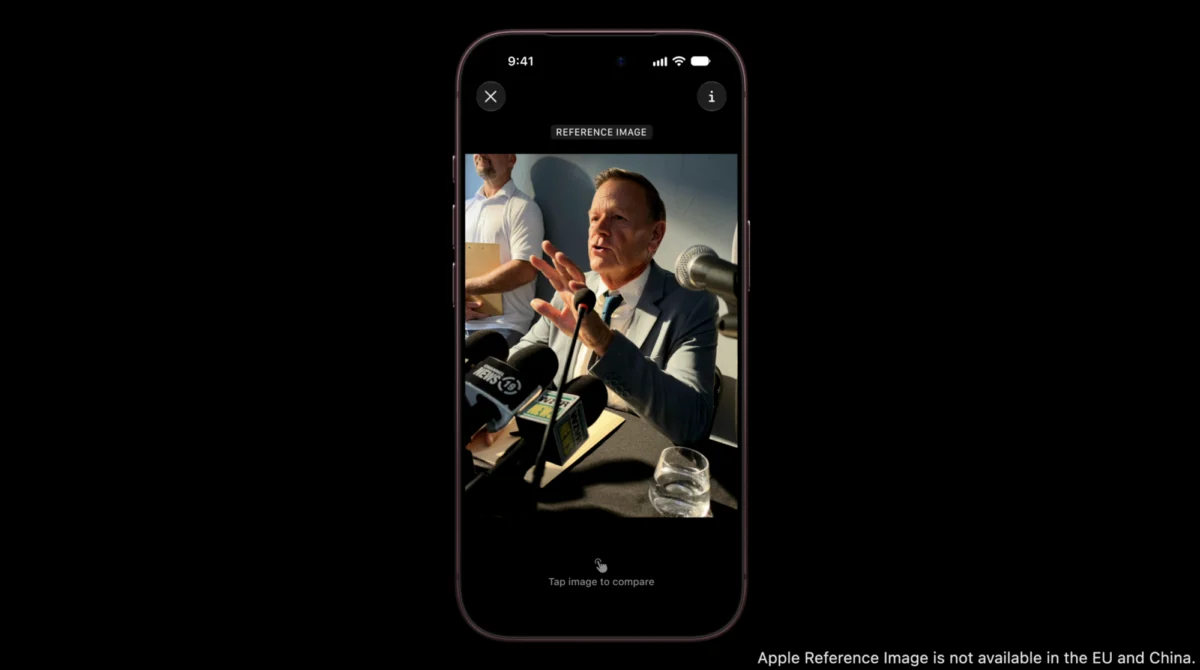
In an era where generative artificial intelligence can create or alter images with startling realism, Apple has introduced a new security-focused feature called "Apple Reference Image." This tool is built directly into the iPhone 18 Pro’s sensor architecture and is designed to provide a verifiable "digital negative" of any photo taken.
When a user captures a photo in Reference mode, the raw sensor data is cryptographically signed and processed through Apple’s Private Cloud Compute. This creates an unalterable version of the image that serves as a baseline for authenticity. This reference file is stored alongside the standard image in the Photos app, allowing users to prove that a photograph has not been manipulated by AI or other editing tools.
This feature is expected to have a significant impact on photojournalism and legal documentation. By supporting the SynthID watermarking standard and providing cryptographic proof of origin, Apple is taking a stand against the spread of deepfakes and misinformation. As AI tools become more accessible, the ability to verify the "provenance" of a digital file is becoming a critical requirement for professional media organizations.
Market Implications and the Future of Mobile Photography
The release of the iPhone 18 Pro comes at a time of intense competition from manufacturers like Samsung, Google, and Xiaomi, many of whom have also pushed the boundaries of sensor size and zoom capabilities. However, Apple’s focus on mechanical aperture and digital authenticity represents a different strategic path. By emphasizing hardware-level control and cryptographic security, Apple is targeting a more professional demographic that may have previously felt limited by the "black box" nature of smartphone image processing.
There are, however, concerns regarding the long-term viability of the variable aperture hardware. Some reports indicate that Samsung scrapped plans for a similar system in its upcoming Galaxy S27 Ultra due to concerns over bulk and manufacturing costs. The complexity of six moving blades in a device that is frequently dropped or exposed to dust presents a significant engineering risk. If the iPhone 18 Pro experiences high failure rates in its camera module, it could lead to a retreat back to fixed-lens designs in future generations.
Despite these risks, the immediate impact on the industry is clear. The iPhone 18 Pro has set a new benchmark for what is expected from a flagship device in 2026. By integrating professional tools like histograms, manual shutters, and authenticity verification, Apple is no longer just selling a phone with a good camera; it is selling a specialized imaging device that happens to be a phone. As the line between professional photography and mobile convenience continues to blur, the iPhone 18 Pro stands as the most aggressive attempt yet to merge those two worlds into a single, pocketable device.