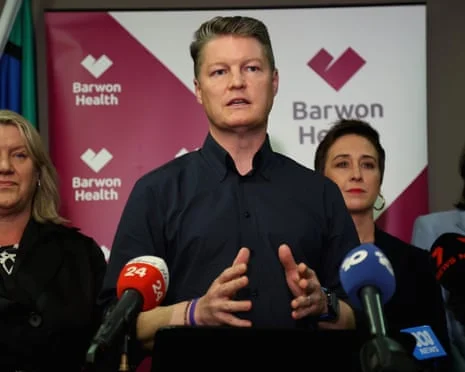
The Australian federal opposition has signaled a potential shift in housing policy, suggesting that mandatory energy efficiency standards for new residential constructions could become optional to lower the cost of entry for homebuyers. Shadow Treasurer Tim Wilson sparked a nationwide debate during a Wednesday morning broadcast, questioning the necessity of stringent building regulations that he claims add tens of thousands of dollars to the price of a new home. During the interview, Wilson noted that in certain climates, residents could manage seasonal temperature fluctuations by simply "putting a jumper on" rather than being forced to pay for high-end insulation and efficiency features mandated by the government.

The proposal coincides with a broader push by the Coalition to deregulate the Australian housing market and drastically reduce immigration levels. Shadow Housing Minister Andrew Bragg is set to present a plan to the National Press Club that would strip the current 2,000-page National Construction Code down to a "basic Australian standard" of just 80 pages. The opposition argues that the current complexity of the code makes it effectively "illegal to build a cheap, safe house" in Australia, contributing to the country’s chronic housing shortage and affordability crisis.
Deregulating the National Construction Code
The National Construction Code (NCC) serves as the primary set of technical design and construction provisions for buildings across Australia. Over the decades, it has expanded to include detailed requirements for fire safety, structural integrity, health, and, increasingly, environmental performance. The Coalition’s plan would maintain essential safety and health requirements as compulsory but would reclassify many "additional features"—specifically those related to energy efficiency—as optional.

Andrew Bragg’s proposed 80-page document aims to remove what the opposition describes as "red tape" that hinders the speed and cost-effectiveness of new developments. By allowing builders and buyers to opt out of certain efficiency standards, the Coalition believes it can close a projected shortfall of 130,000 dwellings. However, the proposal has drawn immediate fire from the Labor government. Treasurer Jim Chalmers dismissed the plan, stating that the government is already working with building ministers to streamline the code without sacrificing the long-term livability and sustainability of Australian homes.
The Energy Efficiency Debate: Affordability vs. Sustainability
The debate over energy efficiency standards for housing highlights a fundamental tension in Australian politics: the balance between immediate housing affordability and long-term cost of living. Tim Wilson’s suggestion that energy standards should not be a "one size fits all approach" reflects a belief that homeowners should have the freedom to choose lower upfront costs. Wilson argued that in regions where extreme cold or heat only lasts for a small portion of the year, the "huge amounts of money" required to meet high-star ratings may not be a justifiable investment for every citizen.

Critics of this deregulatory approach point to the notorious inefficiency of existing Australian housing stock. Data from the Nationwide House Energy Rating Scheme (NatHERS) indicates that the average Australian home built before 2003 rates just 1.8 stars out of 10. These homes are often described by architectural experts as "glorified tents," offering little protection against the elements. Research suggests that residents in low-rated homes pay significantly higher utility bills and face increased health risks due to indoor temperature extremes and the prevalence of mold.
Health Risks and the "Tent" Analogy in Australian Housing
The World Health Organization (WHO) has established clear safety standards for indoor environments, noting that homes should be kept above 18 degrees Celsius (64.4 degrees Fahrenheit) to protect the health of occupants. Many Australian rental properties currently fail to meet this threshold during winter months. Public health advocates argue that making energy efficiency standards optional would trap lower-income Australians in "sick buildings" that are expensive to heat and cool, ultimately shifting the cost from the developer to the tenant.

The Labor government’s current strategy involves lifting the minimum energy efficiency standard for new homes to 7 stars. Proponents of this mandate argue that the extra cost at the time of construction—estimated by some industry groups to be between $2,000 and $5,000, though the opposition claims it can be much higher—is recouped through lower energy bills over the life of the mortgage. The opposition’s "jumper" analogy has become a lightning rod for those who believe Australia must modernize its building standards to meet climate goals and protect vulnerable citizens.
Drastic Cuts to Net Overseas Migration
In tandem with housing deregulation, the Coalition has announced a major policy shift regarding Australia’s immigration intake. The opposition has promised to cap Net Overseas Migration (NOM) at 180,000 per year over the forward estimates. This represents a significant reduction from the post-pandemic peak, which saw NOM reach nearly 300,000 in the last financial year. The current government expects the figure to naturally decline to 245,000 by 2026.

The Coalition intends to achieve this target by reducing the number of family and international student visas. Andrew Bragg argued that the government has failed to align migration levels with housing supply, leading to a "shortfall of 130,000 dwellings." The proposal has found an unlikely ally in Pauline Hanson, the leader of One Nation, who claimed credit for the major parties’ shift toward more restrictive migration policies. Hanson asserted that her consistent advocacy for lower migration forced the Coalition to adopt her "agenda."
The "Melon-Gate" Diplomatic Dispute
While housing and migration dominated the domestic policy discussion, a diplomatic controversy known as "melon-gate" continued to roil the federal parliament. The dispute stems from comments made by Prime Minister Anthony Albanese regarding a Japanese political figure during a podcast appearance. The opposition has accused the Prime Minister of demeaning a key ally and has demanded a formal apology to the Japanese government.

The situation escalated on Wednesday when Shadow Foreign Affairs Minister Ted O’Brien and Shadow Defense Minister James Paterson called for an investigation by the Australian Federal Police (AFP). The request follows the leaking of a confidential diplomatic cable to the media, which suggested that the Japanese government did not wish to make a major issue of the Prime Minister’s comments. The opposition alleges that the Prime Minister’s Office may have been involved in leaking the document to downplay the severity of the gaffe.
Opposition Leader Angus Taylor moved to suspend standing orders in the House of Representatives to force a debate on the matter, calling for Albanese to show "humility" and "pick up the phone" to apologize to Tokyo. The government has dismissed the referral to the AFP as a political stunt, with Housing Minister Clare O’Neil stating that the Liberals have "absolutely lost the plot" and are wasting police resources on a minor podcast matter.

Banking Profits and a Cooling Property Market
Amid the political sparring, the Commonwealth Bank of Australia (CBA) released its full-year results, reporting a massive $10.9 billion cash profit, a 7% increase from the previous year. The result comes despite a series of interest rate hikes by the Reserve Bank of Australia (RBA) intended to curb inflation. CBA’s report noted that while the economy remains resilient, there are growing signs of financial distress among customers.
Arrears for personal loans, home loans, and credit cards have begun to tick higher, though they remain at historically modest levels. The bank also revealed a 28% drop in investor mortgage applications since May, a trend the government attributes to changes in negative gearing and capital gains tax policies. Treasurer Jim Chalmers welcomed the RBA’s decision to hold interest rates steady this week but cautioned against judging the long-term health of the housing market based on a few months of volatile data.

Electoral Reform and Regional Security Agreements
In a significant move for state politics, the Victorian Parliament voted to abolish group voting tickets (GVTs) for its upper house. Victoria was the final Australian jurisdiction to use the system, which allowed political parties to control the flow of preferences. Experts had long criticized GVTs for enabling "backroom deals" that allowed candidates with minimal primary votes to win seats. The new system will require voters to number at least five groups in order of preference, a change that is expected to significantly impact minor parties in the upcoming November elections.
On the international stage, Australia joined 40 other nations, including the United States, United Kingdom, and France, in signing a joint statement regarding ballistic missile testing. The statement calls for all nations to provide at least 24 hours of advanced notice before launching intercontinental or submarine-launched ballistic missiles. The move follows recent missile tests by North Korea and China in the Pacific region, which the signatory nations described as "dangerous" and a threat to global stability.

The convergence of these issues—housing deregulation, migration caps, diplomatic friction, and economic strain—sets the stage for a contentious legislative period. As the government and opposition remain deadlocked on key reforms, including the National Disability Insurance Scheme (NDIS) and gambling regulations, the Australian public continues to navigate a landscape defined by a high cost of living and a shifting sense of national priority. The debate over whether to "put on a jumper" or mandate 7-star energy efficiency serves as a poignant symbol of the broader ideological divide currently shaping the country’s future.