Millions of spectators across the European continent and the North Atlantic gathered on Wednesday to witness a historic celestial event as a total solar eclipse swept through a path of totality including Iceland and Spain, while a deep partial eclipse captivated the United Kingdom and neighboring nations. The rare astronomical phenomenon, the first total eclipse to touch mainland Europe in over two decades, prompted a massive logistical mobilization as enthusiasts traveled by land, air, and sea to secure prime viewing locations. From the rugged cliffs of the Icelandic Westfjords to the sun-drenched Mediterranean coast of Spain, the event transformed the midday sky into an eerie twilight, triggering both scientific fascination and widespread public celebration.
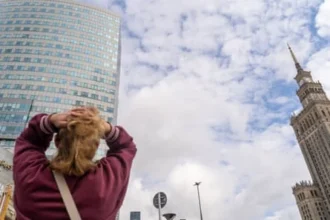
In Spain, government officials estimated that as many as six million people traveled to the 125-mile-wide path of totality, which cut a diagonal swath across the country from the northwestern province of A Coruña to the island of Mallorca. In Madrid, which sat just outside the total blackout zone but experienced over 99% coverage, the atmosphere was described by local astronomers as "palpable and electric." The Madrid Planetarium became a central hub for science communicators, where crowds gathered hours in advance, despite a localized shortage of certified solar safety glasses that left many scrambling for last-minute supplies.

The eclipse’s trajectory across Spain offered a diverse range of viewing conditions. In the northern mountains, clear skies provided an unobstructed view of the sun’s corona—the outer atmosphere visible only during totality—while coastal cities like Valencia saw spectators taking to boats in the Albufera lagoon to watch the moon’s shadow race across the water. The Spanish airline Iberia even operated a special flight, designated IB1473 in honor of the birth year of astronomer Nicolaus Copernicus, allowing passengers to view the spectacle from an altitude of 30,000 feet, well above any potential cloud interference.

Further north, Iceland experienced its first total solar eclipse in 72 years, drawing record numbers of visitors to the island nation. The most coveted spot was Látrabjarg in the Westfjords, the westernmost point of the Icelandic mainland, which boasted the longest duration of totality at two minutes and 13 seconds. The influx of "eclipse tourists" led to unprecedented traffic on Iceland’s narrow rural roads, forcing authorities to close certain routes overnight to manage the volume of vehicles. In the capital region, the Icelandic artist Björk hosted a specialized festival in Hafnarfjörður, timing the musical sets to coincide with the moment of maximum obscuration.

Despite the excitement in Iceland, weather remained a significant variable. While some regions enjoyed clear views, low-hanging clouds threatened to obscure the sight for many in the southern and eastern parts of the country. Local businesses showed a unique level of flexibility for the event; the national supermarket chain Bónus authorized its store managers to close locations for 15 minutes during the peak of the eclipse, ensuring that employees could participate in the rare cultural moment.

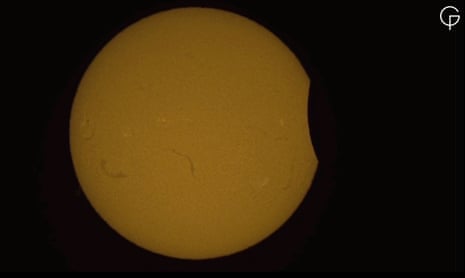
In the United Kingdom, where the eclipse was partial rather than total, the spectacle was no less significant for the millions who watched from parks and public squares. Cornwall, located in the far southwest of England, saw the highest level of coverage at approximately 95%. This region holds a special place in British astronomical history, having been the site of the UK’s last total solar eclipse in 1999. In the harbor town of Falmouth, the local community organized an elaborate series of events, including a Royal Navy parachute display and wing-walking performances, to entertain the crowds awaiting the "Pacman-shaped" sun.

However, the event in Cornwall was not without its challenges. Emergency crews were forced to respond to a wildfire near Land’s End airport, which sent a plume of smoke over Cape Cornwall, threatening to block the view for thousands of gathered spectators. Additionally, the Falmouth Coastguard issued stern warnings to the public to stay away from cliff edges as the sky darkened, citing the risk of falls in the diminished light. The Royal National Lifeboat Institution (RNLI) also cautioned "eclipse dippers"—those planning to swim during the event—about the sudden drop in temperature and reduced visibility associated with the moon’s transit.

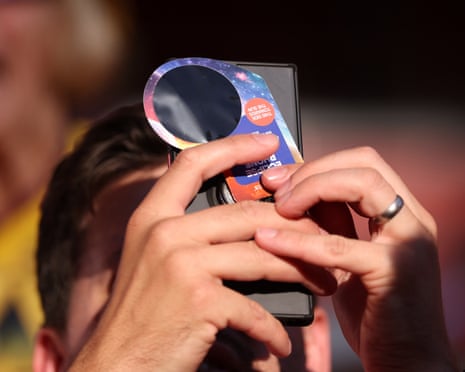
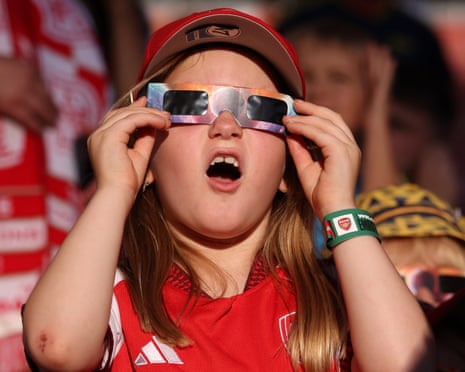
The astronomical event also brought renewed focus to the critical importance of eye safety. The European Space Agency (ESA) and various national health services issued multiple warnings that looking directly at the sun without specialized ISO-certified filters can lead to permanent retinal damage. Medical experts noted that the danger is paradoxically higher during an eclipse because the overall brightness of the sky drops, causing the pupils to dilate and allowing more harmful ultraviolet and infrared radiation to hit the back of the eye when a person stares at the remaining sliver of the sun.
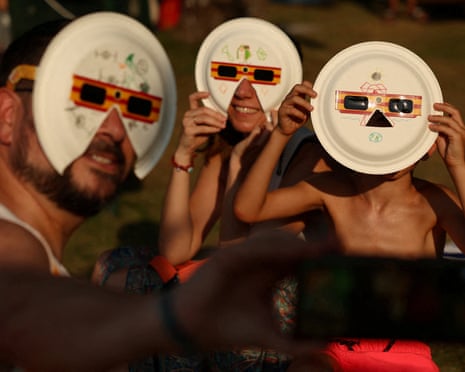
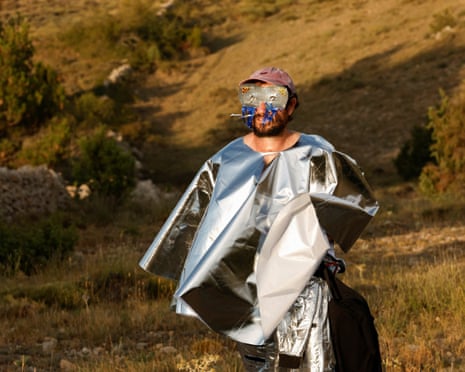
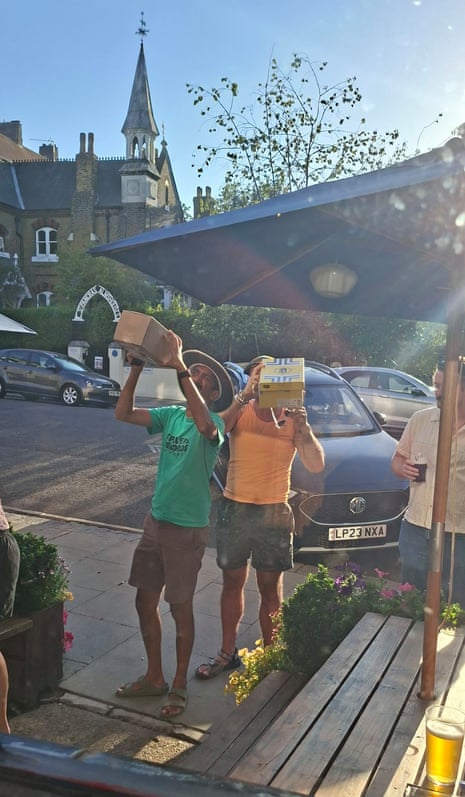
Dr. Panayiotis Maghsoudlou, a clinical lecturer in ophthalmology, explained that the retina lacks pain receptors, meaning individuals may not realize they are sustaining a burn until hours after the damage has occurred. Symptoms of "solar retinopathy" include blurred central vision, distorted lines, and permanent blind spots. Following the 1999 eclipse, the UK reported over 70 cases of significant visual loss, a statistic that prompted a much more aggressive public safety campaign for the 2026 event. In response to the shortage of professional glasses, many citizens turned to DIY methods, such as using colanders or cardboard boxes to create pinhole projectors, safely casting an image of the eclipsed sun onto the ground or a white sheet.
Adding a dramatic geological layer to the day’s events, Mount Etna in Sicily, Europe’s most active volcano, continued a week-long eruptive phase characterized by the emission of "primitive magma." This deep-seated magma, which originates from the Earth’s mantle with little chemical alteration, produced towering ash plumes reaching nearly 15,000 feet. The volcanic activity created a surreal backdrop for eclipse-watchers in southern Italy and caused significant disruption to regional aviation. Catania airport faced multiple closures, and ash clouds drifted as far south as Malta, leading to flight cancellations at the height of the summer tourist season. Experts from Italy’s National Institute of Geophysics and Volcanology (INGV) noted the rare coincidence of two of nature’s most powerful displays—one celestial and one terrestrial—occurring simultaneously.
The economic impact of the 2026 eclipse is expected to be substantial. While the 1999 eclipse was estimated to have cost the UK economy roughly £500 million in lost productivity due to the nationwide "standstill," the modern approach has been to embrace the event as a significant driver for the hospitality and travel sectors. Hotels along the path of totality in Spain and Iceland reported being fully booked years in advance, with premium "eclipse packages" fetching thousands of dollars. The rise of astrotourism has become a vital niche market, drawing high-spending travelers to remote regions that might otherwise be overlooked during the standard vacation season.
As the moon’s shadow finally moved off the coast of Mallorca and into the Mediterranean, the event left a lasting impression on a new generation of observers. For many in the United Kingdom, this was the most significant solar event they will see for decades, as the next total solar eclipse visible from the British Isles is not forecasted to occur until the year 2090. In Spain, the event marked the end of a long "eclipse drought," providing a wealth of data for solar scientists studying the sun’s corona and its influence on the Earth’s ionosphere.
The success of the public viewing events across Europe, despite localized weather issues and equipment shortages, underscored a universal human fascination with the mechanics of the solar system. Scientific organizations are now turning their attention to analyzing the data collected by thousands of ground-based sensors and satellite observations during the transit. As the continent returns to its normal routine, the 2026 eclipse will be remembered as a moment when millions of people simultaneously turned their gaze upward, united by a rare and fleeting alignment of the heavens.