Polls opened Thursday morning in the coastal constituency of Clacton, where Reform UK leader Nigel Farage has deployed a high-spending digital campaign to secure his seat against a diverse field of challengers, including the satirical candidate Count Binface. Recent financial disclosures indicate that Farage and his party have funneled more than £10,000 into targeted social media advertising, a move analysts suggest is designed to insulate the populist leader from an embarrassing showing against fringe opponents. The special election comes at a pivotal moment for British politics, as Farage seeks to cement his influence while navigating ongoing allegations regarding undisclosed financial donations from cryptocurrency interests.
While the month of August is traditionally viewed by Westminster insiders as the "silly season"—a period characterized by a lack of substantive legislative activity and an increase in eccentric news stories—the stakes in Clacton remain exceptionally high. Farage, a figure who has fundamentally reshaped the British political landscape through his leadership in the Brexit movement, is attempting to maintain a narrative of momentum for Reform UK. Despite his party’s strong polling over the last year, the Clacton contest has been overshadowed by a series of "sleaze" allegations, specifically involving a £5 million gift from a cryptocurrency billionaire that critics claim was not properly declared.
The Digital Air War in Clacton
Detailed analysis of digital campaign data reveals that Reform UK is the only entity in this byelection utilizing paid Meta features to influence the electorate. The strategy, described by political observers as a "twin-track" approach, seeks to present Farage simultaneously as a dedicated local advocate and an embattled insurgent fighting an entrenched "establishment" machine. Of the total expenditure, approximately £1,000 was dedicated to videos encouraging residents to display "I’m with Nigel" garden signs, while another £500 focused on driving postal vote returns to "send a message" to the political elite.
The most significant portion of the advertising budget—estimated between £4,000 and £4,500—was allocated to a five-minute campaign video. In the footage, Farage speaks at length about his personal connection to the Clacton constituency, while alleging that his political success has prompted his opponents to use "foul means" to obstruct his path. "Rather than being judged by the political class and the mainstream media, I am going to let you, the voters in the Clacton constituency, make a decision," Farage stated in the advertisement. "I want you to be my judge, not the political elite."
This heavy investment in social media suggests a level of concern within the Reform UK camp regarding the potential for "protest votes" to gravitate toward satirical candidates. Count Binface, a perennial joke candidate who campaigns in a costume resembling a waste bin, has historically used humor to highlight perceived absurdities in the British electoral system. While Farage remains the heavy favorite to win the seat, the financial commitment to "see off the threat" of a joke candidate underscores the volatile nature of the current political climate in seaside towns that feel abandoned by mainstream parties.

Local Apathy and the "Human Zoo" Phenomenon
Despite the intense media focus and the high-tech digital campaign, many residents of Clacton describe a profound sense of exhaustion and detachment from the electoral process. Local commentary has characterized the byelection as a "circus" that does little to address the entrenched socio-economic issues facing the region. Observers on the ground report that while national reporters and political activists have descended upon the town, many residents are choosing to ignore the campaign entirely, leaving leaflets unread and expressing a lack of intent to visit polling stations.
The sentiment among some locals is that Clacton has been turned into a "human zoo," where the struggles of the working class are used as a backdrop for Farage’s populist rhetoric. Issues that dominate local conversations—such as the prevalence of litter, the conduct of landlords, the deterioration of road infrastructure, and the lack of parking—remain largely unaddressed by the high-level political maneuvering. Predictions for the final result suggest a low voter turnout, which often benefits established names with high brand recognition but can also lead to unpredictable outcomes if a specific demographic feels particularly motivated to register a protest.
National Policy Conflicts: The Zero-Hours Contract Debate
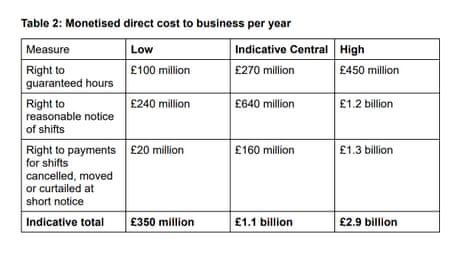
As voters head to the polls in Clacton, the broader UK government is grappling with a significant backlash over its proposed labor reforms. The Department for Business, Innovation, Science and Trade (DBIST) recently published a consultation document revealing that the government’s plan to ban zero-hours contracts could cost the private sector up to £3 billion annually. While the ban has already been legislated through the Employment Rights Act 2025, the government is currently seeking input on the specific regulations that will govern the transition.
The DBIST document outlines three core measures intended to protect workers: the right to guaranteed hours based on a reference period of work, the requirement for reasonable notice for shifts, and mandatory compensation for shifts cancelled at short notice. The government’s central estimate for the cost of these changes sits at approximately £1.1 billion, but the "high-end" estimate of £3 billion has provided ammunition for business advocacy groups. The British Chambers of Commerce (BCC) described the figures as a "hammer blow" to firms already struggling with inflationary pressures and global supply chain disruptions.
Jacqui Smith, the government’s skills minister, defended the policy in a series of media appearances on Thursday. Smith argued that the current system is inherently unfair to employees who are bound by contracts without any guarantee of income or stability. "We want to make sure that when people get into work, that will be work that is fairly paid, where they’ve got security, and where they can combine it with the responsibilities they have in their families," Smith told Sky News. The consultation period for these regulations has been set for a remarkably short two-week window, indicating that the administration intends to move forward with implementation regardless of the projected costs to the business community.
Economic Headwinds and the Impact of Global Conflict
The political tension in Westminster and Clacton is mirrored by a cooling national economy. Official figures released Thursday show that UK economic growth slowed significantly during the second quarter of the year. Economists point to the ongoing war in Iran as the primary driver of this slowdown, as the conflict continues to disrupt global energy markets and push domestic utility prices higher. The Office for National Statistics indicated that while the UK had shown signs of recovery earlier in the year, the geopolitical instability in the Middle East has dampened consumer confidence and restricted industrial output.
This economic stagnation provides a challenging backdrop for both the government and its challengers. For Farage and Reform UK, the narrative of economic decline and "establishment failure" is a central pillar of their platform. For the governing Labour party, the slowdown complicates their promises of national renewal and complicates the fiscal space available for their planned social reforms. The intersection of rising energy costs and new labor regulations has created a complex environment for small and medium-sized enterprises, many of which are the primary employers in constituencies like Clacton.
Education and the Future Workforce
Amidst the political and economic turmoil, hundreds of thousands of young people across the country received their A-level results on Thursday morning. Early data suggests a record number of students have been accepted into degree courses, reflecting a shift in the educational landscape as universities expand their clearing processes to accommodate a growing demographic of applicants. However, the celebration of academic achievement is tempered by concerns over the long-term viability of the UK’s higher education funding model and the alignment of university degrees with the needs of a rapidly changing labor market.
The results day serves as a reminder of the generational divide that often characterizes British elections. In Clacton, the demographic skews older and more skeptical of the benefits of globalization and modern educational trends—a fact that Farage has successfully leveraged in his previous campaigns. The disconnect between the aspirations of urban, university-bound youth and the realities of life in post-industrial seaside towns remains one of the most significant fault lines in British society.
Final Stages of the Clacton Special Election
As the afternoon progresses, the focus remains on the polling stations in Clacton and the surrounding areas, such as Walton-on-the-Naze. The result of this byelection will be viewed as a litmus test for the durability of Farage’s brand of populism. If Farage secures a commanding victory, it will embolden Reform UK to challenge the Conservative party for dominance on the right of the political spectrum. Conversely, a narrow win or a surprisingly strong showing for a candidate like Count Binface would suggest that the "Farage effect" may be reaching its ceiling.
The final tally is expected to be announced in the early hours of Friday morning. Regardless of the outcome, the Clacton special election has already highlighted the deep divisions within the British electorate and the increasing importance of digital spending in modern political warfare. With the national economy under pressure and major labor reforms on the horizon, the winner will enter a Parliament that is more fractured and scrutinized than at any point in recent history.