The question of whether the United States is ready for President Alexandria Ocasio-Cortez has transitioned from a progressive thought experiment to a central fixture of national political discourse as the 2028 election cycle begins to take shape. Standing before a packed audience at the University of Chicago’s Rockefeller Memorial Chapel earlier this year, the New York Congresswoman offered a glimpse into an ambition that she claims transcends mere titles or legislative seats. Her assertion that her goal is to fundamentally "change this country" has ignited a firestorm of speculation regarding a potential White House bid, as voters on both sides of the aisle weigh the viability of a democratic socialist leading the executive branch.
In the months following that appearance, the momentum surrounding Ocasio-Cortez has shifted from grassroots enthusiasm to data-driven political strategy. Friends, rivals, and non-partisan analysts are increasingly pointing toward a convergence of factors that could facilitate a 2028 run. With a significant portion of the electorate expressing exhaustion with the aging Democratic establishment and a desire for systemic economic reform, the Congresswoman’s profile as a disruptor appears more relevant than ever.
The Rising Speculation Over a 2028 Presidential Run
The metrics supporting a potential candidacy are becoming difficult for the Democratic National Committee to ignore. A recent Granite State Poll conducted by the University of New Hampshire placed Ocasio-Cortez at the front of a hypothetical Democratic field in the critical primary state. This early polling strength is bolstered by a level of brand recognition that few politicians in Washington possess. With nearly 10 million followers on Instagram and a sophisticated digital infrastructure, she maintains a direct line of communication with younger voters that bypasses traditional media gatekeepers.
Historical precedents set by figures like Barack Obama and Donald Trump suggest that presidential contests often reward candidates who capture a specific cultural moment. At 36, Ocasio-Cortez represents a demographic and ideological shift that stands in stark contrast to the current political gerontocracy. Supporters argue that she is the natural antithesis to the "Make America Great Again" movement, offering a progressive populism that seeks to counter nativist rhetoric with a focus on economic justice and universal social programs.

National polling data reflects a growing appetite for this ideological shift. A Zogby Strategies poll recently indicated that a generic democratic socialist candidate leads a generic MAGA-aligned candidate by a margin of 45% to 33%. For organizations like the Democratic Socialists of America (DSA), where Ocasio-Cortez holds membership, the prospect of her candidacy represents the ultimate test of their movement’s national reach. Ashik Siddique, co-chair of the DSA, noted that her entry into the race would mobilize a "strong working-class voice" that has historically felt sidelined by centrist party leadership.
Strategic Maneuvers and the Question: Is the US Ready for President Alexandria Ocasio-Cortez?
While Ocasio-Cortez has not officially declared her intentions, her recent public activity mirrors the "stealth mode" campaigns often employed by high-level aspirants. Over the last year, she has expanded her national footprint far beyond her Bronx and Queens district. Her "Fighting Oligarchy" tour alongside Senator Bernie Sanders drew massive crowds, reinforcing her status as the heir apparent to the progressive movement Sanders galvanized in 2016 and 2020.
Further evidence of a strategic pivot appeared during a recent interview with ABC’s Jonathan Karl. When questioned about the cultural and political excesses of the pandemic era, specifically the "defund the police" movement, Ocasio-Cortez laughed and described the period as "Woke One was crazy." This rhetorical distancing from the more controversial slogans of the far-left is viewed by political strategists as a deliberate attempt to moderate her image for a general election audience. By framing past radicalism as a product of "lockdown isolation," she is attempting to redraw the lines of her political identity.
Her personal transparency has also become a tool for political normalization. Her recent announcement regarding the freezing of her eggs was presented not just as a personal update, but as a commentary on the professional challenges facing women in leadership. While she acknowledged the "political risk" of such disclosures, analysts suggest these moves are designed to foster a sense of "lived experience" and relatability—traits that were often criticized as lacking in previous female presidential candidates.
Navigating the Path from Outsider to Establishment Player
One of the most significant hurdles Ocasio-Cortez faces is the accusation that she has been co-opted by the very "political industrial complex" she once vowed to dismantle. Since her 2018 upset victory over Joe Crowley, she has moved from the fringes of the House to a position of functional cooperation with Democratic leadership. Former Speaker Nancy Pelosi, once a target of progressive ire, recently praised the Congresswoman’s "operational" approach, describing her as a "joy to work with."
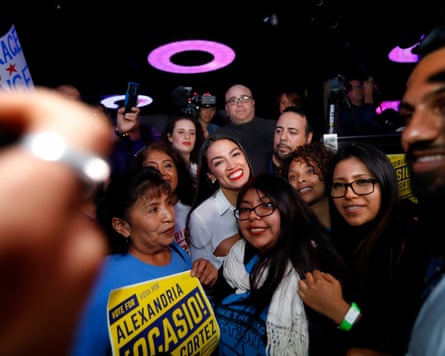
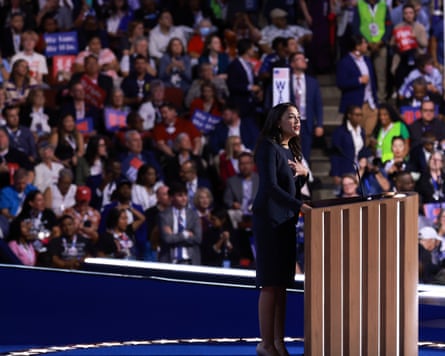
This evolution has created friction within her own base. Critics on the far-left, such as political commentator Cenk Uygur, have expressed "tactical despair" over her recent actions. Uygur pointed to her speech at the 2024 Democratic National Convention, where she praised Vice President Kamala Harris’s efforts regarding a ceasefire in Gaza, as a "whitewashing" of the administration’s foreign policy. For these critics, Ocasio-Cortez’s shift toward the center is a sign that she is prioritizing institutional approval over revolutionary change.
The challenge for Ocasio-Cortez will be maintaining her "outsider" credibility while proving she can govern within the system. Corbin Trent, her former communications director, argues that her superpower remains her genuine curiosity and openness. Unlike career politicians who struggle to project authenticity, Trent suggests that Ocasio-Cortez’s background as a bartender and organizer provides a foundation of "relatability" that cannot be manufactured in a consultant’s office.
Demographic Hurdles and the South Carolina Primary
Even if she successfully bridges the gap between progressives and moderates, the road to the White House remains blocked by significant demographic and geographic challenges. Centrist Democrats frequently argue that the democratic socialist wing of the party lacks the ability to connect with African American voters, particularly in the South. This "demographic wall" has historically thwarted progressive insurgents in states like South Carolina, which serves as a primary firewall for the party establishment.
Nina Turner, a national co-chair for Bernie Sanders’ 2020 campaign, has noted "rumblings" within the Black community that the progressive movement has not done enough to prioritize Black liberation or address specific racial anxieties. For Ocasio-Cortez to win a national primary, she must convince these constituencies that her economic agenda is inseparable from their social and civil rights concerns.
Antjuan Seawright, a Democratic strategist based in South Carolina, suggested that her viability depends on her ability to speak to "kitchen-table concerns" without appearing as a "liability" in conservative-leaning swing states. He argued that if she can frame issues like healthcare and economic reform as universal necessities rather than radical overhauls, she could find a path through the South. However, the Republican media machine has already spent years branding her as a "radical communist," a label that remains a potent weapon in the American political landscape.
Is the US Ready for President Alexandria Ocasio-Cortez or a Senatorial Pivot?
Given the historical difficulties of winning the presidency directly from the House of Representatives, some advisors suggest a different path. Tara Setmayer, co-founder of the Seneca Project, argues that Ocasio-Cortez would be better served by a run for the U.S. Senate, potentially challenging Chuck Schumer for his New York seat. A Senate win would provide her with the "gravitas" and legislative record often required to win over skeptical moderate voters in a general election.
The comparison to Barack Obama is frequently cited in these discussions. Obama served as a senator for only a short period before his 2008 victory, but that time allowed him to build a national platform that was distinct from the localized politics of the House. However, the "attention vacuum" of modern politics often favors those who seize the moment immediately. As Kurt Bardella, a former congressional aide, pointed out, Ocasio-Cortez is a "gifted communicator" who already commands the kind of attention most senators spend decades trying to cultivate.
The question of whether the country is ready for her leadership will likely be answered by the economic and social conditions of 2028. If the electorate continues to feel abandoned by traditional institutions, the Congresswoman’s message of systemic change may find a more receptive audience than ever before. Whether she chooses the path of the executive or the continued influence of the legislature, Alexandria Ocasio-Cortez has already ensured that her vision for America is a central part of the national identity.
Ultimately, her journey from a Bronx bartender to a potential presidential contender reflects a broader transformation within the American political fabric. Her ability to survive the transition from a "woke" icon to an "operational" legislator suggests a political maturity that her detractors often underestimate. As the 2028 cycle approaches, the debate over her readiness will only intensify, forcing the Democratic Party to decide if it is willing to embrace a future led by its most famous and polarizing progressive voice.