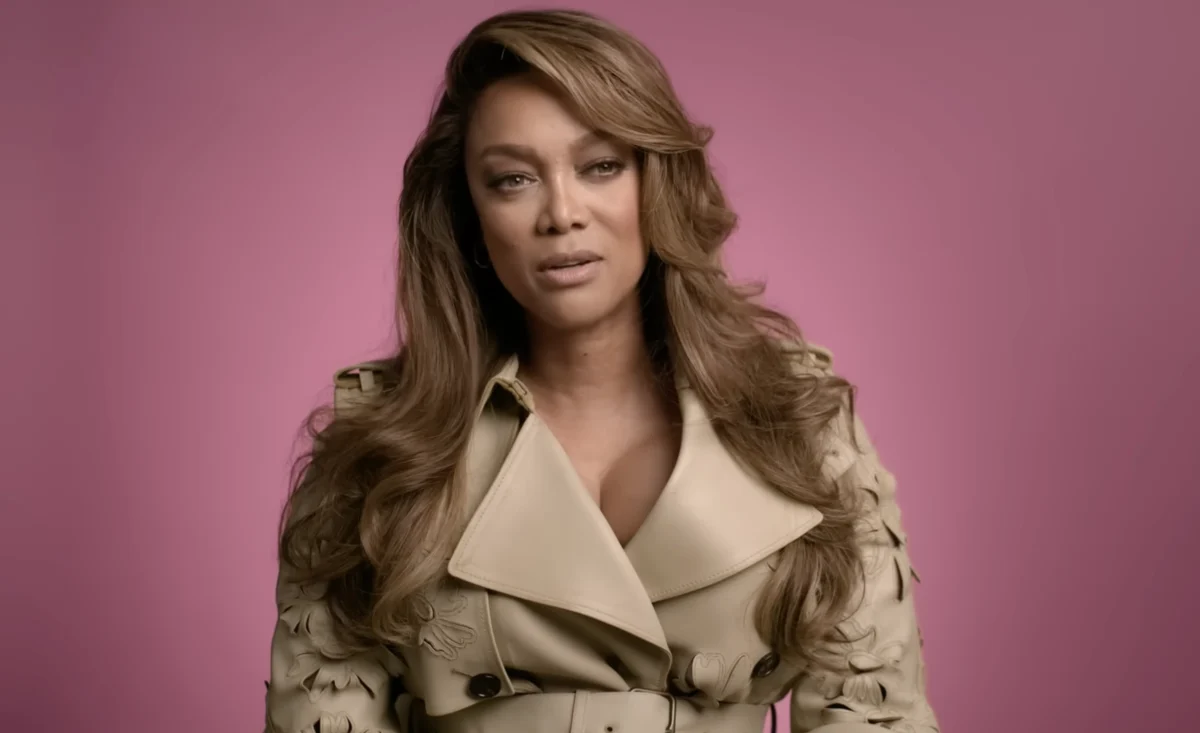
Netflix has initiated a robust legal maneuver, filing a motion to strike and dismiss a defamation lawsuit brought by supermodel and entrepreneur Tyra Banks concerning her portrayal in the streaming giant’s docuseries, Reality Check: Inside America’s Next Top Model. The legal action intensifies a growing dispute over the editorial control and narrative construction of retrospective documentaries, particularly those re-examining iconic reality television shows.
The Core Legal Challenge
Filed on Friday in a California court, Netflix’s motion directly challenges the foundation of Banks’ complaint, asserting that her grievances stem from "ordinary editorial decisions" ratherating to actual falsehoods. The streamer argues that Banks, a seasoned media professional, signed an agreement explicitly granting filmmakers the right to edit her interview footage without her prior review or approval, and releasing them from potential claims, including defamation and false light. This legal defense positions the dispute squarely on the principles of creative freedom in documentary filmmaking versus an individual’s right to control their public image.
Unpacking Tyra Banks’ Allegations
Tyra Banks launched her defamation lawsuit against Netflix in June, alleging that Reality Check falsely represented her, specifically by "stripping her comments of context and reassembling them to support a false and defamatory narrative." She contended that out of a three-and-a-half-hour interview, only a mere 16 minutes of her footage was utilized in the docuseries. Banks’ legal team argued that this selective editing created a misleading impression, damaging her reputation and public standing.
A central point of contention in Banks’ lawsuit revolves around the docuseries’ depiction of her response to a sensitive incident involving former America’s Next Top Model contestant Shandi Sullivan. Banks claims the documentary created a "devastating and deliberate" implication that she couldn’t recall Sullivan’s alleged sexual assault during the filming of cycle two. In Reality Check, Banks is shown being asked, "You remember the story with Shandi?" Her filmed response, an "um," is immediately followed by a cut to a black screen, which Banks asserts was deliberately edited to suggest a lapse in memory or concern on her part.
The ‘Reality Check’ Docuseries in Question
Reality Check: Inside America’s Next Top Model delves into the cultural phenomenon and sometimes controversial history of America’s Next Top Model (ANTM). The docuseries, directed by acclaimed documentarians Daniel Sivan and Mor Loushy, aims to provide a critical re-evaluation of the groundbreaking reality competition, exploring its impact on fashion, media, and the lives of its contestants. It incorporates interviews with former models, crew members, and Banks herself, attempting to present a multifaceted perspective on the show’s legacy. Its release ignited significant discussion, reigniting debates about the ethical considerations and long-term consequences of reality television.
Netflix’s Defense: Editorial Prerogative and Prior Agreement
Netflix’s motion robustly defends the docuseries’ editorial integrity. The streamer’s legal filing highlights that Banks’ participation was governed by a signed agreement. This document, according to Netflix, explicitly states Banks had "no right to review or approve" the finished documentary and released claims arising from it, including those for defamation and false light. This contractual agreement forms a significant pillar of Netflix’s defense, suggesting Banks waived the very rights she now seeks to enforce.
Furthermore, Netflix refutes Banks’ specific claim regarding the Shandi Sullivan segment. The motion asserts that the documentary, in fact, shows Banks clearly stating, "I do remember her story," directly contradicting the accusation that the editing implied forgetfulness. Netflix argues that a documentary explicitly showing Banks remembering an event cannot simultaneously imply she forgot it, challenging the premise of her defamation claim on a factual basis.
The streamer also draws a parallel between the editorial decisions made for Reality Check and Banks’ own extensive career in television production. "Banks understands editorial discretion," the motion reads, pointing out her role as creator, host, and executive producer for 24 seasons of ANTM. Netflix contends that Banks made similar editorial judgments – deciding what footage to include, what to omit, and how to present competing narratives – throughout her own career. Therefore, the motion posits, Reality Check merely turned that "editorial lens back on ANTM and Banks," and her disagreement with the resulting portrayal does not automatically render it defamatory.
Legal Precedents and Protections
The legal battle touches upon critical aspects of media law, including the robust protections afforded to documentary filmmakers under the First Amendment in the United States. Motions to strike, such as the one filed by Netflix, are often employed in cases where a plaintiff’s claim is perceived as infringing upon free speech rights, sometimes invoking anti-SLAPP (Strategic Lawsuit Against Public Participation) statutes designed to prevent meritless lawsuits that chill public discourse. While Netflix’s motion doesn’t explicitly cite anti-SLAPP, its arguments align with the principles underlying such protections, emphasizing the right of creators to produce critical works without undue interference from subjects who may disagree with their portrayal. The legal landscape generally grants significant latitude to documentarians in crafting narratives, particularly when based on truthful or accurately edited statements, even if those portrayals are unflattering or not precisely what a subject desired.
The Legacy of America’s Next Top Model
America’s Next Top Model, which premiered in 2003, quickly became a global cultural phenomenon, pioneering the reality competition format for aspiring models. Created and executive produced by Tyra Banks, the show ran for 24 cycles, captivating audiences with its high-stakes challenges, dramatic makeovers, and often intense critiques. ANTM launched the careers of some models, but its legacy has increasingly come under scrutiny in recent years.
Retrospective analyses and growing public awareness have led to a re-evaluation of various aspects of the show, including its approach to body image, mental health, and the treatment of contestants. Past clips and behind-the-scenes accounts have sparked debates online and in the media, questioning whether some of the show’s challenges and judgments, once seen as entertaining, crossed ethical lines. This broader cultural re-assessment provided fertile ground for documentaries like Reality Check to emerge, aiming to offer a more critical and nuanced look at ANTM‘s impact and methods.
Broader Implications for Documentary Filmmaking and Celebrity Portrayals
This legal confrontation between Netflix and Tyra Banks carries significant implications for the documentary filmmaking industry and the broader entertainment landscape. At its heart is the tension between a documentary subject’s desire to control their narrative and a filmmaker’s artistic and journalistic freedom to present a comprehensive, often critical, account. The outcome could influence how documentarians approach interviews with high-profile individuals, particularly those revisiting past projects or public figures.
The dispute also highlights a growing trend of "re-evaluation" documentaries, where past cultural touchstones, especially reality television, are revisited through a contemporary lens. These films often seek to expose uncomfortable truths or offer new perspectives on narratives previously accepted at face value. Such projects inherently risk clashes with the individuals who were central to the original works, particularly when the re-evaluation challenges their public image or perceived legacy. The case could set precedents regarding the boundaries of consent waivers in documentary production and the interpretation of "defamation" when subjects contend their statements were taken out of context.
What Comes Next in the Tyra Banks Lawsuit?
With Netflix’s motion now filed, the court will consider the arguments presented by both sides. If the motion to strike and dismiss is granted, Banks’ defamation lawsuit could be terminated at an early stage, potentially saving Netflix from a prolonged and costly legal battle. Conversely, if the motion is denied, the lawsuit would proceed, moving into discovery phases where both parties would gather more evidence, potentially leading to a settlement or a full trial.
A Netflix spokesperson reiterated the company’s commitment to defending the docuseries, stating to ABC News that they plan to "vigorously defend" the work of directors Daniel Sivan and Mor Loushy. The statement emphasized that Banks "was given the opportunity to speak openly about her experience and the creators fairly presented her perspective alongside those of every other participant shown in this documentary." As of the latest reports, Tyra Banks’ legal representatives have yet to issue a public statement in direct response to Netflix’s motion. The legal proceedings will undoubtedly be closely watched by those in the entertainment industry, legal circles, and the public interested in the ongoing discussions surrounding media accountability and artistic expression.
The legal clash underscores the complex interplay between celebrity image, artistic license, and the quest for contextualized truth in an era increasingly prone to revisiting and re-evaluating past cultural phenomena. The resolution of this lawsuit could shape future expectations for subjects participating in documentaries and the legal protections afforded to filmmakers seeking to offer critical perspectives.