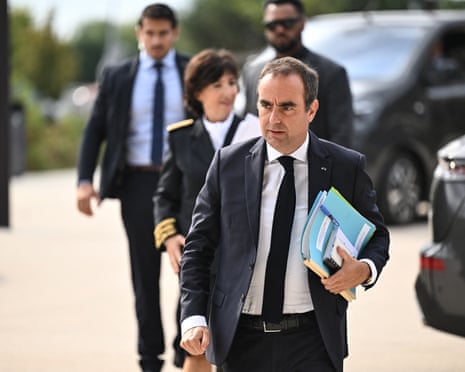
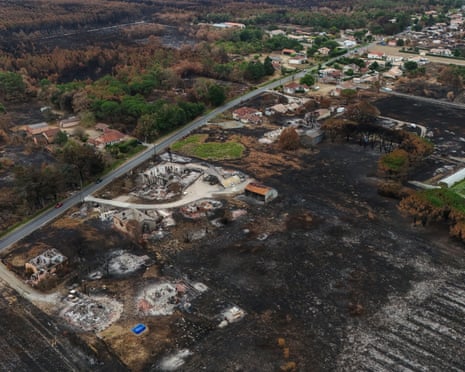
French Prime Minister Sébastien Lecornu faced a hostile reception on Monday as he visited communities devastated by recent wildfires in the Gironde region, highlighting a growing rift between local residents and the national government over emergency resource allocation. As the Prime Minister attempted to reassure citizens in the town of Le Porge, he was met with a chorus of boos from a crowd frustrated by what they perceived as an inadequate and unequal response to the summer’s catastrophic blazes. The political unrest in France comes as the European Union mobilizes an international relief effort through its Civil Protection Mechanism to support firefighting operations in Belgium and Spain, where record-breaking temperatures and prolonged droughts have ignited the most severe fires in decades.
Political Tensions Flare in Fire-Ravaged Gironde
The visit by Prime Minister Lecornu to southwestern France was intended to signal the state’s commitment to reconstruction, yet it quickly became a flashpoint for local grievances. In Le Porge, a town significantly impacted by the massive wildfires that swept through the region last month, residents gathered to express their anger. Many locals accused the government of prioritizing the protection of the upscale Cap-Ferret peninsula—a popular vacation destination for wealthy Parisians—at the expense of working-class residential areas and agricultural land.
The frustration was palpable as a group of residents placed an empty chair in the town square, symbolizing what they described as the government’s absence during the height of the crisis. Tony Veiga, a 65-year-old local pensioner, summarized the sentiment to reporters, stating that the Prime Minister’s failure to engage directly and transparently with the affected population felt like a personal slight. "It really amounts to treating us as if we don’t matter," Veiga said.
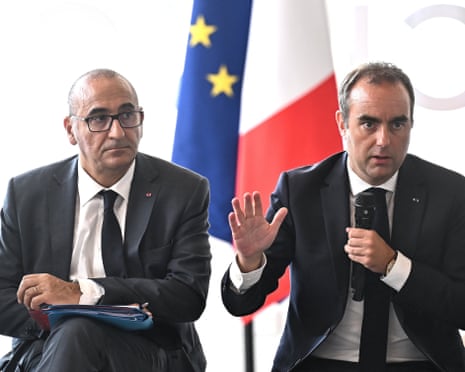
In response to the backlash, Lecornu’s office insisted that the Prime Minister had met with a select group of farmers and residents to discuss their specific needs. During a subsequent press conference in the nearby town of Mérignac, Lecornu forcefully rejected what he termed "conspiracy theories" regarding the prioritization of wealthy areas. He maintained that tactical decisions were made by local commanders on the ground and that the state had "absolutely nothing to hide" regarding its operational conduct. To address the immediate economic fallout, Lecornu announced a €12 million ($13 million) aid package for the Gironde and Landes departments, promising fast-tracked planning permissions for reconstruction and tax relief for struggling businesses.

Belgium Battles Largest Wildfire in Modern History
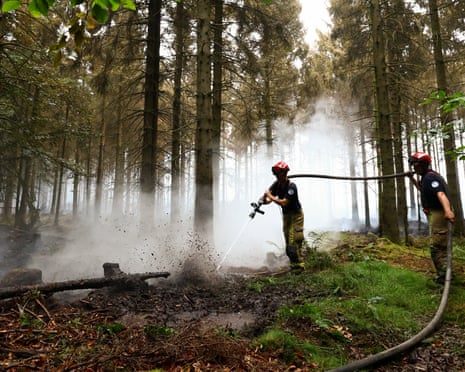
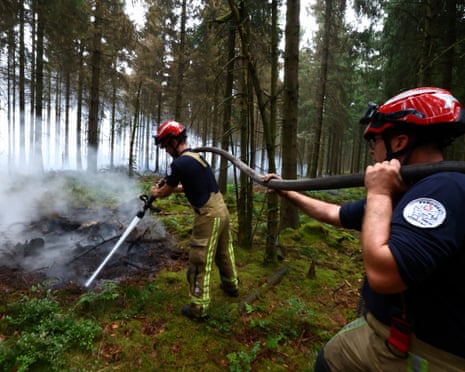
While France grapples with the political aftermath of its fires, Belgium is currently in the midst of a historic environmental crisis. Firefighters in the eastern part of the country are struggling to contain a massive blaze in the High Fens (Hautes Fagnes) nature reserve. The fire, which broke out on Friday afternoon, is now believed to be the largest wildfire in Belgium’s modern history, having already scorched more than 3,000 hectares (7,400 acres) of land.
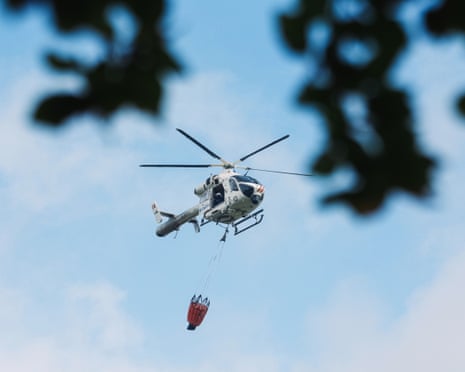
The geography of the High Fens has proven to be a significant obstacle for emergency crews. The region consists of a complex patchwork of heath, peat bogs, and raised wooden boardwalks. These conditions make it nearly impossible for heavy ground vehicles to navigate the terrain without sinking, forcing firefighters to rely almost exclusively on aerial support. Peat fires are notoriously difficult to extinguish because they can smolder deep underground for weeks, only to resurface when winds pick up or temperatures rise.

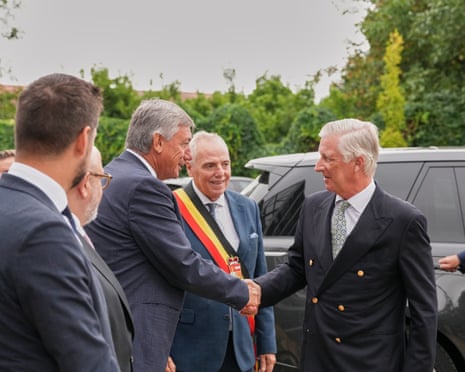
Recognizing the severity of the situation, King Philippe of Belgium visited the emergency coordination center on Monday to receive briefings from fire commanders. The Belgian government has officially requested international aid, prompting the European Commission to trigger its collective defense protocols. Two Swedish water-dropping planes from the EU’s permanent firefighting fleet have been dispatched to the region, joined by helicopters from the Netherlands, Norway, and Germany. Marc Gilbert, the head of the Belgian fire service, told local media that the current crisis underscores the need for a more integrated, permanent European firefighting fleet and urgent recruitment to fill personnel shortages.
EU Solidarity and the Civil Protection Mechanism
The deployment of Swedish aircraft to Belgium is part of a broader surge in EU-led assistance across the continent. European Commission President Ursula von der Leyen emphasized the importance of cross-border cooperation, stating on social media that "Europe’s solidarity is in full flight." Beyond physical assets, the EU is providing critical intelligence through its Copernicus satellite service, which offers real-time mapping of fire perimeters and potential hotspots to ground commanders in France, Spain, Belgium, and Greece.
In Spain, the situation remains critical as local authorities battle several large-scale blazes. A Spanish soldier died on Sunday while working to contain a wildfire in the Aragon region, which has threatened a 1,000-year-old monastery and forced the evacuation of several villages. To bolster Spanish efforts, France has sent 104 ground firefighters and 36 specialized vehicles across the border, even as it manages its own recovery efforts. This reciprocal aid is a cornerstone of the EU’s disaster response strategy, allowing member states to share the burden of increasingly frequent climate-driven disasters.
Casualties and Containment Efforts in Greece and Portugal
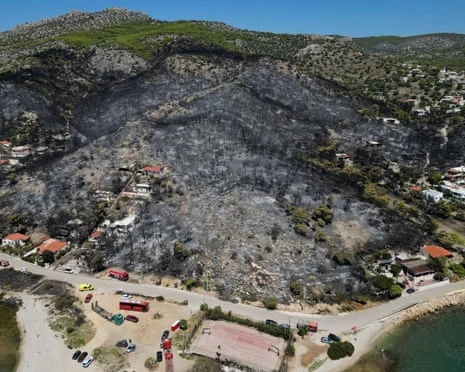
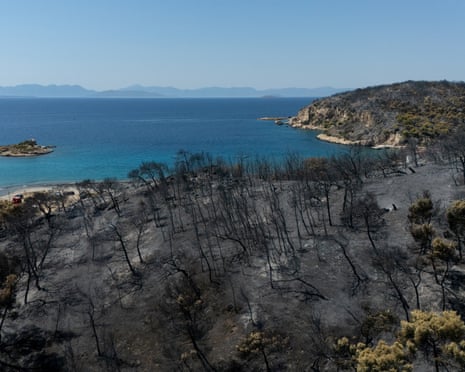
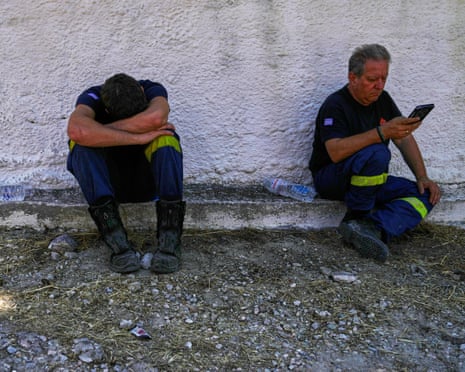
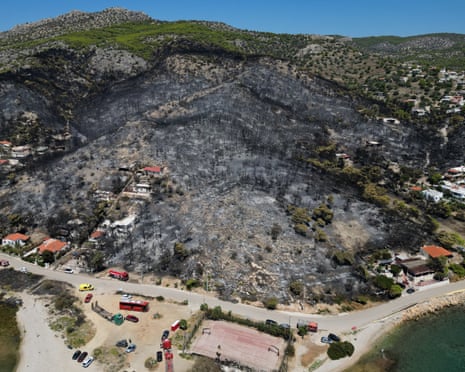
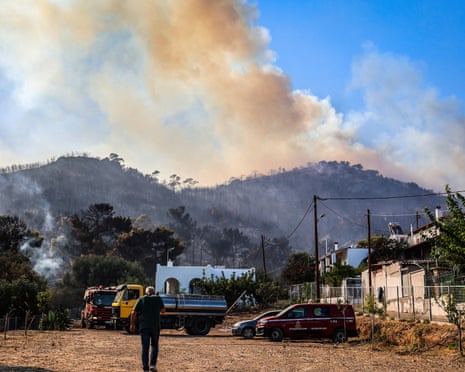
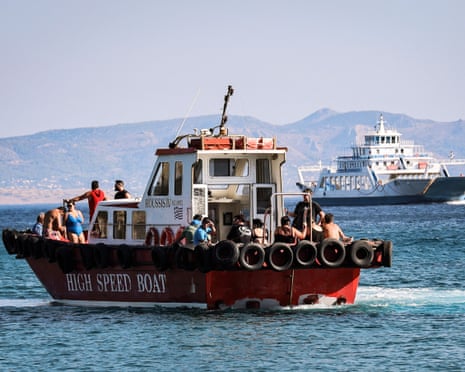
The human toll of the wildfire season continues to mount in the Mediterranean. On the Greek island of Salamis, near Athens, two elderly residents were found dead outside their home over the weekend as flames engulfed the Peristeria beach area. The fire forced the evacuation of nearly 600 people, many of whom were day-trippers rescued from packed beaches by the Greek coastguard and private boat owners.
On Monday, Greek fire services reported that the Salamis blazes had been "largely extinguished," though 200 firefighters and two helicopters remain on the island to prevent flare-ups. However, new fires broke out on Monday morning in Spata, an area east of Athens that houses the city’s international airport, and in the Argithea region of Koropi. While these newer blazes were quickly contained, the constant emergence of new fronts has kept emergency services in a state of high alert.
In Portugal, hundreds of firefighters are currently engaged in a series of battles along the Spanish border. Local media reported that five firefighters were injured near the village of Dine when their vehicle was trapped by shifting flames. Intense blazes are also active in the Boticas and Chavez regions, fueled by a new wave of extreme heat that has pushed temperatures back into the high 30s Celsius (near 100°F).
From Fire to Flood: A New Pattern of Risk
A significant concern raised by senior officials on Monday was the transition from fire risk to flood risk. Prime Minister Lecornu warned that the destruction of vegetation in the Gironde and Landes departments has left the soil unable to absorb water, creating a high probability of flash flooding this coming autumn and winter. "Our disaster can herald another," Lecornu remarked, noting that he has instructed regional authorities to begin flood mitigation planning immediately.
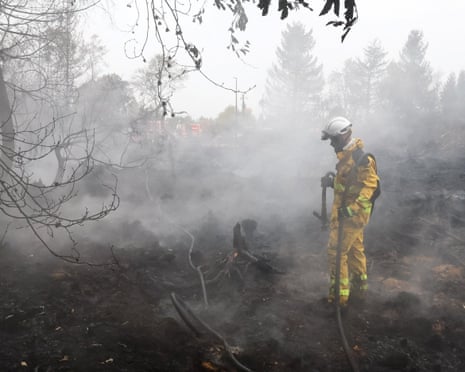
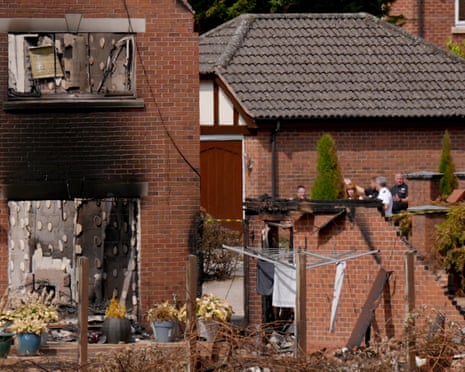
This warning mirrors sentiments expressed by UK officials. In Britain, Housing Secretary Angela Rayner visited the town of Stourbridge in the West Midlands on Monday to survey the remains of 19 homes destroyed by a wildfire last week. Walking through the charred shells of properties, Rayner linked the destruction to a broader climate trend. "We’re seeing a pattern here with the wildfires. We’re seeing a pattern with climate," Rayner told reporters.
The UK Met Office has forecast heavy rainfall and thunderstorms for much of the country later this week. While the rain is expected to provide relief following the UK’s fifth heatwave of the summer, meteorologists warned that intense downpours on dry, parched earth could lead to significant surface flooding. Greater Manchester Mayor Andy Burnham echoed these concerns, citing expert warnings that the El Niño effect could lead to an exceptionally wet winter, turning fire-ravaged landscapes into flood zones.
Broader Implications for European Policy
The recurring nature of these disasters is forcing a reassessment of European environmental and infrastructure policy. In Belgium and France, there are growing calls for "defensive landscaping"—the practice of creating firebreaks and managing forests to reduce fuel loads. Additionally, the head of the Belgian firefighters, Marc Gilbert, has called for a fundamental shift in how the EU manages its aerial resources. Rather than relying on ad-hoc deployments, Gilbert and other fire chiefs are advocating for a permanently stationed, year-round EU fire brigade that can move seamlessly between member states.
As the wildfire risk in Greece is expected to be downgraded to level 2 out of 5 in some regions on Tuesday due to improving weather conditions, the respite is expected to be temporary. The systemic impact of human-caused climate breakdown has essentially extended the wildfire season in Europe from a two-month summer window to a six-month period of high risk.

The political fallout for leaders like Lecornu serves as a warning that the public is increasingly sensitive to the equity of disaster response. As reconstruction begins in France and the UK, and as containment efforts continue in Belgium and Spain, the focus is shifting from immediate survival to long-term resilience. Governments are now under pressure to prove that they can protect all citizens, regardless of economic status, from a climate reality that is becoming more volatile with each passing year.