Amid escalating tensions and competing claims of control over the vital Strait of Hormuz, shipping data offers a nuanced perspective on which power vessels truly fear defying. President Donald Trump has asserted U.S. military dominance over the strait, even suggesting potential territorial claims. Concurrently, Iran insists on its approval for all transits, while the U.S. maintains a naval blockade targeting Iran-linked vessels. These dueling assertions have created a volatile environment, leaving international shipping navigating a complex geopolitical minefield. The question of who holds sway in this critical chokepoint is increasingly being answered not by political rhetoric, but by the observable movements of cargo ships.
Navigating the Fractured Waterway: The Two Principal Routes
Historically, the Strait of Hormuz was viewed as a singular, unified waterway. Ships navigated its passage based on port calls, charter agreements, and safety considerations, largely unconcerned with military implications. However, the escalating conflict and heightened U.S.-Iran tensions have bifurcated this critical maritime artery into two distinct routes. Iran advocates for the northern route, hugging its coastline near Larak and Qeshm Islands, facilitating direct access to Iranian ports and offshore terminals. In contrast, the United States champions the southern route, situated closer to Oman’s shores and further from Iranian territory. This southern corridor is the one officially sanctioned and protected by U.S. naval forces for commercial carriers.
Oil and Gas Traffic: A Data-Driven Snapshot of Vessel Movements
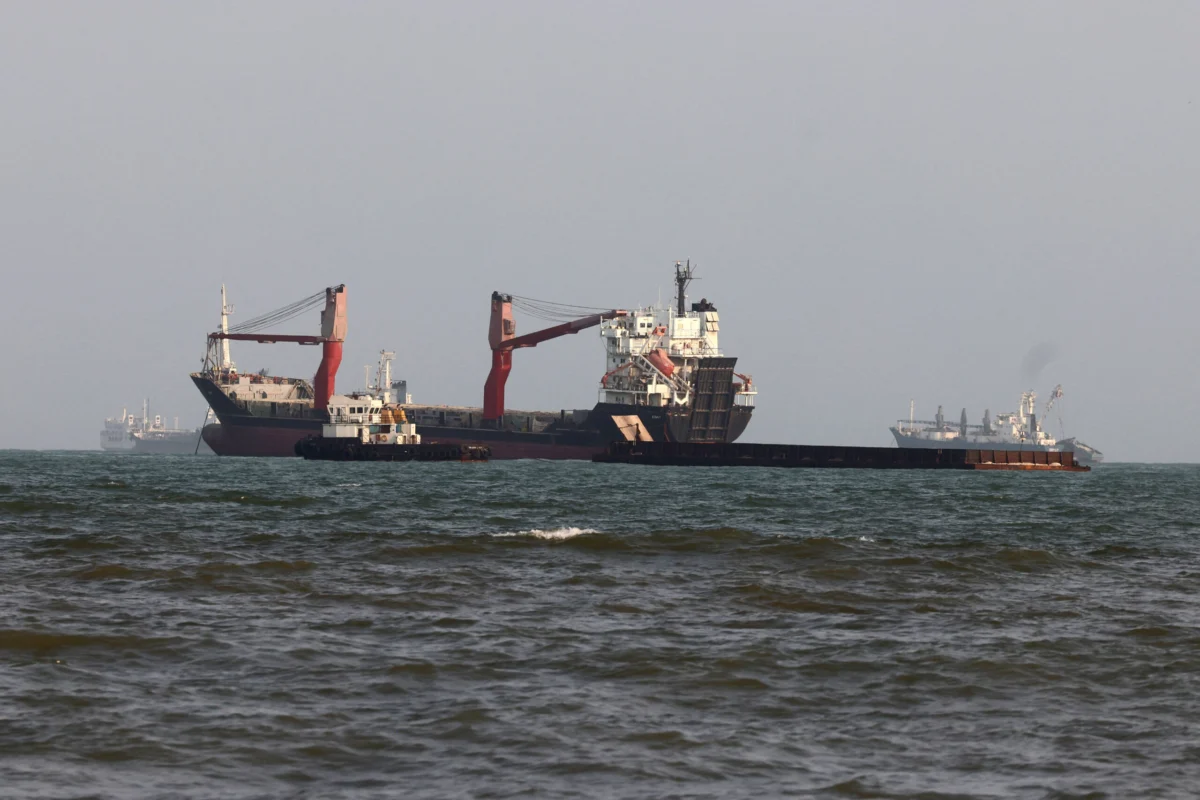
Maritime intelligence firm Kpler has provided crucial data on vessel traffic through the Strait of Hormuz between August 1 and August 19. During this period, 112 vessels carrying crude oil, liquefied petroleum gas (LPG), and liquefied natural gas (LNG) traversed the strait, either entering or exiting the Persian Gulf. Of these, a significant 21 openly utilized the Iranian route, while a mere two formally declared the Omani route.
The most striking finding is that a substantial 89 vessels, representing over 80 percent of all oil and gas traffic, employed "dark" or unclassified routes. This phenomenon occurs when vessels deactivate their Automatic Identification System (AIS) transponders or when their AIS data fails to align with Kpler’s defined Iranian or Omani corridors. Consequently, the precise routing of these vessels remains indeterminate.
"While these transits can be observed once vessels reappear after crossing, the nature of dark routing makes it highly difficult to determine what proportion may also have used the Omani route or to confirm their precise routing from the available data," explained Mohamed Rafik Halitim, a customer success manager for Maritime and Commodities at Kpler. This deliberate obscurity highlights a calculated strategy by shipping operators to evade scrutiny.
Beyond Energy: Broader Cargo Movements Through Hormuz
The patterns observed in oil and gas shipments are mirrored in the broader maritime traffic. Between August 1 and August 19, Kpler recorded a total of 236 ship transits through the Strait of Hormuz. This inclusive figure encompasses vessels carrying dry cargo and chemicals, in addition to energy products.
Within this larger dataset, 83 ships openly navigated the Iranian route, while only three publicly declared the Omani route. An additional two vessels utilized the older, pre-war central route. However, the overwhelming majority – 148 ships, or more than six out of every ten – opted for dark or unknown routes. This trend underscores a pervasive reluctance to be overtly identified within the contested waterway.
In comparison, 35 percent of all vessels openly identified with the Iranian route, while only a small fraction publicly declared adherence to the Omani or pre-war central pathways. This disparity suggests a significant divergence in how vessels perceive and react to the directives of the involved powers.
The Rise of "Dark Routing": Evading Detection and Targeting
The widespread practice of vessels switching off their AIS transponders is a direct response to the tangible threats emanating from both Iran and the United States. Since the onset of hostilities, both nations have engaged in actions against vessels they accuse of violating established maritime protocols. This has led many ships to disable their transponders, thereby stripping away the digital identifiers that military forces use for targeting.
Neil Quilliam, an associate fellow at the Middle East and North Africa Programme at the UK-based think tank Chatham House, noted, "Switching off transponders can reduce the visibility of a vessel’s precise location and movements, although it also creates concerns about maritime safety and transparency." He added, "Some operators believe the commercial and security benefits outweigh those risks under current conditions."
The risks are not theoretical. On August 8, the United Arab Emirates reported that Iran had targeted a tanker owned by the Abu Dhabi National Oil Company (ADNOC) with a missile as it attempted to transit the strait. ADNOC stated that since the conflict began, 15 of its vessels had been attacked by missiles and drones in the strait, resulting in one crew fatality and 20 injuries, though the statement did not assign blame to either side.

The U.S. has also engaged in aggressive actions. Last month, the U.S. military fired upon an oil tanker heading toward Iran’s Kharg Island, citing the vessel’s failure to heed warnings. More recently, on August 11, U.S. Navy helicopters fired Hellfire missiles at the Panama-flagged Vela Nova cargo vessel, asserting it was attempting to breach the U.S. blockade of Iranian ports in the Gulf of Oman.
Beyond evading direct military targeting, turning off transponders facilitates covert ship-to-ship cargo transfers. Energy policy researcher and consultant Marc Ayoub stated, "According to sources and data over the past two weeks, some Gulf countries, including Saudi Arabia, Iraq, and Kuwait, have sent out some shipments through the Omani route by turning off their vessel tracking and by doing ship-to-ship transfers."
This strategy involves a vessel traveling the Omani route with its transponder off, transferring its cargo to another ship outside the strait, which then delivers it to its final destination. The original "dark" vessel then returns to its origin port undetected. Ayoub also indicated that some Iranian vessels are utilizing the Omani route, often with ship-to-ship transfers, to circumvent sanctions and the U.S. blockade. "They send their shipment to Oman through the Omani route, they change the documents of those shipments so that they appear as if they are exported by Oman, and then they send it to the oil market," he explained.
Deconstructing Fear: Iran vs. The U.S. in the Strait of Hormuz
The pervasive use of dark routing makes definitive pronouncements on who "controls" the Strait of Hormuz challenging. However, the available data offers compelling insights into which power vessels are more inclined to defy and whose displeasure they seek to avoid.
Despite the formidable presence of the U.S. Navy and its accompanying blockade, a notable one-fifth of all energy-carrying ships openly transited the Iranian route, implicitly challenging President Trump’s pronouncements. When factoring in vessels carrying general cargo and chemicals, this figure rises to 35 percent openly utilizing the Iranian corridor.
In stark contrast, only two oil and gas ships, and a total of just four vessels across all categories, openly declared passage through a route other than the one designated by Iran. This disparity strongly suggests that the fear of antagonizing Tehran outweighs the perceived threat posed by the United States and its naval blockade.
Is Iran’s Grip on Hormuz Loosening?
Despite the data indicating a greater deference to Iran’s route, experts believe Iran retains significant capabilities to influence maritime traffic in the Strait of Hormuz. "Iran is not losing control in the current status quo," stated Ayoub. However, he cautioned that this situation could prove unsustainable for global oil markets in the long term.
Quilliam concurred, noting, "Iran still retains significant capacity to disrupt maritime traffic and threaten shipping in the Strait of Hormuz." He added, "However, the growing use of alternative logistics arrangements, ship-to-ship transfers, and enhanced regional maritime security measures suggest that Iran’s ability to exert pressure through the strait is not absolute." This implies a complex interplay of traditional power projection and evolving evasion tactics.
The Strategic Significance of the Strait of Hormuz in the Iran War
The Strait of Hormuz is an indispensable maritime chokepoint. Prior to the commencement of the U.S.-led war against Iran on February 28, approximately one-fifth of the world’s oil and LNG supplies flowed through this vital waterway, with an average of 130 ships transiting daily. In August 2026, the total number of ships passing through over 19 days reached 236.
Iran initially closed the strait in early March, permitting passage only for select "friendly" vessels. This situation persisted until the signing of a Memorandum of Understanding (MoU) with the United States on June 17. The status of the strait has since become a pivotal issue hindering negotiations for a lasting peace agreement to end the war.
In parallel, the United States has implemented its own blockade of Iranian ports in and around the strait. The U.S. military’s engagement with vessels accused of attempting to breach this blockade, including the firing on the Vela Nova cargo vessel, underscores the heightened military posture.
The crisis in the Strait of Hormuz has had profound global repercussions, triggering energy shortages and a significant surge in oil prices. Brent crude, the global benchmark, saw its price climb well past $100 per barrel on multiple occasions during the conflict, reaching a high of $119 in March. While prices saw a notable decline following a ceasefire in April and the subsequent MoU in June, renewed tensions have again pushed Brent crude prices upward, standing at $92.9 per barrel on Thursday morning.
"If Tehran’s influence over shipping flows is perceived to be diminishing, this could weaken one of its traditional sources of leverage in negotiations with the U.S.," Quilliam observed. The ongoing dynamic within the Strait of Hormuz, therefore, continues to be a critical factor in the broader geopolitical and economic landscape surrounding the Iran conflict.