The United States has escalated its economic pressure campaign against Cuba, targeting nine state-owned enterprises involved in the critical mining, metal, and construction sectors, alongside three officials from a state-run cultural exchange organization. These latest measures, announced by the U.S. Treasury Department, represent a significant tightening of sanctions aimed at crippling Cuba’s ability to generate revenue and maintain its infrastructure, exacerbating existing economic hardships on the island.
The newly sanctioned entities include Cuba’s Ministry of Construction, a cornerstone of the nation’s infrastructure development and rebuilding efforts. Also targeted are government-controlled import companies that play a vital role in the procurement of essential goods and materials. These sanctions are designed to cut off access to international markets and financial systems for key sectors of the Cuban economy.
Among the most significant targets is GEOMINSAL, a mining group responsible for extracting and trading Cuba’s valuable mineral deposits, including substantial reserves of cobalt and nickel. These minerals are crucial for both domestic industrial needs and for export revenue, making their sanctioning a direct blow to the island’s economic potential. The U.S. Treasury’s action aims to disrupt any international trade or investment related to these resources.
In addition to the corporate entities, three leaders affiliated with the Cuban Institute of Friendship with the Peoples (ICAP) have been placed on the sanctions list. ICAP, a state organization tasked with fostering international relations and promoting Cuba’s image abroad, is accused by U.S. officials of facilitating illicit activities.
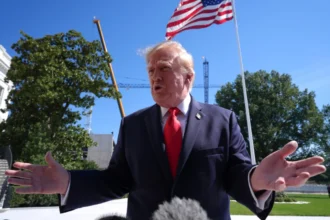
The Trump administration has framed these sanctions as necessary measures against national security threats. Secretary of State Marco Rubio, a vocal critic of the Cuban government, asserted that the targeted mining and construction companies are instrumental in supporting what he described as the "regime’s repressive apparatus."
Rubio further alleged that ICAP is orchestrating a "subversive network" of international sympathizers. He claimed this network is used to undermine U.S. interests and promote ideologies deemed hostile by the administration.
"The Trump Administration will not stand by while a hostile foreign power seeks to exploit our freedoms—none of which are afforded to its people—by misleading and corrupting American citizens with lies, spy tradecraft, and other malfeasance," Rubio stated in an accompanying declaration. He specifically accused ICAP of aiding Cuba’s efforts to "export Marxism, racial resentment, and Communist violence across the world."
A Strategy of Maximum Pressure
These latest sanctions are part of a broader "maximum pressure" strategy initiated by the Trump administration, designed to compel a fundamental change in Cuba’s political system and governance. This approach has intensified existing U.S. policies aimed at isolating Cuba, which have been in place for decades due to ideological and political differences.
The heightened pressure on Cuba gained momentum following specific geopolitical events, with President Trump reportedly shifting focus to the island nation. Cuba, situated a mere 90 miles off the coast of Florida, has been governed as a socialist state under the one-party rule of the Communist Party since the mid-20th century.
Statements from the Trump administration earlier this year indicated a clear intention to exert significant leverage over Cuba, with suggestions that the island would be a primary focus for regime change efforts once other foreign policy objectives were met. Reports have also surfaced regarding negotiations with Cuban officials, with indications that the administration explored scenarios including the resignation of Cuban President Miguel Diaz-Canel.
Impact on Cuba’s Fragile Economy
The cumulative effect of these stringent measures has been a severe strain on Cuba’s already fragile economy. The administration’s strategy has included a de facto fuel blockade, initiated in January, which drastically curtailed Cuba’s oil supply, particularly from Venezuela. The U.S. has also threatened tariffs on any nation that exports fuel to the island, leading to a significant reduction in energy imports. Consequently, only a minimal number of oil tankers, primarily from Russia, have managed to dock in Cuba since the blockade began.
In May, an executive order was signed, granting the U.S. government broad authority to impose sanctions on individuals and entities deemed "responsible for repression" in Cuba. Thursday’s sanctions directly cite this order as their legal basis, underscoring the administration’s commitment to this punitive approach.
Cascading Consequences: Blackouts and Shortages
The economic warfare waged by the United States has had tangible and devastating consequences for the Cuban population. Energy blackouts have become increasingly frequent, disrupting daily life and essential services. Furthermore, critical shortages of basic goods, including vital medicines, have become commonplace, raising alarms about a potential humanitarian crisis.
International Condemnation and Warnings
United Nations officials have voiced grave concerns over the impact of these U.S. sanctions on the Cuban people, warning of the potential for a widespread humanitarian crisis. In March, a group of UN experts characterized the fuel blockade as an illegal form of "energy starvation."
Following this, UN Human Rights Commissioner Volker Turk highlighted alarming trends in Cuba’s public health indicators. He pointed to accelerating infant mortality rates and a decline in survival rates for children battling cancer. Turk directly attributed these deteriorating health outcomes to the escalating restrictions imposed by the U.S.
"The fuel restrictions imposed since early 2026 and recent tightening of extraterritorial sanctions, taken together, are directly harming Cubans, especially the most vulnerable," Turk stated. "These sanctions must be lifted immediately."
U.S. Justification and Continued Enforcement
Despite international appeals and warnings of humanitarian consequences, the Trump administration maintains that its sanctions are a necessary response to perceived national security threats posed by Cuba. U.S. officials argue that the Cuban government’s actions and alliances necessitate a robust economic blockade to protect American interests and promote democratic values.
The newly sanctioned entities, particularly those in mining and construction, are seen by the U.S. as integral to the Cuban state’s ability to fund its operations and projects, which the administration views as detrimental to regional stability and U.S. security. The targeting of ICAP officials reflects a broader U.S. strategy to counter what it perceives as Cuban efforts to exert influence and ideological sway internationally.
The Broader Geopolitical Landscape
These measures unfold against a backdrop of complex geopolitical dynamics. The U.S. has historically viewed Cuba through the lens of its Cold War-era rivalry, and the current administration has sought to reassert American dominance in the Western Hemisphere. The sanctions also reflect a broader U.S. foreign policy aimed at challenging governments perceived as adversarial or aligned with U.S. rivals.
The future trajectory of U.S.-Cuba relations remains uncertain, with the current administration’s unwavering commitment to its "maximum pressure" policy suggesting a continued escalation of economic sanctions. The impact on the Cuban people, already enduring significant hardship, is likely to deepen, potentially leading to further social and economic instability on the island. The international community’s response and the resilience of the Cuban government will be critical factors in shaping the ongoing situation.