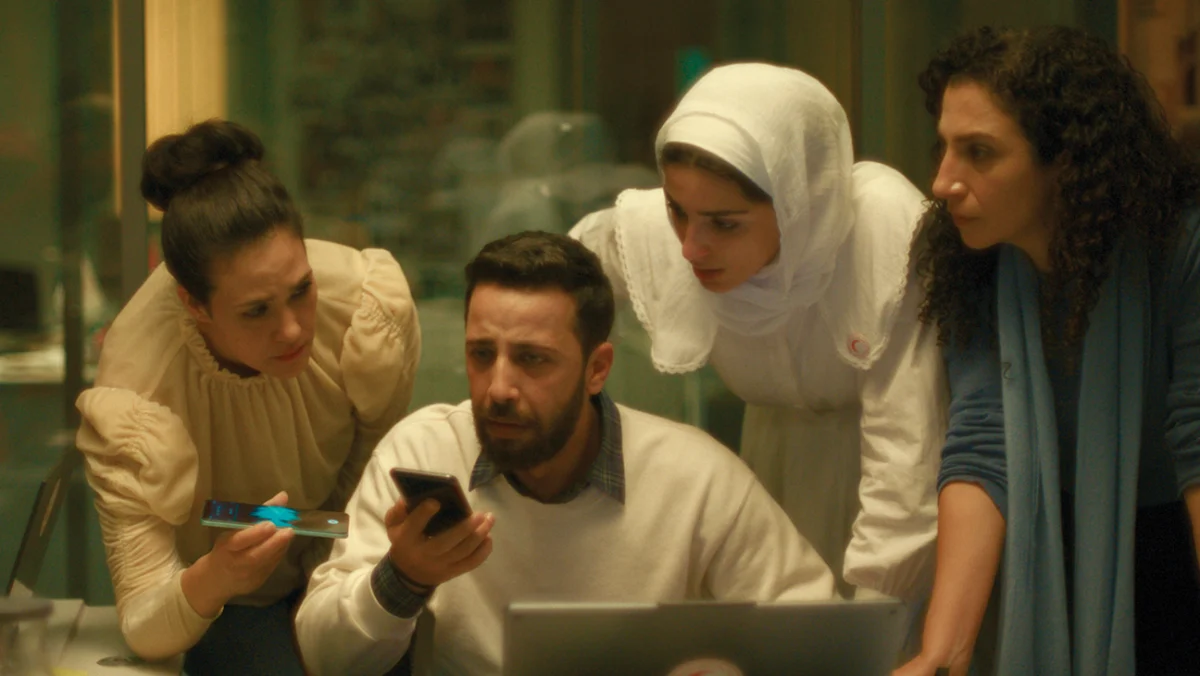
The director of the Oscar-nominated docudrama The Voice of Hind Rajab, Kaouther Ben Hania, has vehemently criticized the Israeli military’s recently announced investigation into the death of 5-year-old Palestinian girl Hind Rajab, labeling the probe a "smokescreen." Rajab was killed in January 2024 after Israeli forces reportedly fired on her family’s car in Gaza City, an incident that also claimed the lives of her relatives and two paramedics dispatched to rescue her. Ben Hania’s remarks, shared via Instagram, question the sincerity and timing of the investigation, which comes months after the tragic event garnered widespread international attention.
Ben Hania specifically questioned the significant delay in launching the inquiry, highlighting that extensive evidence has been publicly available for over two years. This evidence, according to the director, includes independent investigations, detailed satellite imagery, and ballistic analysis. Most powerfully, she cited "Hind’s own voice" as the most devastating proof, referring to the harrowing audio recordings of the child describing Israeli tanks surrounding her family’s vehicle. The director expressed incredulity that an investigation would only commence when the "accused" decided to examine its own conduct, especially given the existing body of facts.
The Tragic Incident and Hind’s Last Moments
The incident unfolded in late January 2024, amidst intense Israeli military operations in Gaza City. Hind Rajab, her maternal uncle, his wife, and their four children were attempting to flee their neighborhood in a black Kia car when they encountered Israeli forces. Accounts from survivors and later investigations suggest the vehicle came under direct fire. All occupants of the car, except Hind, were killed almost immediately.
Trapped and terrified, Hind made a desperate phone call to the Palestinian Red Crescent Society (PRCS), her voice recorded as she pleaded for help. During the call, Hind relayed that her 15-year-old cousin, Layan Hamada, who was also alive at the time, had been shot and killed. The PRCS recorded Layan’s frantic whispers and the sounds of gunfire before her voice went silent, followed by Hind’s increasingly distressed pleas. Hind remained on the phone for approximately three hours, communicating with PRCS dispatchers, who tried to reassure her and coordinate her rescue.
The PRCS dispatched an ambulance team, Yusuf al-Sultan and Ahmed al-Madhoon, to Hind’s location. Despite receiving coordination for their passage from Israeli authorities, the ambulance lost contact shortly after reaching the vicinity of the family’s car. Days later, when Israeli forces withdrew from the area, both the ambulance and the Kia car were found completely destroyed. All six family members inside the car, including Hind, were dead. The two paramedics were also found dead inside the ambulance, which bore extensive damage consistent with shelling.
"The Voice of Hind Rajab": A Cinematic Call for Justice
Kaouther Ben Hania’s docudrama, The Voice of Hind Rajab, draws heavily on these devastating audio recordings and other documented evidence to reconstruct the events surrounding Hind’s death. The film uses a blend of documentary footage, animation, and dramatic reconstruction to tell the story, aiming to humanize the immense toll of the conflict on Palestinian civilians, particularly children. The inclusion of Hind’s actual voice, a raw and undeniable testament to her final moments, forms the emotional core of the film.
The film has garnered significant international acclaim, receiving nominations for prestigious awards such as the Oscars and BAFTAs, and winning a grand jury prize at the Venice Film Festival. Its success underscores the global resonance of Hind’s story and the broader humanitarian crisis in Gaza. Ben Hania has consistently used the platform provided by the film’s recognition to advocate for accountability and justice for victims of the conflict. She has framed the film not just as a narrative piece, but as a critical tool for global awareness and a catalyst for change, emphasizing that "we can’t live in a world without accountability."
Israeli Military’s Internal Probe and Criticisms
This week, the Israeli military acknowledged firing at the Rajab family’s car and the ambulance dispatched to assist them. It announced the launch of an investigation into its troops’ conduct during the incident. Such internal investigations by the Israel Defense Forces (IDF) are typically conducted by the Military Advocate General’s Corps and are meant to examine potential breaches of military law or rules of engagement.
However, the nature and timing of this announcement have drawn sharp criticism not only from Ben Hania but also from Hind Rajab’s mother, Wesam Hamada. Hamada echoed Ben Hania’s sentiments, questioning why it took over two years for the investigation to be launched and for the military to acknowledge its role in the shooting. Speaking to the Associated Press, Hamada asserted that the probe is merely an "attempt to distract from what’s happening in Gaza and improve the (Israeli) army’s image to the world."
Critics argue that internal military investigations often lack the necessary impartiality and transparency required for credible accountability, particularly in complex conflict zones where allegations of war crimes are prevalent. Human rights organizations and international legal bodies frequently call for independent, external investigations into incidents involving civilian casualties to ensure objectivity and public trust.
Broader Implications: Accountability and International Law
Ben Hania’s criticism extends beyond Hind Rajab’s specific case, touching upon the wider landscape of accountability for Palestinian deaths in Gaza. She highlighted that the cases the Israeli military chooses to investigate are often those that "international public opinion has made impossible to ignore." This selective approach, she argued, leaves countless other deaths unexamined, their victims remaining nameless and their stories unheard due to what she termed "international indifference."
The director’s comments align with concerns raised by numerous human rights groups, including Amnesty International and Human Rights Watch, which have consistently called for independent probes into alleged Israeli military abuses in Gaza and the West Bank. These organizations argue that Israel’s internal investigative mechanisms frequently fail to deliver justice for Palestinian victims, leading to a culture of impunity. They point to patterns of insufficient investigations, delayed proceedings, and a low rate of indictments or convictions for military personnel involved in civilian deaths.
Under international humanitarian law, parties to an armed conflict are obligated to investigate alleged violations, especially those involving civilian harm, and to prosecute those responsible. The principle of command responsibility also holds commanders accountable for crimes committed by their subordinates if they knew or should have known about them and failed to prevent them. The perceived lack of independent accountability mechanisms can lead to calls for international bodies, such as the International Criminal Court (ICC), to step in and exercise jurisdiction. The ICC has an ongoing investigation into the situation in Palestine, though Israel does not recognize its jurisdiction.
The Context of Escalating Conflict
The incident involving Hind Rajab occurred within the broader context of the ongoing Israeli military offensive in Gaza, launched in response to the October 7, 2023, attacks by Hamas. The conflict has resulted in an unprecedented scale of destruction and loss of life in Gaza, with tens of thousands of Palestinians killed, a significant portion of whom are women and children. The United Nations and various aid organizations have repeatedly warned of a dire humanitarian crisis, including widespread famine and displacement.
Ben Hania explicitly connected Hind’s death to this larger conflict, stating that "the Israeli military continues to kill Palestinians in Gaza, while the occupation intensifies in the West Bank." This framing positions Hind’s story not as an isolated tragedy, but as emblematic of a systemic issue within the ongoing Israeli-Palestinian conflict, where civilian protection and accountability remain deeply contentious issues.
The Push for Independent Justice
Both Kaouther Ben Hania and Wesam Hamada are united in their demand for an independent authority to deliver justice for Hind and all victims in Gaza. They believe that only an external, impartial body can conduct a thorough and credible investigation that would satisfy international legal standards and provide a measure of closure for affected families.
The director expressed hope that her film could contribute to a future where accountability is paramount. She told The Hollywood Reporter earlier this year that she hopes "this film can be part of the change. Because we can’t live in a world where just because you have the biggest gun, you rule the world." This sentiment underscores a broader global movement advocating for international law and human rights to prevail even in the most challenging conflict zones. As the Israeli military’s internal investigation proceeds, international scrutiny and calls for genuinely independent oversight are expected to intensify, keeping the focus on justice for Hind Rajab and countless others.