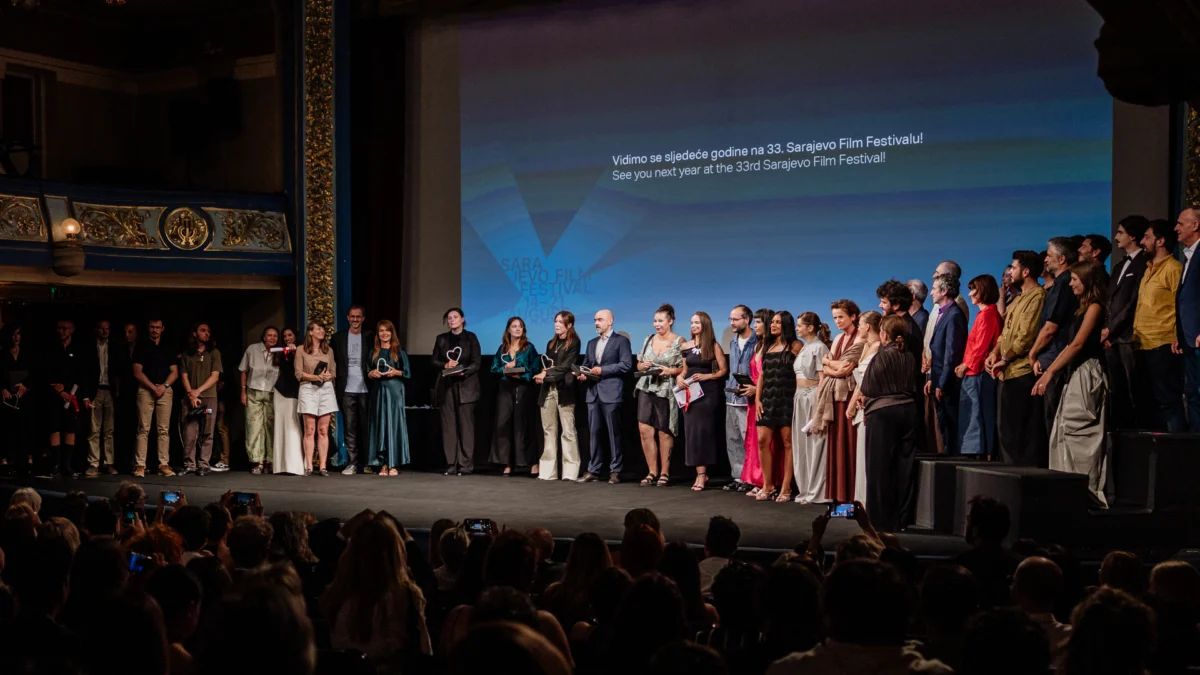
Austrian filmmaker Sandra Wollner’s poignant drama Everytime has been honored with the prestigious Honorary Heart for Best Narrative Feature Film at the 32nd Sarajevo Film Festival, securing a significant win at the renowned cinematic event. The festival, which concluded its latest edition on Friday night, also celebrated Georgian director Ana Urushadze, who received the Best Director award for her critically acclaimed film Supporting Role, further highlighting the diverse talent emerging from Central and Eastern European cinema.
A Resonant Victory for ‘Everytime’
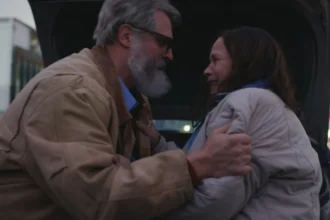
Sandra Wollner, alongside producers Lixi Frank, Viktoria Stolpe, and David Bohun, accepted the top prize for Everytime, which came with a cash award of 16,000 Euros. The film, led by Birgit Minichmayr, delves into the complex dynamics of a grieving family. It follows a mother, her young daughter, and a teenage boy as they journey to Tenerife, a desperate attempt to process the tragic death of their eldest daughter and sister. The narrative masterfully explores themes of loss, resilience, and the subtle ways individuals navigate profound emotional landscapes.
The jury, a distinguished panel that included Igor Bezinović, Sara Klimoska, Matthijs Wouter Knol, and Athina Rachel Tsangari, and was notably presided over by acclaimed British actress Emily Watson, lauded Everytime with unanimous praise. They described the film as a "mesmerically elastic and transcendental grief-soaked ghost story," emphasizing its moments of "cinematic grace." This commendation underscores the film’s unique approach to a universal human experience, blending raw emotion with a compelling, almost ethereal narrative style.
Exploring Grief and Trauma on Screen
Wollner, in an interview conducted in Sarajevo during the festival, reflected on the profound historical context of the event itself. She remarked on the festival’s powerful origins, having been founded amidst the siege of Sarajevo in 1995. Wollner noted that this unique history continues to resonate, shaping a distinct approach to storytelling, particularly concerning themes of trauma and loss. She recounted feeling this distinct sensibility during a radio interview, where questions about her film revealed a different cultural perspective on dealing with profound emotional wounds. This observation highlights how the festival, born from adversity, fosters an environment where filmmakers and audiences engage with difficult subjects through a lens of shared historical understanding and empathy. The significant financial prize awarded to Everytime not only recognizes its artistic merit but also provides crucial support for future projects from Wollner and her team, underscoring the festival’s role in fostering independent filmmaking.
Ana Urushadze’s Directorial Triumph
The Best Director prize, accompanied by a 10,000 Euro award intended to support her next cinematic endeavor, was bestowed upon Georgian filmmaker Ana Urushadze for her work on Supporting Role. Urushadze’s film introduces Niaz Ninua, portrayed by Dato Bakhtadze, a once-prominent Georgian film star whose career is now in decline. Accustomed to heroic lead roles, Niaz finds his artistic comfort zone challenged when a young, female director offers him a part as a bizarre and deeply unsympathetic character in her debut feature. Initially offended and unconvinced by the role, Niaz embarks on an introspective odyssey through the city, gradually surrendering to the transformative power of the character.
A New Voice in Georgian Cinema
Urushadze previously spoke about her film’s core message, stating that it is "ultimately a film about realizing the elusive nature of reality, and taking control of your life." This thematic depth resonated strongly with the jury, who expressed their enchantment with her "irreverent blending of the banal and the oneiric." Urushadze’s win signals a growing recognition for Georgian cinema on the international stage, known for its distinct artistic voice and often surreal, philosophical narratives. Her ability to craft a story that is both grounded in human experience and infused with dreamlike qualities positions her as a significant emerging talent to watch. The prize money will serve as a vital catalyst for her continued creative output, enabling her to further explore her unique vision and contribute to the rich tapestry of global independent film.
Honoring Cinematic Contributions
Beyond the competitive awards, the Sarajevo Film Festival also paid tribute to a luminary of regional cinema, Emir Hadžihafizbegović. One of the most prominent actors in Bosnian-Herzegovinian and broader regional cinema, Hadžihafizbegović was awarded an Honorary Heart of Sarajevo in recognition of his enduring contributions to the art form. He joined a distinguished roster of cinematic icons who received similar accolades this year, including jury president Emily Watson, Diego Luna, Woody Harrelson, and Iranian director Asghar Farhadi. These lifetime achievement awards underscore the festival’s commitment to celebrating the legacies of artists who have profoundly shaped the cinematic landscape. The festival officially concluded with a special screening of a restored version of No Man’s Land by Bosnian director Danis Tanović, a powerful and fitting choice given its historical significance and status as an Academy Award-winning film.
Acting Accolades
The individual acting categories also saw new talents recognized for their powerful performances. Eva Kostić was honored with the Best Actress award for her compelling role in 17, earning her 2,500 Euros. The jury lauded her performance as "a fearless emergence of a young talent. Raw, visceral and deeply instinctive," highlighting her natural ability to inhabit complex characters. Simultaneously, Adrian Văncică took home the Best Actor prize for his work in You Don’t Belong Here, receiving the same cash prize. His performance was commended by the jury for its "tenacity and understated rigour," indicating a nuanced and powerful portrayal that left a lasting impression. These awards not only celebrate individual achievements but also bring wider attention to the films themselves, promoting their visibility within the international film community.
Documentary Filmmaking Shines in Sarajevo
The documentary film section, overseen by a jury led by Palestine’s Kamal Aljafari, alongside Austrian Sabine Gebetsroither and U.K. film editor Ollie Huddleston, recognized several impactful works. The Heart of Sarajevo for Best Documentary Feature was awarded to To Hold a Mountain, a collaborative effort by Biljana Tutorov and Petar Glomazić, who received 4,000 Euros. The jury praised the film for its "astonishingly epic cinematography" and described it as a "touching portrait of two extraordinary women and a disappearing way of life." They noted how the subjects, "tied together by a traumatic past," embarked on an "unforgettable journey" to save their mountain, highlighting themes of environmentalism, heritage, and the human spirit.
Voices of Defiance and Resilience
In the short documentary category, Croatia’s Karla Jelić received the Heart of Sarajevo for her project Holy Defiance, along with 2,000 Euros. This film was commended by the jury as a "short and extremely powerful film" featuring "a brave act of defiance against resurgent male misogyny." The jury explicitly saluted the "courageous artist who stood alone against reactionary crowds trying once again to confine society and silence women," underscoring the film’s critical social commentary and its fearless stance against gender inequality. Additionally, the Special Jury Award in this selection went to Zhora Papoian for The Ferry Flows, earning 2,500 Euros. The jury lauded this short film for its ability to convey stories through images "without being didactic," allowing viewers "time and space to experience the lives of a music teacher and his pupils who are forced to endure grief and loss as part of their daily lives." These documentary awards reflect the festival’s dedication to showcasing films that not only entertain but also provoke thought and shed light on pressing social and cultural issues.
Nurturing New Talent and Diverse Perspectives
The festival also highlighted a broad spectrum of emerging talent across various categories. The award for Narrative Short Film went to Tamara Todorović for Nobody Said Anything, with a special mention given to Sis Gürdal’s Porkatal. In the student film category, Réká Pinczés’s Unwellness was recognized, signaling the vibrant future of cinema. A Special Award for Promoting Gender Equality was presented to Kosara Mitić for 17, with a special mention to Helena Maksyom for Don’t Ask Me If I Killed. The Special Youth Perspectives Award went to Dima Duma for Skateboarding Is Not for Girls, emphasizing the festival’s commitment to youth-focused storytelling. Finally, the Katrin Cartlidge Foundation Award, which supports new talent, was presented to Lana Daher. These diverse awards collectively illustrate the Sarajevo Film Festival’s comprehensive approach to nurturing and celebrating cinematic artistry at every level, from established directors to promising newcomers.
The Sarajevo Film Festival’s Enduring Legacy
The 32nd Sarajevo Film Festival, held in the city’s historic National Theatre for its closing ceremony, continued its legacy as a pivotal platform for cinema from Southeast Europe and beyond. Founded under extraordinary circumstances, it has evolved into a vital cultural institution that not only showcases groundbreaking films but also fosters dialogue, promotes cultural exchange, and supports the development of regional film industries. The accolades for Everytime and Supporting Role, alongside the recognition of numerous other talents, underscore the festival’s commitment to artistic excellence and its role in bringing diverse narratives to a global audience. The event serves as a powerful reminder of cinema’s capacity to transcend borders, heal wounds, and reflect the multifaceted human experience, making it a cornerstone of the international film calendar.