The United States has officially removed Syria from its "state sponsors of terrorism" list, a significant development that analysts believe will pave the way for the war-torn nation’s reintegration into the global financial system. This decision marks the dismantling of one of the last major obstacles hindering Syria’s economic recovery and its access to international financial markets.
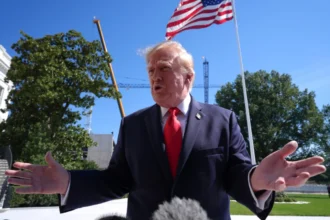
The formal delisting, completed on Monday, followed President Donald Trump’s September 12 notification to Congress of his intent to rescind Syria’s designation, a status that had been in place since 1979. A mandatory 45-day congressional review period concluded without objection, cementing the end of this long-standing punitive measure. While the U.S. had previously eased some restrictions on transactions with Syrian banks, the "terrorism" designation carried a heavier weight, imposing additional financial and trade limitations. For a country still grappling with the devastation of a nearly 14-year conflict, this removal offers a much-needed economic lifeline.
Longstanding Sanctions and Shifting Geopolitics
Syria’s designation as a state sponsor of terrorism dates back to the presidency of Hafez al-Assad, initially due to its alleged support for Palestinian armed groups. Relations between Damascus and Washington deteriorated further following the U.S. invasion of Iraq in 2003. The diplomatic rupture deepened in 2012 when the U.S. closed its embassy in Syria, a year after nationwide protests against the al-Assad regime escalated into a brutal civil war.
Throughout the ensuing conflict, Syria faced increasing international isolation, with a cascade of sanctions imposed by various global powers. The recent collapse of the al-Assad regime in December 2024, leading to a new transitional government comprised of former rebel factions, has accelerated efforts to mend international ties. A primary objective of this new administration has been to lift these restrictive measures, a goal that has now been substantially achieved with the U.S. action.
Notably, Syrian President Ahmed al-Sharaa and his former rebel group, Hayat Tahrir al-Sham, were also previously targeted by U.S. sanctions, which have since been lifted. Despite this shift away from isolation, Syria’s economy remains in a precarious state, with an estimated 90 percent of its population living below the poverty line.
Obai Kurd Ali, a Syrian expert with the Tahrir Institute for Middle East Policy, emphasized the decades-long impact of the "state sponsor of terrorism" designation. "For nearly five decades, Syria’s designation as a state sponsor of terrorism resulted in severe restrictions on financing and exports and contributed to significant hesitation and overcompliance among banks and investors who were reluctant to engage with Syria, fearing secondary sanctions," Kurd Ali told Al Jazeera.
He further highlighted the human cost: "People in Syria are suffering from severe poverty and a deteriorating economic situation with decent living standards becoming unaffordable day after day. For Syrians, any step that may lead to better living conditions is worth celebrating, and removing [the] designation is not only one such step but also one of the final major actions toward dismantling the complex web of U.S. sanctions that isolated Syria for so long."
"Great Momentum" for Syria’s Economic Revival
Vittorio Maresca di Serracapriola, sanctions lead analyst for Karam Shaar Advisory, sees the U.S. decision as creating "great momentum" for Syria’s economic prospects. The removal of the designation significantly reduces legal risks for international banks and investors considering financial dealings or transactions with Syria. It also opens new avenues for U.S. foreign assistance and government contracting, potentially facilitating development and reconstruction efforts.
"The removal of restrictions on U.S. foreign assistance and government contracting has the potential to open additional channels for development and reconstruction support," Maresca di Serracapriola stated, adding that "the biggest impact will likely be on financial flows and investment." International financial institutions often cited the "terrorism" designation as a primary reason for their reluctance to engage with Syrian banks, contributing to a cycle of financial isolation.
The timing of the U.S. decision is particularly significant, coinciding with other positive developments for Syria’s financial sector. The Central Bank of Syria reactivated its account at the Federal Reserve Bank in New York in March, and more recently, the World Bank approved a $100 million grant aimed at modernizing Syria’s financial sector. These concurrent events suggest a coordinated effort to reintegrate Syria into the global financial architecture.
Ibrahim Kochaji, a Syrian banking and economic expert, described the lifting of sanctions as a "pivotal moment in the trajectory of the national economy." However, he cautioned that it is "not an immediate remedy" for the country’s deep-seated economic challenges. Kochaji stressed that a genuine resolution will necessitate a "long path of reforms and measures," underpinned by stability and effective governance.
Echoing this sentiment, Kurd Ali urged the transitional government to capitalize on this opportunity. "The transitional government must seize this opportunity to put its own house in order," he advised. "Good governance, transparency, robust anticorruption measures and meaningful judicial reform are essential to regain investors’ confidence and ensure that investment contributes to a sustainable and inclusive recovery that puts people’s priorities at its heart."
Potential Impacts on Daily Life and Future Challenges
The fall of the al-Assad regime was met with widespread relief and celebration across Syria. Many Syrians have reported improvements in their day-to-day lives since the regime’s collapse, yet persistent frustrations remain regarding soaring energy costs and a sluggish local economy.
Kochaji anticipates that the removal of sanctions will eventually translate into tangible improvements for Syrians, though he cautions that the impact will be gradual. "The realistic answer is that the impact will be gradual, but it can become tangible if the government manages the transition wisely," he explained. If handled effectively, this could lead to reduced production and transportation costs, the creation of new job opportunities, and an overall uplift in living standards.
While the primary economic barriers have been lowered, analysts remain cautious about the immediate rebound of Syria’s banking sector. Maresca di Serracapriola pointed out that international banks and investors will continue to scrutinize Syria’s anti-money-laundering and counter-financing of terrorism frameworks, its overall risk environment, and general governance and political stability. "So that will not necessarily shift the picture entirely with respect to banking," he concluded.
The path forward for Syria’s economy is complex and will require sustained effort from both the government and the international community. The removal of U.S. sanctions represents a critical step, but it is the implementation of sound economic policies and robust governance that will ultimately determine the extent of recovery and the tangible benefits for the Syrian people. The focus now shifts to how effectively the transitional government can leverage this newfound access to global markets and financial resources to rebuild its devastated nation and improve the lives of its citizens.