Israeli forces raided a United Nations agency facility in occupied East Jerusalem, a move officials and analysts are identifying as a critical step in dismantling international refugee protections and consolidating control over the West Bank, with a strategic aim to advance annexationist goals. The incursion into the Qalandiya Training Centre, operated by the UN Relief and Works Agency for Palestine Refugees in the Near East (UNRWA), was led by far-right National Security Minister Itamar Ben-Gvir. Israeli authorities justified the action under legislation passed in October 2024 that bans the UN agency, drawing sharp condemnation from Qatar, which warned of systematic efforts to strip millions of Palestinians of essential services.
Strategic Annexation and Territorial Ambitions
The raid on the UNRWA facility, situated on the boundary line between East Jerusalem and the West Bank, is seen by Israeli affairs expert Adel Shadid as part of a larger geopolitical scheme. Shadid highlighted the facility’s proximity to the historic Qalandiya Airport, an area Israel aims to control for significant settlement expansion. "The occupation aims to gain complete control over the airport adjacent to the institute to establish a massive settlement comprising over 9,000 settlement units in addition to a Jewish heritage centre and to erase the historical and geographical Jordanian landmarks of the airport," Shadid told Al Jazeera.
This expansionist agenda, according to Shadid, is designed to complete the pillars of the "Greater Jerusalem" project. This initiative, if realized, would annex between 12 to 13 percent of the West Bank’s total area. The control over these two adjacent areas, the training center and the airport, would allow the Israeli municipality to command an area exceeding 800 square kilometers (310 square miles). Such a territorial consolidation would effectively sever Palestinian geographical continuity and undermine any prospect of an independent Palestinian state. Shadid asserted that the ultimate objective extends beyond preventing statehood, aiming explicitly to preclude any independent Palestinian entity or presence on the land.
Encirclement and Isolation of Palestinian Hubs
Retired Lebanese Brigadier General and military analyst Elias Hanna corroborated this assessment, pointing to a pattern of tactical encirclement of Palestinian urban centers. Hanna explained that the strategic importance of Qalandiya is intrinsically linked to the broader settlement project in the West Bank. This project is characterized by the establishment of settlement blocs designed to control geographical continuity between Palestinian areas and to isolate them from one another. The control over the Qalandiya area, Hanna noted, could significantly impact movement and connectivity between Jerusalem and Ramallah, two vital Palestinian cities.
Targeting Refugee Rights and UNRWA’s Mandate
The raid represents an unprecedented affront to UNRWA’s institutional mandate and operational framework. Adnan Abu Hasna, UNRWA’s media advisor, described the takeover as a violation of established protocols and international law. "UNRWA was not informed [in advance] of any action by the Israeli government against the UNRWA institute and complex in Qalandiya," Abu Hasna stated. He emphasized that the lowering of the UN flag and the seizure of the headquarters in such a manner is a dangerous escalation against international humanitarian law, UN laws, and the agency’s mandate conferred by the UN General Assembly.
Abu Hasna underscored that the raid contravenes a historic bilateral agreement signed between UNRWA and Israel on June 14, 1967. This agreement stipulated the facilitation of UNRWA’s operations and the protection of its facilities, employees, and headquarters, granting them immunity and privileges. "Unfortunately, all of this has ended now under the weight of escalating Israeli measures," he lamented.

UNRWA plays a crucial role in providing essential services, including education, healthcare, social services, and microfinancing, to millions of Palestinian refugees. The agency is currently grappling with a severe financial crisis, exacerbated by significant defunding campaigns, particularly by the United States. Abu Hasna cited the Trump administration and Republican lawmakers’ decision to cut $360 million, representing approximately 30 percent of UNRWA’s annual budget, as a major blow to its operational capacity. This financial strain, coupled with Israeli raids, destructions of facilities, and operational restrictions, severely jeopardizes the agency’s ability to fulfill its humanitarian mission.
Deepening Settler-Military Cooperation
The operational dynamics on the ground reveal a deepening alignment between Israeli state forces and armed settler groups, according to Israeli affairs specialist Anas Abu Arqoub. He described this as a division of roles characterized by complete integration. "The settler phenomenon…[is] in fact armed organisations with a clear leadership hierarchy, a system of regular and reserve fighters called upon when needed, and they possess a military combat doctrine," Abu Arqoub explained. He noted that a substantial portion of these settlers are drawn from within the Israeli army, utilizing its weaponry and undergoing joint military training.
This convergence has severe implications, as recognized by Israeli research institutions. The Institute for National Security Studies, for instance, has pointed out the capacity of this settler military force to execute complete ethnic cleansing in the West Bank, often under the guise of "loss of control." This collaboration suggests a coordinated strategy that blurs the lines between state policy and vigilante actions, further entrenching Israeli control and displacing Palestinian populations.
International Impunity and US Influence
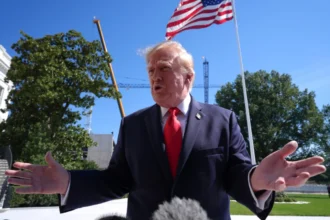
The impunity with which these actions are carried out is directly linked to international backing, particularly from the United States, according to Birzeit University political science Professor Ghassan Khatib. Khatib identified the weakness of the United Nations’ position as one of two primary factors driving Israel’s defiance of international law and violation of Palestinian rights. "The first and most important factor is the American position, the actual sponsor of this Israeli rebellion," Khatib stated. He observed a direct correlation between the escalating pace of Israeli violations and the re-election of Donald Trump to the U.S. presidency approximately two years ago.
This U.S. support, according to Khatib, emboldens Israel to pursue its territorial ambitions and undermine international legal frameworks. The integration of settler militias into the occupation system, he warned, poses an escalating danger to the region and the prospects for peace. The international community’s response, or lack thereof, has created an environment where such aggressive expansionist policies can proceed with minimal consequence.
Electoral Basis and Local Defiance
From the perspective of the local Palestinian community, the raid on the Qalandiya refugee camp, which also experienced Israeli forces’ incursion on Tuesday, is viewed as both a diplomatic defiance and a domestic political maneuver. Mohammed Saeed, public relations director for the popular committee of the Qalandiya refugee camp, characterized the Israeli incursion as a clear message asserting dominance. "We are the owners of the land, and we decide its fate," Saeed told Al Jazeera, reflecting the sentiment of resistance and dispossession felt by the camp’s residents.
The actions taken against UNRWA and the Palestinian refugee population underscore a broader strategy to alter the demographic and political landscape of the West Bank. By dismantling refugee support systems and consolidating control over strategic territories, Israel aims to cement its control and preempt any future Palestinian self-determination. The international community’s ability to effectively counter these actions remains a critical question, with the ongoing reliance on U.S. political support for Israel casting a long shadow over diplomatic efforts and international law. The continued actions against UNRWA signal a deliberate effort to erase Palestinian presence and rights, with significant implications for regional stability and the pursuit of a just resolution to the conflict.