Qatar’s Prime Minister, Sheikh Mohammed bin Abdulrahman bin Jassim Al Thani, is scheduled to arrive in Tehran on Thursday for crucial discussions aimed at de-escalating regional tensions and breathing new life into stalled diplomatic efforts between Iran and the United States. The visit underscores Qatar’s persistent role as a key mediator in a complex geopolitical landscape, as the conflict between the U.S. and Iran, which began in February, nears its sixth month without any discernible diplomatic progress.
Qatar’s Diplomatic Push Amidst Escalating Tensions
A spokesperson for Qatar’s Ministry of Foreign Affairs, Majed al-Ansari, confirmed the visit via a statement posted on the social media platform X on Wednesday. Sheikh Mohammed, who also serves as Qatar’s Foreign Minister, is expected to engage with a delegation of senior Iranian officials. The primary objectives of these high-level talks will be to explore pathways for reducing existing tensions and to cultivate an environment conducive to renewed dialogue between Washington and Tehran.
Al-Ansari emphasized Qatar’s unwavering commitment to the diplomatic process, stating, "The visit comes in line with the State of Qatar’s firm position that the diplomatic path is the best means of resolving differences & promoting security & stability in the region." This statement reiterates Doha’s long-standing strategy of leveraging its neutrality and established relationships to facilitate communication between adversaries.
Iran officially acknowledged the impending visit, indicating that the discussions would encompass the ongoing mediation efforts and initiatives spearheaded by Qatar, as well as broader regional developments. This acknowledgment signals a willingness on the part of Tehran to engage in discussions about de-escalation, though the specifics of any potential breakthroughs remain uncertain.
A History of Qatari Mediation
Qatar has a proven track record as a crucial back-channel negotiator between the United States and Iran. The small Gulf nation played a pivotal role in brokering a memorandum of understanding in June that temporarily halted hostilities between the two nations. However, this fragile agreement unraveled in July, leading to a protracted period of heightened tensions. The current impasse, now extending into its sixth month, is characterized by a general lull in direct confrontations but a stark absence of any diplomatic resolution.
U.S. Pressure Campaign and Iran’s Response
In parallel with the diplomatic efforts, the United States has maintained a strategy of exerting significant economic pressure on Tehran. This has included the imposition of stringent sanctions targeting Iran’s trade partners and its access to international financial markets. The stated goal of this pressure campaign is to compel Iran to alter its behavior on the international stage, particularly concerning its nuclear program and regional activities.
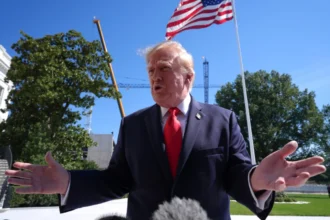
U.S. President Donald Trump, in remarks made to Al Jazeera on Wednesday, conveyed a sense of unhurried resolve regarding the resumption of talks with Iran. He indicated that he was "in no hurry" to re-engage, suggesting that he viewed the combination of economic and military actions as effective tools for influencing Tehran’s decision-making. "I have no time schedule; whatever it takes," President Trump stated, underscoring the administration’s commitment to its current strategy.
Iran has consistently condemned the U.S. economic pressure campaign, labeling it as "economic terrorism." In a letter addressed to the United Nations on Wednesday, Iranian Foreign Minister Abbas Araghchi formally denounced the new sanctions as an "act of state and economic terrorism." He urged United Nations member states to resist implementing these measures, arguing that they deliberately inflict harm on civilians by restricting access to essential goods such as food, medicine, and medical equipment.
The Strategic Strait of Hormuz: A Point of Contention
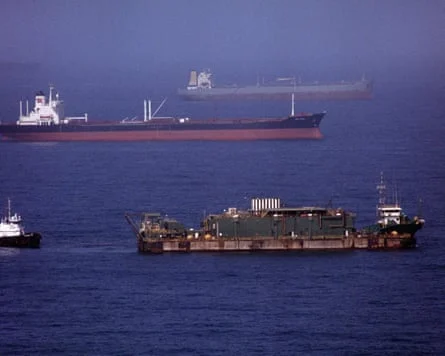
A significant point of contention between the U.S. and Iran remains the Strait of Hormuz, a vital maritime chokepoint through which a substantial portion of the world’s oil and liquefied natural gas shipments transit. Prior to the current conflict, approximately 20 million barrels per day of crude oil passed through the strait. Iran has asserted its desire for greater control over this strategic waterway, while the United States advocates for its continued status as an international waterway open to all maritime traffic.
This fundamental disagreement over the Strait of Hormuz was a contributing factor to the collapse of the June memorandum of understanding. Since the breakdown of that agreement, oil flows through the strait have diminished significantly, reportedly falling to a three-month low of around 5 million barrels per day on Monday.
Qatar’s Ministry of Foreign Affairs indicated that Sheikh Mohammed’s discussions in Tehran would include the situation in the Strait of Hormuz, with a focus on "the need for it to return to the status quo prior to February 28." This suggests Qatar is seeking a return to pre-conflict shipping conditions, which would imply a de-escalation of tensions and a more open passage.
Regional Diplomatic Maneuvers Intensify
Sheikh Mohammed’s visit to Tehran follows a series of other diplomatic engagements involving regional powers seeking to address the escalating crisis. Just two days prior, Omani Foreign Minister Badr Albusaidi met with his Iranian counterpart, Abbas Araghchi, in Tehran. Following those discussions, Iran’s Deputy Foreign Minister, Kazem Gharibabadi, announced that Iran and Oman had reached an agreement on a new, temporary shipping route through the Strait of Hormuz.
However, Gharibabadi reiterated Iran’s stance that the waterway would not fully reopen until the United States fulfilled its commitments under the previous deal, including the lifting of sanctions and the release of frozen assets. This condition highlights Iran’s demand for concrete concessions from the U.S. as a prerequisite for further de-escalation.
Adding to the regional diplomatic flurry, Pakistan’s Army Chief, Asim Munir, also visited Tehran earlier in the week. Islamabad reported that these talks aimed to "end the stalemate" in the conflict and indicated that "significant progress" was made during his discussions. The involvement of Pakistan, a major regional player with its own security interests, further underscores the broad regional concern over the escalating tensions.
The Urgency of Preventing Wider Conflict
According to Mostafa Khoshcheshm, a professor at the University of Applied Sciences in Tehran, the intensified diplomatic activities by regional countries stem from a shared belief that the situation is rapidly moving towards a dangerous escalation. "They know that if war breaks out, it would be a fully-fledged war and the fire would spill over into the entire region and beyond, leaving a detrimental impact on the global economy," Khoshcheshm observed.
This perception of imminent danger is driving "hectic diplomatic moves" by these nations, as they seek to avert a wider conflagration that could have devastating consequences for regional stability and the global economy. The current diplomatic push, with Qatar’s Prime Minister at its forefront, represents a critical juncture in efforts to de-escalate tensions and find a peaceful resolution to the ongoing standoff between the United States and Iran. The outcome of these discussions in Tehran will be closely watched by international observers and have significant implications for regional security and global energy markets.