Rescue teams across the rugged Himalayan frontier are racing against time to locate more than 1,000 people still unaccounted for after a catastrophic flash flood decimated villages and border crossings between Nepal and Tibet. Authorities confirmed on Thursday that the death toll has reached at least 160, though officials on both sides of the border warn that the number of fatalities is expected to rise sharply as search operations reach previously isolated areas. The disaster, which struck early Wednesday morning, was triggered by a massive collapse of glacial rock and ice that sent a wall of mud and debris surging through narrow mountain valleys.

In Nepal, police officials reported that 157 bodies have been recovered from the thick sludge and wreckage of homes along the Trishuli River. Across the border in Tibet’s Gyirong county, Chinese state media reported three confirmed deaths, but the number of missing persons there has surged to 558. Among those missing in Tibet are at least 260 foreign nationals, according to the state broadcaster CCTV. Simultaneously, Nepal’s tourism department reported that 468 travelers—including 393 foreigners—remain out of contact, creating a chaotic situation for international embassies trying to account for their citizens.
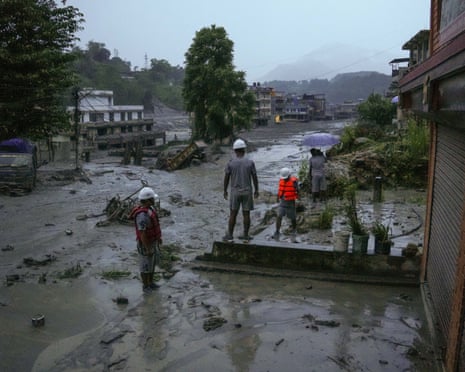
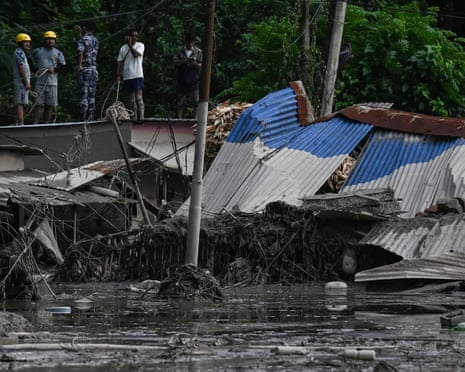
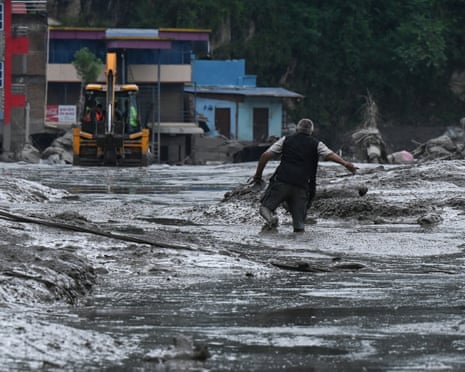
The scale of the destruction has left local officials stunned. Verified video footage from the border region captured the moment a towering surge of mud and debris, several stories high, slammed into a border facility. Dozens of people were seen fleeing for their lives as the torrent engulfed buildings, buses, and heavy machinery in seconds. The force of the water was so great that entire markets and villages were essentially wiped off the map, leaving behind a landscape of grey silt and shattered timber.
USGS Confirms Glacial Collapse as Catalyst for Disaster
While initial reports from the region suggested that a magnitude-4.4 earthquake might have triggered the disaster, the United States Geological Survey (USGS) issued a correction on Thursday. The agency clarified that the seismic activity recorded at 8:37 a.m. local time on Wednesday was not a tectonic earthquake but was instead the result of a massive glacial collapse and subsequent debris flow. The USGS updated the event to a magnitude-5.2 seismic signature, reflecting the immense energy released when the lower portion of a glacier sheared off and plummeted to the valley floor.
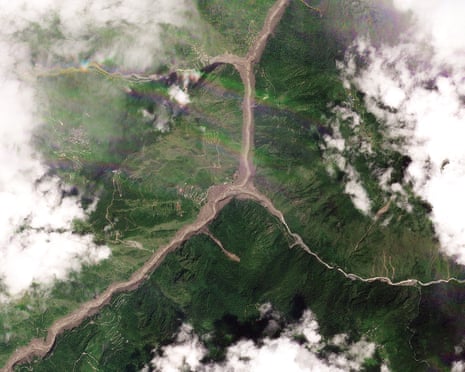
This mass-wasting event created a "catastrophic impact downstream," according to the agency. The collapse likely blocked the flow of a high-altitude river for several minutes, creating a temporary dam. When that blockage failed under the weight of the accumulated water, it released a "glacial lake outburst" effect, sending a concentrated wave of mud, ice, and rock into populated areas. Scientists have long warned that the fragile geography of the Himalayas is becoming increasingly unstable due to shifting environmental conditions.
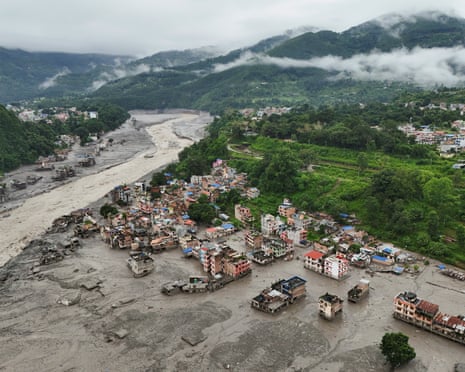
The confusion over the cause of the flood highlights the difficulty of monitoring the remote, high-altitude terrain where Nepal meets Tibet. Nepalese Foreign Minister Shishir Khanal stated that the landslide likely occurred in a region that is difficult to access by foot, making satellite imagery and seismic data the primary tools for understanding the disaster’s origin. Disaster authorities in Kathmandu noted that the "snow-rock landslide" occurred precisely on the border, complicating the initial coordination between the two nations.
Search and Rescue Challenges in the High Himalayas
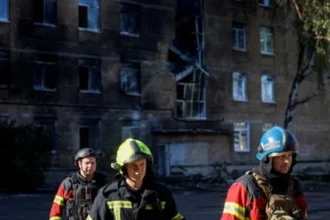
The search and rescue operation is currently one of the most complex in the history of the region. In Tibet, the government has mobilized nearly 800 emergency workers and 150 vehicles, including specialized sniffer dogs, speedboats, and heavy excavators. Despite these resources, the terrain remains treacherous. Mudslides have cut off the primary roads leading to the Gyirong land crossing, a vital trade and tourism hub, leaving rescuers to rely on aerial transport and manual labor to clear debris.
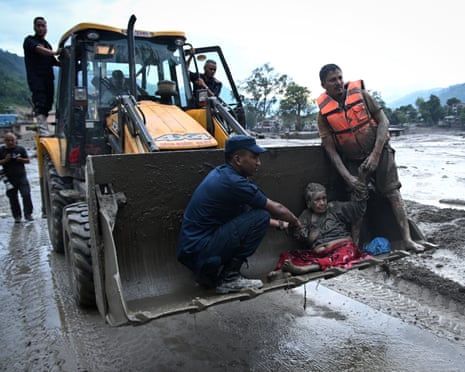
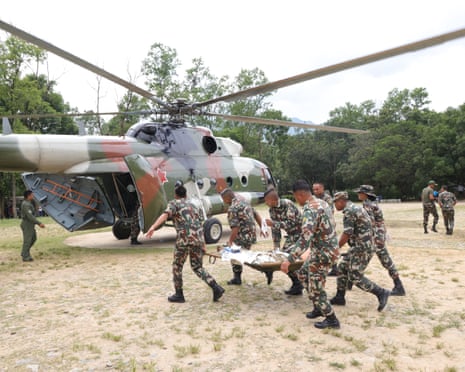
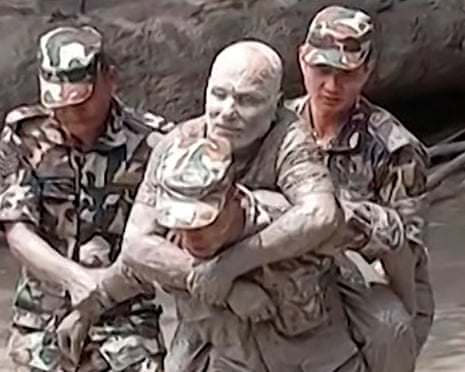
On the Nepalese side, the Army has deployed helicopters to winch survivors from rooftops and isolated patches of high ground. In the Nuwakot and Rasuwa districts, rescuers have been seen using excavators not just for clearing mud, but as makeshift transport vehicles to move survivors across flooded plains. The International Federation of Red Cross and Red Crescent Societies (IFRC) is dispatching emergency supplies, including first aid kits, stretchers, blankets, and body bags, as the focus shifts from rescue to the grim task of body recovery.
"To be honest, looking at the area now, you would think there was no human civilization there at all," said Sagar Pandey, president of the Trekking Agencies’ Association of Nepal. Pandey, who conducted a helicopter survey of the Rasuwa area, described a scene of total erasure. "The flash flood swept away everything—human creations, roads, houses. I still hold a 1% hope for those missing, but the reality is devastating."
International Impact and the Fate of Missing Travelers
The disaster has resonated globally due to the high number of foreign tourists caught in the path of the water. Nepal’s tourism board released a breakdown of the missing foreigners, which includes 142 Indians, 47 Americans, 34 Australians, 33 British citizens, and 24 Canadians. Other missing travelers hail from South Korea, the Netherlands, Malaysia, Portugal, and South Africa. The South Korean Foreign Ministry in Seoul confirmed that at least nine of its citizens are among those unaccounted for.
Specific concern has been raised for a group of 15 Australians trekking in a valley near the border. Sagar Pandey, who also heads Himalayan Glacier Trekking, reported that he has lost all contact with a 47-person tour group that included two families of four from New South Wales. The group included children as young as 11 and adults up to age 64. The lack of communication is attributed to the total destruction of cellular towers and satellite phone infrastructure in the valley.
Diplomatic missions in Kathmandu are working around the clock to coordinate with the Nepalese military. However, the fluid nature of the missing persons’ tallies has led to uncertainty. It remains unclear if some individuals are being counted twice—once by Chinese authorities and once by Nepalese officials—or if the two lists are entirely separate. If the tallies are distinct, the total number of missing could exceed 1,100 people.
Infrastructure Destruction and Economic Fallout
The Nepal flash flood has not only caused a humanitarian crisis but has also dealt a severe blow to the region’s infrastructure. The Trishuli River valley is home to several major hydroelectric power projects that are critical to Nepal’s national grid. Initial assessments suggest that at least two power plants have sustained significant damage, which could lead to long-term energy shortages in Kathmandu and surrounding districts.
Transportation networks have also been crippled. The road connecting Kathmandu to the Chinese border—a lifeline for the import of goods—has been severed in multiple locations by landslides and washed-out bridges. Officials say it could take months to restore full ground connectivity. This disruption is expected to drive up the cost of essential goods and impact the livelihoods of thousands of people who depend on trans-border trade.
The United Nations has pledged its full support to the relief efforts. UN Secretary-General António Guterres announced that UN teams and partners are currently mobilizing personnel and supplies to support the most affected communities. The priority remains providing clean water and preventing the outbreak of waterborne diseases in temporary shelters where displaced families are currently being housed.
Scientific Perspectives on Rising Himalayan Risks
The tragedy has reignited a debate among climate scientists regarding the stability of the "Third Pole," a term used to describe the Hindu Kush-Himalayan region because it holds the largest reserve of glacial ice outside the polar regions. Experts suggest that while a single event cannot be definitively linked to global temperature rises, the frequency and intensity of such glacial collapses are increasing.
As the atmosphere warms, the permafrost that acts as a "glue" for mountain slopes begins to melt, making rock and ice more prone to sudden failure. Additionally, the formation of unstable glacial lakes poses a constant threat to downstream communities. Scientists from the International Centre for Integrated Mountain Development (ICIMOD) have warned that the current monitoring systems are insufficient to provide early warnings for events as sudden as a glacial collapse.
For survivors like 68-year-old Keshav Prasad Baral, the scientific explanations offer little comfort. Baral described watching a "huge gush of mud" rise higher and higher as it approached his home. He tried to save his wife, but the force of the mud swept her away before they could reach the terrace. "A helicopter saved me four hours later," he said. "But my wife is gone, buried somewhere beneath the mud."
Future Outlook and Recovery Efforts
As search teams continue to probe the debris, the region remains under a state of high alert. Meteorologists and geological experts have warned that a lingering blockage upstream on the border river could trigger a secondary flood if it bursts. Residents in low-lying areas have been advised to remain in emergency shelters until the river levels stabilize and the risk of further landslides diminishes.

Chinese Leader Xi Jinping has issued a directive for all available resources to be used in the search for survivors. "The most urgent task is doing everything possible to search for and rescue the missing people," Xi said in a statement broadcast by CCTV. The cooperation between Beijing and Kathmandu in the coming days will be vital for managing the recovery and identifying the victims.
The road to recovery for the communities along the Nepal-Tibet border will be long and arduous. Beyond the immediate need for food and shelter, the psychological toll on survivors and the economic impact of lost tourism and trade will be felt for years. For now, the focus remains on the narrow window of time in which survivors might still be found, even as the "grim task" of recovering and identifying bodies continues under the shadow of the Himalayas.