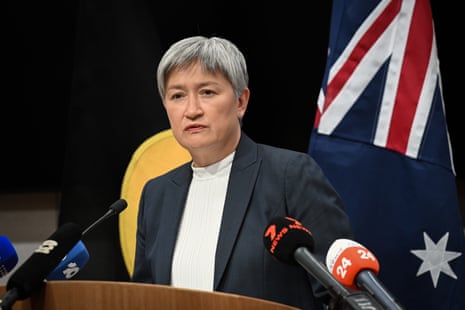
The Australian government has announced a $5 million emergency assistance package and the deployment of three humanitarian specialists to Nepal as the death toll from catastrophic flooding continues to climb and the number of missing Australians rises to 39. Foreign Affairs Minister Penny Wong confirmed the escalation of the crisis on Friday, noting that the missing persons count increased from 35 overnight as search and rescue teams struggle to reach remote regions along the Nepal-China border. Simultaneously, a landmark legislative shift occurred within Australia as the Northern Territory passed voluntary assisted dying laws, making the practice legal in every jurisdiction across the country for the first time in nearly three decades.
The twin developments highlight a period of intense activity for the Albanese government, which is balancing an urgent international consular crisis with significant domestic social reforms. The flooding in Nepal, triggered by torrential monsoon rains, has devastated communities along the Trishuli River and surrounding districts, with local authorities reporting at least 360 fatalities and hundreds more still unaccounted for. In the Northern Territory, the passage of end-of-life legislation closes a long-standing legal gap that had existed since the federal government overturned the territory’s previous euthanasia laws in the late 1990s.

Crisis in Nepal: Search Efforts Intensify as Australia to Send $5m and Three Humanitarian Workers to Nepal
Foreign Affairs Minister Penny Wong stated that the Australian government is rapidly mobilizing consular and humanitarian support in response to the floods, which she described as "catastrophic." The $5 million assistance package is intended to provide immediate relief to affected communities, focusing on food, clean water, and emergency shelter. The deployment of three humanitarian response specialists within the next 48 hours is designed to bolster the efforts of Australian diplomatic staff already operating on the ground in Kathmandu.
According to the Department of Foreign Affairs and Trade (DFAT), the 39 missing Australians are linked to several different travel scenarios. Fifteen individuals were part of the Himalayan Glacier Adventure tour, while at least one was traveling with Kathmandu Holiday Tours and Travels. Minister Wong clarified that four additional Australians were traveling independently and are currently unaccounted for. "The extraordinary scale of this disaster and the remoteness of the affected region mean immense challenges lie ahead for the response and recovery," Wong said, adding that the number of missing persons could still fluctuate as communication lines are restored in mountainous areas.
The regional impact of the floods has been particularly severe in the Chitwan, Gorkha, and Rasuwa districts. Keshav Kadel, vice president of the Australian Nepalese Multicultural Centre, described a harrowing scene in his home region, where bodies are being pulled from the Trishuli River after being swept downstream from higher elevations. The Nepalese diaspora in Australia has responded with vigils and fundraising efforts, particularly in Melbourne, where community members gathered this week to offer prayers for the victims and the 43 active consular cases involving Australian citizens.

Legislative Milestone: Voluntary Assisted Dying Now Legal Nation-wide
While the international crisis unfolded, the Northern Territory Parliament concluded a marathon debate late Thursday night to pass the Rights of the Terminally Ill Bill. The passage of this legislation means that voluntary assisted dying is now legal nation-wide, a status that has been absent in Australia since 1997. The bill passed via a conscience vote, which allows lawmakers to vote according to their personal or moral beliefs rather than along strict party lines.
The Northern Territory was a global pioneer in this field, becoming the first jurisdiction in the world to legalize voluntary euthanasia in 1995. However, those laws were short-lived; the federal government under Prime Minister John Howard used its constitutional powers over the territories to veto the legislation in 1997. It was not until 2022 that the federal parliament restored the rights of the Northern Territory and the Australian Capital Territory to legislate on the matter. With the NT’s new bill, the territory joins all six Australian states and the ACT in providing a legal framework for end-of-life assistance.
Despite the bill’s passage, it remains a point of significant contention due to a "gag clause" that survived the amendment process. This clause prohibits healthcare professionals from initiating conversations about voluntary assisted dying with their patients. Critics, including government backbencher Tanzil Rahman and Opposition Leader Selena Uibo, argued that the restriction is non-compassionate, particularly for elderly patients in remote, one-clinic towns who may not be aware of their legal options. Under the new law, access is restricted to patients who are predicted by at least two doctors to have 12 months or less to live.

Domestic Energy Concerns: The Hidden Cost of Free Power
In a separate development affecting Australian households, energy market observers are raising alarms over a new government-backed energy scheme. The "Solar Sharer" program, which launched in July across Queensland, New South Wales, and South Australia, was marketed as a way to provide three hours of free electricity daily to homes without solar panels. The initiative was intended to utilize the excess solar energy generated during the middle of the day, helping to balance the grid and lower costs for low-income families.
However, consumer advocates warn that the plan may carry an "expensive catch." Gavin Gilchrist, a project manager at Inner West Community Energy, reported that in parts of Sydney, the supply charges and peak-use rates associated with the Solar Sharer plan are nearly double those of standard market offers. "While the three hours of free power sounds attractive, the significantly higher rates charged during the rest of the day can lead to an overall increase in the monthly bill for many households," Gilchrist noted. This discrepancy has led to calls for greater transparency in how energy retailers structure "free" incentive programs.
Biosecurity and Wildlife Protection: NSW Launches H5 Bird Flu Vaccination
In the environmental sector, New South Wales has initiated an emergency vaccination program to protect vulnerable bird species from the H5 strain of avian influenza. The program, led by the Taronga Conservation Society, marks a proactive step in preventing a mass mortality event among Australia’s native fauna. The H5 virus, which has devastated bird populations globally, has prompted the NSW government to prioritize high-risk colonies and captive populations.

The initial rollout includes vaccinations for little penguins in Manly and on Barunguba Montague Island. Additionally, Carnaby’s black cockatoos and red-tailed black cockatoos at Taronga Zoo have received the first of a two-dose course. NSW Premier Chris Minns stated that while the government cannot entirely stop the spread of the virus among wild populations, the vaccination of "beloved native birds" in controlled environments and key habitats is a critical component of the state’s biosecurity strategy. The vaccine requires a follow-up dose administered three to four weeks after the initial injection to ensure maximum efficacy.
Political Reactions and the Path Forward
The federal opposition has signaled its full support for the government’s response to the Nepal disaster. Shadow Foreign Affairs Minister Ted O’Brien expressed the Coalition’s "absolute devastation" over the loss of life and the uncertainty surrounding the missing Australians. Speaking on national radio, O’Brien affirmed that the opposition stands with the government in its deployment of aid and specialists. "The government is in the driver’s seat, and I believe it is responding in the right way," O’Brien said, emphasizing the need for bipartisan cooperation during international humanitarian crises.
As Australia to send $5m and three humanitarian workers to Nepal, the immediate focus remains on the welfare of the 39 missing citizens. Search and rescue operations are expected to intensify as the Australian specialists arrive to coordinate with local Nepali authorities and international NGOs. In the coming weeks, the focus will shift from immediate rescue to long-term recovery and infrastructure repair in the flood-ravaged border regions.
Domestically, the legalization of voluntary assisted dying marks the end of a long legal chapter but the beginning of a complex implementation phase for the Northern Territory’s healthcare system. Medical boards and ethics committees are expected to begin drafting the clinical guidelines required to facilitate the new laws, while advocates continue to lobby for the removal of the controversial gag clause. Meanwhile, the energy and biosecurity sectors remain under close watch as the government navigates the challenges of a transitioning power grid and the persistent threat of global viral outbreaks.