A pharmacist from Milton Keynes has utilized social media to pinpoint the final known movements of her mother and aunt following a catastrophic flash flood that has devastated the border regions of Nepal and Tibet. Tulshi Patel successfully identified her relatives in a local tour guide’s social media post, providing a critical lead for search teams as the death toll from the disaster continues to climb. The catastrophic weather event, which struck on Wednesday, has claimed at least 675 lives, while more than 3,000 individuals remain missing in the rugged Himalayan terrain.
The flash floods thundered through narrow valleys with little warning, sweeping away entire villages and critical infrastructure along the Nepal-China border. Among the thousands of people currently unaccounted for are 33 British nationals, a group that includes a 13-year-old child, several National Health Service (NHS) workers, and a priest. In response to the growing crisis, a specialized search and rescue team from the United Kingdom is scheduled to arrive in the Nepali capital of Kathmandu on Saturday to assist local authorities and international agencies in the recovery effort.
The Digital Search: Daughter Traces Mother and Aunt’s Last Known Location in Nepal Through TikTok Video
The search for Hemangini Jitendra Patel and her sister, Hema Sunil Amin, became a digital investigation for their family back in the United Kingdom. Tulshi Patel told reporters that her mother and aunt had been planning this pilgrimage since the beginning of the year, describing the journey to the sacred sites of the Himalayas as a primary item on their "bucket list." The two women were part of a larger tour group traveling toward Tibet when communication was severed by the sudden onset of the floods.
Patel explained that her last direct contact with the pair occurred on Monday, followed by a photograph sent on Tuesday. When news of the disaster broke, the family began a "deep-dive" into social media platforms, hoping to find any sign of the group’s progress. They eventually discovered a video posted by a local Nepali tour guide on TikTok. The footage, timestamped at approximately 6:00 a.m. Nepal time on Wednesday, clearly showed both women and three other members of their tour group waiting at the border crossing.
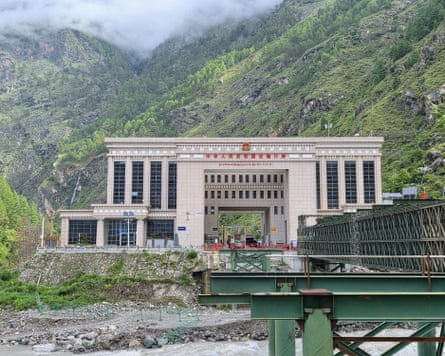
The video confirmed that the group was at the Friendship Bridge, a vital link between Nepal and China, just hours before the flood hit. According to Patel, the group was originally scheduled to cross the border on Tuesday, but weather-related delays pushed their transit to Wednesday morning. This timing placed them directly in the path of the disaster, as the bridge was reportedly swept away shortly after the video was recorded.
Seismic Triggers and the Scale of the Himalayan Disaster
The devastation is believed to have been triggered by a magnitude 5.2 seismic event that occurred near the border between Nepal and China at 8:37 a.m. local time on Wednesday. Data from the U.S. Geological Survey (USGS) suggests that the tremor may have destabilized glacial structures or triggered a massive landslide that subsequently blocked and then breached river systems. Such events, often referred to as glacial lake outburst floods (GLOFs), are known for their immense power and the speed at which they can travel down steep mountain valleys.
In the hours following the seismic event, a wall of water and debris surged through the region, obliterating everything in its path. The Friendship Bridge, which serves as a primary immigration center on the Tibet border, was among the first major structures to be destroyed. The destruction of this crossing has significantly hampered rescue efforts, as the terrain is now nearly impassable for heavy machinery and traditional rescue vehicles. Chinese and Nepali rescue teams have reported finding nothing but ruins in areas that were once bustling border hubs.
The environmental conditions in the high Himalayas have made the search for the missing exceptionally dangerous. Authorities have warned of continued flash flood risks and the potential for further seismic aftershocks. The high altitude and freezing temperatures further reduce the window of survival for those who may be trapped in the debris or stranded in remote pockets of the valley.
Pilgrimage Dreams Interrupted at Kailash Mansarovar
Many of the foreign nationals caught in the disaster were in the region to visit Kailash Mansarovar, a high-altitude site in Tibet that holds profound spiritual significance for Hindus, Buddhists, Jains, and followers of the Bon religion. Among them was 51-year-old Neetu Goyal Tiwari, who was embarking on what her family described as a "dream trip." Tiwari’s family has been desperately attempting to contact officials in both Nepal and China to determine her whereabouts.
The logistical challenges of the search are compounded by the international borders involved. Naresh Goyal, Neetu’s brother, noted that because many of their family members are based in India, obtaining the necessary visas to enter China or Nepal for a private search is a slow and difficult process. While Tiwari’s husband and daughter remain in the UK awaiting news, her relatives in India are pleading for more international cooperation to bridge the communication gap between the two affected countries.
"We are not sure what the next second holds," Naresh Goyal said, reflecting the sentiment of hundreds of families across the globe. He described his sister as a fun-loving woman with a great heart, emphasizing the personal toll behind the rising casualty statistics. The uncertainty is exacerbated by the fact that many travelers may have crossed into Chinese territory just before the floods, making it unclear which national authority is responsible for their documentation and rescue.

Desperation Drives Families to the Affected Region
As the official search enters its fourth day, some families have decided they cannot wait for government updates. Bhupesh Bector, a resident of Slough, is among those who have chosen to fly directly to the region. His wife, 53-year-old Leena Bector, was one of 27 travelers in her specific group who remain unaccounted for. Bector expressed frustration with the lack of clarity from the UK Home Office regarding whether his wife was officially recognized on the missing persons list.
"Even if they find her today or tomorrow, I need to be there," Bector told the media before his departure. "She must be in trauma." His decision highlights a growing trend of families taking matters into their own hands when official channels are overwhelmed by the scale of a natural disaster. For many, the need to be physically closer to the site of the disappearance outweighs the risks and the logistical hurdles of traveling into a disaster zone.
The UK Foreign, Commonwealth & Development Office (FCDO) has stated it is supporting the families of the British nationals who are missing and is in close contact with local authorities. However, the sheer number of missing persons and the destruction of telecommunications infrastructure in the northern valleys of Nepal have made it difficult to provide real-time updates to worried relatives.
Infrastructure Collapse and the Future of Border Safety
The loss of the Friendship Bridge is not only a humanitarian tragedy but also a significant economic and logistical blow to the region. As the primary land route for trade between Nepal and China, its destruction isolates remote communities that rely on the crossing for food, medicine, and fuel. The green bridge, a landmark of the Kodari-Zhangmu border, was a symbol of the connection between the two nations, and its absence will complicate long-term recovery efforts.
Geologists and climate scientists have long warned about the vulnerability of the Himalayan region to such events. The combination of steep topography, seismic activity, and the effects of climate change on glacial stability creates a high-risk environment for both residents and tourists. This latest disaster is likely to prompt a review of safety protocols for high-altitude pilgrimages and the structural integrity of infrastructure in glacial flood zones.
As the UK rescue team prepares to join the search in Kathmandu, the focus remains on the "eyes and ears" on the ground that Tulshi Patel and other families have called for. While the TikTok video provided a definitive "last known location," the path forward remains obscured by the sheer scale of the mud, rock, and water that has reshaped the landscape. For the families of the 33 missing Britons and the thousands of others, the wait for news continues amid one of the deadliest natural disasters the region has seen in decades.