The Reform UK party has been plunged into a high-stakes crisis following an undercover investigation that allegedly caught senior officials discussing a plot to circumvent British electoral finance laws. As the party convened for its national conference in Birmingham, Reform suspends two officials over donations sting after footage surfaced showing them apparently willing to accept hundreds of thousands of pounds in prohibited foreign funds. Nigel Farage, the party’s leader and a prominent figure in the populist movement, conceded that the recorded conversations were deeply problematic, though he maintained that his organization had not technically violated any statutes.
The controversy centers on an undercover operation conducted by Verbatim, an investigative unit associated with the Centre for Climate Reporting, and subsequently broadcast by Channel 4 News. The footage reportedly shows Dan Jukes, a senior aide to Farage, and James Orr, the party’s head of policy, discussing methods to disguise a £500,000 ($655,000) donation from a foreign source. Under the United Kingdom’s Political Parties, Elections and Referendums Act 2000 (PPERA), political donations are strictly limited to UK-registered voters or entities. The use of "proxy" donors to funnel money from overseas is a criminal offense.
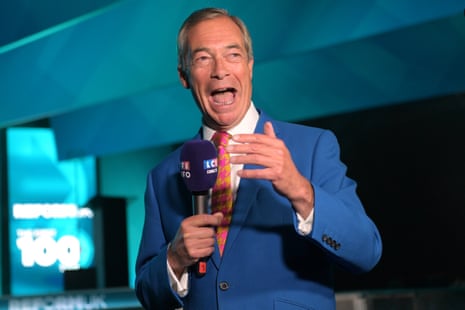
Nigel Farage addressed the fallout during an interview with LBC, characterizing the investigation as a "clear case of entrapment" orchestrated by "foreign-funded climate change activists." While Farage insisted that "the party has broken no laws" and had not actually accepted any "dodgy money," he admitted the optics were damaging. "They got a couple of our contractors to say things that perhaps should not have been said," Farage remarked, adding that he was "not happy" with the conduct of his staff.

The Mechanics of the Undercover Sting
The investigation involved actors posing as a wealthy father-and-son duo interested in backing Reform UK’s insurgent political agenda. The "father" was presented as a US-based supporter, while the "son" was a UK resident who would ostensibly act as the conduit for the funds. According to the report, party officials were recorded suggesting that the money could be funneled through the son’s UK-based business or personal accounts to create the appearance of a legal domestic donation.
In one particularly damaging segment, Farage himself was filmed attending an oyster bar lunch where he met the undercover team. While Farage maintains he was merely meeting potential supporters and asked if the arrangement was "above board," the footage shows him thanking the pair after a discussion about the financial transfer. Reform UK leadership has spent the last 48 hours attempting to frame the incident as a coordinated hit job by political enemies rather than a systemic failure of party vetting and ethics.
The fallout was immediate. Reform suspends two officials over donations sting as a preemptive measure to contain the political damage before Farage took the stage for his keynote address. However, internal messaging regarding the nature of these departures has been inconsistent. Lee Anderson, the Reform UK chair and chief whip, told reporters that Orr and Jukes had "left the building" and would not be returning. Conversely, Danny Kruger, a Member of Parliament involved in Reform’s government preparation, suggested the pair were merely suspended pending the outcome of an internal inquiry.
Legal Implications and the Call for a Criminal Inquiry
The legal ramifications of the sting could extend far beyond internal party discipline. The Labour Party has formally requested that the Metropolitan Police launch a criminal investigation into Reform UK’s financial dealings. Bridget Phillipson, the Labour Party chair, authored a letter to Met Commissioner Mark Rowley, citing potential breaches of PPERA. The letter highlights concerns regarding the evasion of donation restrictions and the possibility of knowingly providing false information to registered party treasurers.
Legal experts suggest the "criminal net" in these matters is cast wide. Nick Vamos, the former head of special crime at the Crown Prosecution Service, noted that UK electoral law makes it illegal for anyone to knowingly perform any act that furthers an arrangement likely to facilitate an impermissible donation. This includes discussions intended to solicit such funds, provided the participants are aware of the source.
"The rules are very clear," Vamos stated. "Only UK-registered voters or companies are permitted to make donations. This includes incurring expenses on behalf of a party, such as the polling mentioned in the undercover report." The investigation alleged that the undercover team paid £30,000 to fund three opinion polls beneficial to Reform UK, an act that could be classified as an undeclared "benefit in kind" from a foreign source.
A Turbulent Conference Amidst Poll Volatility
The donations scandal has overshadowed what was intended to be a celebratory national conference in Birmingham. For much of the past year, Reform UK enjoyed a significant surge in opinion polls, at one point threatening to eclipse the Conservative Party. However, that momentum has stalled following the ascension of Andy Burnham to the premiership. Recent data suggests Reform UK is now locked in a neck-and-neck battle with Labour, making every headline critical to their survival as a mainstream force.
The conference atmosphere has been further strained by a series of unrelated controversies involving senior leadership. Zia Yusuf, the party’s home affairs spokesperson, has faced widespread condemnation for social media posts targeting Sagal Abdi-Wali, a Somali-born child refugee and Labour council leader. Yusuf’s comments, which questioned the demographic shifts in the UK, were described by Labour’s Dawn Butler as "vile and racist."
When questioned on Sky News, Lee Anderson refused to explicitly defend Yusuf, stating he would "speak to Zia directly" to understand his intent. This internal friction comes at a time when Reform UK is attempting to normalize its image by hosting international figures like Jordan Bardella, the president of France’s National Rally. The decision to provide Bardella a platform was met with fierce criticism from the Green Party, which accused Reform of providing a "safe space" for Europe’s far-right.
Radical Policy Proposals and the "National Emergency"
Despite the scandals, Farage and his deputies used the conference to unveil a radical "100-day plan" for government. Central to this platform is the declaration of a "national emergency" on day one of a Reform UK administration. The party claims this would allow them to bypass traditional bureaucratic and judicial hurdles to implement their agenda.
The plan includes a commitment to force Parliament to sit "day and night," seven days a week, to pass dozens of bills. Reform UK spokespeople have signaled a confrontational approach to the UK’s institutional checks and balances, stating that if the House of Lords, the judiciary, or the civil service attempt to obstruct their policies, they will face the "determination" of a Farage-led government.
Specific proposals under this emergency framework include ordering the Royal Navy to physically repel small boats carrying migrants in the English Channel and returning them to French shores. When asked how such a plan would work without the cooperation of the French government—which has historically rejected such "push-back" maneuvers—party officials remained vague, insisting they would simply "pass laws to get stuff done."

Consequences for the Populist Movement
The long-term impact of the donations sting on Reform UK’s electoral prospects remains to be seen. While the party’s base often views mainstream media investigations as "establishment stitch-ups," political analysts warn that the "stench of incompetence" can be fatal for a party trying to project itself as a serious alternative to the status quo.
Tim Shipman, a veteran political commentator, observed that the mood among Reform candidates in Birmingham was "mutinous," with many expressing despair that their personal sacrifices for the party were being undermined by backroom recklessness. "Leaders set culture," Shipman noted. "If senior aides behaved like this, it is because they believed it to be acceptable to the boss."
As Reform suspends two officials over donations sting, the party finds itself at a crossroads. It must decide whether to continue as a "scrappy, sod-the-rules" insurgent operation or evolve into a disciplined political machine capable of navigating the complexities of UK law and governance. For Nigel Farage, the man at the "apex of the triangle," the challenge is to prove that his movement is more than just a vehicle for populist rhetoric and is, in fact, ready for the responsibilities of power. The coming weeks of police assessments and Electoral Commission inquiries will likely determine if this scandal is a temporary setback or a terminal blow to Reform UK’s ambitions.