The Women’s Media Center confirmed on Saturday that Robin Morgan, a defining architect of the second-wave feminist movement and a former child star who transitioned into a radical poet and editor, has died at the age of 85. Her passing comes only days after the death of her long-time friend and collaborator, the iconic activist Gloria Steinem, with whom Morgan co-founded the Women’s Media Center alongside Jane Fonda. Morgan’s life spanned the arc of 20th-century American social transformation, moving from the curated perfection of a 1940s "ideal girl" to the front lines of gender-based political revolution.
Throughout the 1960s and 1970s, Morgan was a central figure in the cultural shifts that redefined the domestic and professional lives of American women. She was a woman of contradictions who embraced them all: a former child actress with an FBI file, a poet with a prison record, and a radical intellectual who once described herself as an "anarchist housewife." Her influence was felt not just in the protests she organized, but in the very language used to describe women’s experiences, having been credited with popularizing terms and symbols that remain staples of feminist discourse today.
Robin Morgan and the Birth of Second-Wave Radicalism
The activism of Robin Morgan was characterized by a move away from the polite lobbying of previous generations toward a more confrontational, systemic critique of patriarchy. In 1968, she gained national attention as one of the key organizers of the inaugural protest against the Miss America pageant in Atlantic City. During this demonstration, activists famously tossed items of "female oppression"—including bras, girdles, and high heels—into a "freedom trash can." While the media later mythologized this event as a "bra-burning," the act was a symbolic rejection of the narrow beauty standards Morgan had been forced to uphold during her own youth in the spotlight.
The impact of that protest helped launch second-wave feminism into the American consciousness. Following the demonstration, Morgan shifted her focus toward literary activism, editing the 1970 anthology Sisterhood Is Powerful. The book is widely regarded as one of the most influential texts of the era, compiling essays, poems, and manifestos from a diverse range of women. It was a commercial and critical success that moved feminist theory from academic circles into the hands of suburban housewives and working-class women across the country.
From the Screen to the Streets: The Early Life of Robin Morgan
Born in Lake Worth, Florida, in 1941, Robin Morgan was groomed for stardom from an early age by her mother. Raised in New York, she became a household name through the radio and television series Mama, where she played the character Dagmar Hansen. Throughout the 1940s and 50s, she was marketed as the "ideal American girl," a persona that stood in stark contrast to the radical rebel she would eventually become. Her childhood was marked by the pressures of maintaining an "unspoiled" and "courteous" image, a performance she later described as a form of erasure.
Her mother had falsely told her that her father was dead and even altered her birth certificate to make her appear younger and more prodigious to the public. This atmosphere of manufactured identity eventually sparked a spirit of resistance. Morgan later recalled a pivotal moment when a producer tried to physically silence her during a broadcast by placing his hand over her mouth. She credited her internal struggle against that physical and professional restraint as the first political act of her life, setting the stage for her later refusal to be silenced by the political establishment.

Literary Legacy and the Power of ‘Sisterhood’
As a writer, Robin Morgan sought to dismantle traditional historical narratives, which she famously critiqued by coining the term "herstory." By reworking the word "history," she aimed to highlight the systemic exclusion of women’s contributions from the global record. Her literary output was prolific, encompassing more than 20 books, including poetry collections such as Monster and Dark Matter. Her poem Monster became an anthem for the movement, expressing a visceral, "lustful" desire for revolution that resonated at rallies and consciousness-raising groups throughout the 1970s.
Morgan’s work also intersected with the lives of other literary giants. Her poem Arraignment was a scathing critique of poet Ted Hughes, whom Morgan and many of her contemporaries held responsible for the 1963 suicide of Sylvia Plath. The poem’s famous couplet, "I accuse / Ted Hughes," became a rallying cry for feminists who saw Plath’s death as a symptom of a patriarchal literary world. This specific piece of work was so culturally pervasive that it later inspired the title of a song by the alternative rock band Sonic Youth.
The Politics of Language: Robin Morgan and the Clenched Fist
Beyond her writing, Robin Morgan was instrumental in developing the visual iconography of the women’s liberation movement. She is credited with popularizing the symbol of the female sign (the circle and cross) merged with a clenched fist, a graphic that became the universal logo for feminist struggle. This symbol represented the marriage of traditional female identity with the militant strength of the era’s radical politics.
In 1970, Morgan published the essay "Goodbye to All That," a searing indictment of the male-dominated New Left. In it, she called out prominent male activists and counterculture figures for their hypocrisy, arguing that they advocated for global revolution while maintaining sexist hierarchies within their own organizations. The essay served as a formal declaration of independence for many women, signaling that the feminist movement would no longer be a secondary concern to the anti-war or civil rights movements but a primary revolution in its own right.
Institutional Leadership and Global Advocacy
In the 1980s and 90s, Robin Morgan transitioned into roles that allowed her to institutionalize the gains of the movement. She served as the editor-in-chief of Ms. magazine, succeeding Gloria Steinem and guiding the publication through a period of editorial transformation. Under her leadership, the magazine returned to its roots as a platform for investigative journalism and international feminist news, free from the constraints of traditional advertising.
In 1984, she founded the Sisterhood Is Global Institute (SIGI), the first international feminist think tank. This organization sought to connect activists from the Global South with those in the West, emphasizing that gender oppression was a transnational issue. Her later anthology, Sisterhood Is Global, featured contributions from thinkers like Simone de Beauvoir and activists from dozens of countries, cementing Morgan’s reputation as a leader with a truly international perspective on justice and equality.
Personal Life and the ‘Two-Member Commune’
Morgan’s personal life was as unconventional and radical as her public persona. She was married for over two decades to Kenneth Pitchford, a gay poet, in a relationship she described as a "two-member commune." Together they had a son, Blake Morgan, who became a successful musician and activist. Morgan was notoriously resistant to the labels of the time; she was often "straight-baited" by radical lesbians who felt she should leave her husband, while simultaneously being attacked by conservatives who assumed she was a lesbian because of her political views.
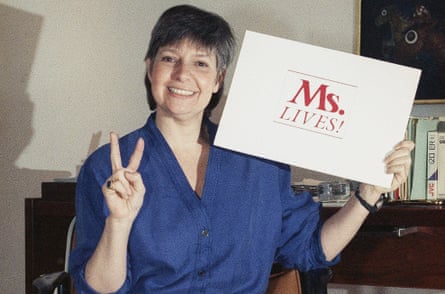
She remained open about her fluid identity and her belief that personal relationships should be as liberated as political ones. In her 2001 memoir, Saturday’s Child, she reflected on her life with a sense of humor and amazement, noting that despite the hardships of her childhood and the intensity of her political battles, she had managed to maintain a sense of joy. Her ability to navigate the complexities of gender and sexuality within her own home served as a model for the "personal is political" ethos of the second wave.
Later Years: Parkinson’s and Continued Advocacy
In her later years, Robin Morgan faced a new challenge after being diagnosed with Parkinson’s disease. True to her activist nature, she did not retreat from the public eye. Instead, she used her diagnosis as a platform for further advocacy, writing poetry about the experience of illness and delivering a powerful TEDWomen talk in 2015. She continued to host a syndicated radio show, WMC Live with Robin Morgan, where she interviewed activists, politicians, and artists about the ongoing struggle for women’s rights.
Her work with the Women’s Media Center remained a primary focus until her death. The organization was designed to address the underrepresentation of women in newsrooms and media leadership, a goal Morgan pursued with the same vigor she brought to the streets of Atlantic City in 1968. Her colleagues at the center described her as a visionary who never lost sight of the need for women to control their own narratives.
The Enduring Legacy of Robin Morgan
Robin Morgan’s death marks the end of an era for American feminism. As one of the movement’s most vocal and prolific architects, she helped build the infrastructure that allowed future generations of women to seek higher office, lead corporations, and demand bodily autonomy. Her transition from a child star—a role defined by pleasing others—to a radical leader—a role defined by challenging others—remains one of the most remarkable transformations in American public life.
Her legacy lives on in the institutions she founded, the vocabulary she helped create, and the millions of women who found their voices through the "powerful sisterhood" she championed. While the location and specific cause of her death have not been released, the impact of her 85 years is visible in nearly every corner of modern social and political life. She leaves behind a body of work that continues to challenge the status quo, reminding the world that, in her own words, the revolution is not just a dream but a necessity.