The Australian Greens have intensified their criticism of the Albanese government’s handling of the Israeli military strike that killed Australian aid worker Zomi Frankcom, labeling the official response as weak and insufficient. Senator David Shoebridge, the Greens’ defense spokesperson, condemned the federal government for failing to impose material sanctions or halt military-related exports following "reprehensible" comments made by the officer who ordered the lethal attack. The political rift follows recent public statements from former Israel Defense Forces (IDF) reserve colonel Nochi Mendel, who expressed no regret for the strike that killed seven humanitarian workers in April 2024.
Mendel, who was the chief of staff of the Nahal Brigade at the time of the incident, told international media outlets that he would take the same course of action if presented with the situation again. He further alleged that the World Central Kitchen (WCK) staff members were "not innocent" and were linked to Hamas, an assertion that has been categorically rejected by both the IDF’s internal investigation and an independent review led by former Australian Air Chief Marshal Mark Binskin. The rhetoric has reignited a fierce debate in Canberra regarding Australia’s diplomatic and military relationship with Israel.
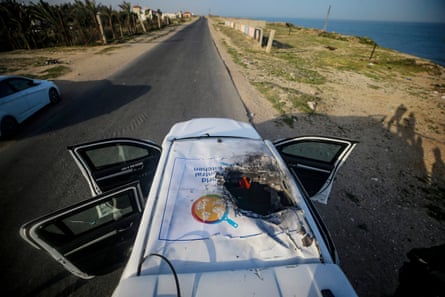
The April 1, 2024, attack targeted a three-vehicle humanitarian convoy traveling along a designated "deconfliction" route on the Gaza coast. The convoy had just unloaded more than 100 tons of food aid at a warehouse in Deir al-Balah when it was struck by three successive drone missiles over a distance of approximately 2.4 kilometers. Frankcom, an experienced Australian humanitarian, was killed alongside colleagues from the United Kingdom, Poland, the United States-Canada, and Palestine. The precision and repetitive nature of the strikes, which targeted survivors as they moved from one damaged vehicle to another, sparked global outrage and led to temporary pauses in aid operations across the Gaza Strip.
The Escalating Critique of the Labor Response
Senator David Shoebridge has emerged as a vocal critic of the Labor government’s diplomatic posture, arguing that verbal condemnation from Foreign Minister Penny Wong is an inadequate substitute for policy action. Shoebridge stated that the government’s refusal to impose sanctions on the individuals involved or to suspend the export of F-35 fighter jet components to Israel constitutes a failure of leadership. He argued that the "reprehensible" comments made by Mendel are not isolated remarks but rather a reflection of a broader military culture that permits the collective punishment of civilians and aid workers.

"I do not care what Minister Wong’s personal feelings are; I don’t care about her outrage," Shoebridge said in a recent address. "I care about the actions taken as foreign minister. Anyone can condemn the actions of the Israeli military, but only the government can impose the sanctions and material responses needed. Until they do, their words are distractions." The Greens have specifically called for the immediate cessation of Australian-made parts for the F-35 program, which are integral to the aircraft currently being utilized in the conflict.
The Albanese government has maintained that it is "pressing for justice" and has expressed deep dissatisfaction with Israel’s decision not to pursue criminal charges against the officers involved. Foreign Minister Penny Wong described Mendel’s recent comments as "utterly disgraceful" and an "outrageous smear" against the victims. However, the government has so far resisted calls for a total arms embargo or targeted sanctions, citing the complexity of international defense supply chains and the need to maintain diplomatic channels with Tel Aviv.
The "Reprehensible" Comments of Colonel Nochi Mendel
The controversy reached a boiling point after Nochi Mendel participated in a series of interviews where he defended the decision-making process that led to the drone strikes. Mendel claimed that the convoy had been "incriminated" under a military policy known as haflala, or "incrimination by association." He alleged that an armed individual had been spotted on top of one of the trucks earlier in the evening, which in his view stripped the entire convoy of its neutral humanitarian status.
Despite the vehicles being clearly marked with the World Central Kitchen logo on their roofs and the mission being coordinated with the IDF, Mendel characterized the deaths as an "idiotic side event" rather than a serious military failure. He insisted that the humanitarian workers were connected to Hamas, although he provided no evidence to support this claim. The IDF’s own summary of the event admitted that the strikes were a "grave mistake" stemming from a "serious failure due to a mistaken identification" and a breach of standard operating procedures.
Mendel’s dismissal of the deaths as a minor incident has been particularly painful for the families of the deceased. The Frankcom family issued a statement through their legal representatives, describing the lack of accountability as an "insult" to Zomi’s memory. They have called for a fully independent, transparent judicial assessment of the criminal responsibility for what they describe as a clear violation of international humanitarian law and the Geneva Conventions.

Humanitarian Impact and the Global Response to the Strike
World Central Kitchen founder and renowned chef José Andrés has been relentless in his pursuit of truth regarding the attack. Andrés described the officer’s comments as an attempt to shift blame onto the victims of a calculated military action. "Enough with the outrageous smears. Enough with excuses," Andrés said in a statement. He emphasized that the WCK is a neutral organization dedicated to the universal human right to food and that the seven workers killed were "friends of humanity."
The strike on the WCK convoy had an immediate and chilling effect on the humanitarian landscape in Gaza. At the time of the attack, the region was facing what international agencies described as "famine-like conditions." The temporary suspension of WCK operations, followed by similar pauses from other NGOs, left hundreds of thousands of people without reliable access to hot meals and dry goods. The incident highlighted the extreme risks faced by aid workers in conflict zones where deconfliction protocols—systems designed to protect humanitarians through communication with military forces—fail to function.
In Australia, the death of Zomi Frankcom has become a symbol of the broader civilian toll of the war. Public demonstrations have frequently cited her name, and her death has pressured the Labor government to take a firmer stance on the protection of humanitarian space. However, the political divide remains sharp; while Labor focuses on diplomatic pressure and "full accountability" through existing international frameworks, the Greens and various human rights organizations argue that only "material reprimands" will prevent future tragedies.
The Failure of Internal Military Investigations
The IDF’s internal investigation, conducted by the Fact Finding and Assessment Mechanism, led to the dismissal of Mendel and another senior officer, while others were formally reprimanded. However, the Israeli Military Advocate General recently announced that no criminal charges would be filed, concluding that there was "no reasonable suspicion of criminal misconduct." This decision has been widely criticized by international legal experts who argue that the repetitive nature of the strikes—targeting three separate cars over several minutes—suggests a level of intent or gross negligence that warrants criminal prosecution.
Critics of the internal probe point out that the military investigating itself rarely leads to accountability for high-ranking officers. The Australian government’s own special adviser, Mark Binskin, noted in his report that the IDF’s actions were the result of significant errors in judgment and a breakdown in communication, but he stopped short of calling for specific criminal indictments, focusing instead on the need for systemic reform in how the IDF manages deconfliction.
The refusal to prosecute has left the Frankcom family and the Australian public in a state of unresolved grief. Senator Shoebridge highlighted this during his Sunday address, stating that he "could not fathom the pain and distress" facing the family when the "killers walk free." He warned that the Albanese government’s perceived inaction would be viewed as a signal that the lives of Australian citizens abroad are not being adequately protected by their own government.
Political Pressure and the Call for Military Sanctions
The debate over the "reprehensible" comments and the subsequent Labor response has forced a re-examination of Australia’s defense exports. While the Australian government states it does not export "lethal weapons" to Israel, it does approve dozens of permits for "defense-related goods." This includes parts for the F-35 Lightning II, a stealth fighter jet used extensively by the Israeli Air Force.
Proponents of an arms embargo argue that Australia is legally and morally obligated to ensure its exports are not used in the commission of war crimes. The Greens have used the Frankcom case to bolster their argument for a complete transparency registry for all military exports. They argue that without such measures, Australia remains complicit in the "collective punishment" of the Palestinian population.
The Labor government continues to navigate a difficult middle ground, attempting to uphold a "rules-based international order" while maintaining its strategic alliances. As the conflict continues and more details emerge regarding the conduct of individual officers like Nochi Mendel, the pressure on Prime Minister Anthony Albanese to move beyond "outrage" and toward "action" is likely to grow. The memory of Zomi Frankcom remains at the center of this storm, a reminder of the human cost of policy decisions made thousands of miles away from the front lines.