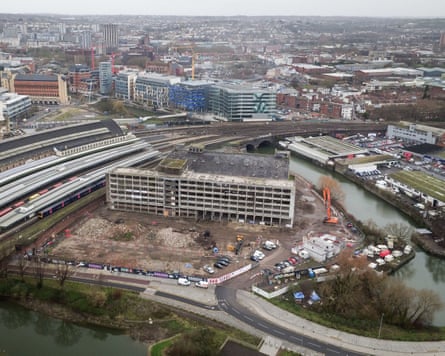
The University of Bristol officially inaugurated its £500 million Temple Quarter Enterprise Campus on Monday, marking the completion of a massive infrastructure project designed to reshape the relationship between the historic institution and the city’s urban core. Located on the site of a formerly derelict Royal Mail sorting office, the campus serves as a high-tech gateway to the city, standing immediately adjacent to the Temple Meads railway station. This flagship development represents one of the most significant investments in the university’s history and serves as the anchor for one of the largest urban regeneration projects in the United Kingdom.
For years, the site was characterized by a crumbling industrial structure that former Prime Minister David Cameron once described as looking like the entrance to a "war zone." The transformation of this eyesore into a glass-and-steel hub for innovation is being hailed by local leaders as a turning point for the region. The project, which has been years in the making, aims to bridge the gap between the university’s traditional academic strongholds and the diverse, evolving communities of East Bristol.
The architectural profile of the site has already drawn significant attention from locals and critics alike. Martin Booth, the editor of the independent publication Bristol 24/7, noted that the new facility looks as if a "gigantic spaceship" has crash-landed next to the station. However, Booth emphasized that the design is a physical manifestation of the university’s efforts to become a more visible and accessible part of the city, moving away from its historically perceived isolation in the affluent, hilltop neighborhood of Clifton.

Transforming a ‘War Zone’ into the Flagship £500m Campus
The journey to the opening of the Temple Quarter Enterprise Campus (TQEC) began with the demolition of the old Royal Mail sorting office in 2019. For decades, that building stood as a symbol of urban decay, greeting visitors arriving at Bristol’s main transit hub with shattered windows and concrete rot. By reclaiming this land, the university and its partners have effectively shifted the city’s center of gravity toward the east, focusing on areas that have historically faced economic deprivation.
The centerpiece of the new development is the £241 million Sloane Robinson building. Named after a foundation established by former Bristol student and hedge fund manager Hugh Sloane—who contributed a £20 million gift toward the project—the building serves as the primary academic and collaborative hub. The total cost of the campus has reached the £500 million mark as the university continues to acquire surrounding land parcels for future expansion, ensuring the site remains at the forefront of global research for decades.
This investment is not merely an academic endeavor but a cornerstone of the broader Bristol Temple Quarter regeneration scheme. This multi-decade initiative is expected to deliver thousands of new homes, commercial workspaces, and community health centers to the surrounding area. The significance of the project has reached the highest levels of British politics, recently receiving a specific mention during Prime Minister’s Questions by Labour leadership, highlighting its role as a model for regional economic growth.
The Architectural Impact of the ‘Gigantic Spaceship’
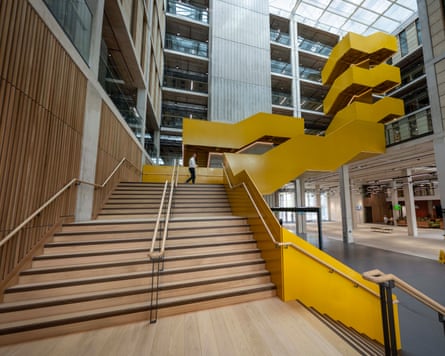
The design of the campus intentionally avoids the "ivory tower" aesthetic common in older European universities. Instead, the university has embraced a "porous" philosophy, creating a space where the boundaries between the institution and the public are blurred. Many areas of the campus are entirely open to the public, featuring new footpaths, cycleways, and a direct entrance from the Temple Meads station platforms.
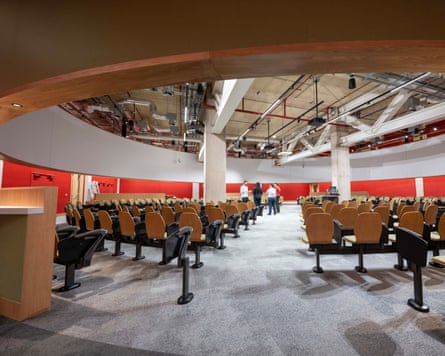
Inside the Sloane Robinson building, the architecture reflects a focus on modern pedagogy and collaborative research. One of the most striking features is a rare circular lecture theatre. During the final preparations for the opening, the university enlisted an actor and voice coach from the renowned Bristol Old Vic theatre to train lecturers on how to effectively utilize the 360-degree space, ensuring that the technology and design of the building translate into a superior learning experience.
The ground floor houses the "Bristol Rooms" and the "Story Exchange," spaces specifically designed to bring together students, academics, and community members. These areas are intended to host discussions on pressing social issues, ranging from climate change and health inequalities to reparative justice. By providing these facilities, the university aims to position itself as a "front door" for all Bristolians, rather than an exclusive enclave for the academic elite.
How the University of Bristol’s Flagship £500m Campus Opens New Economic Doors
The strategic location of the campus next to Temple Meads station is a deliberate response to the regional housing crisis and the rising cost of living. With property prices and rental rates in Bristol soaring, many students and staff members have been forced to live outside the city. The proximity to the station allows for seamless commuting from more affordable areas, making a world-class education more accessible to those who cannot afford to live in the city center.
Judith Squires, the university’s deputy vice chancellor and the lead for the TQEC project, noted that the trend of students living at home and commuting is expected to grow. "We think it opens up lots of opportunities that we haven’t yet explored," Squires said while standing in a garden space located directly above the station’s platform 15. "It also means that it’s very accessible for a lot of our staff who can commute in, but also for our industrial partners who will be coming to do research and collaboration in the building."
The financial backing for the project reflects a complex public-private partnership. The West of England Combined Authority (WECA) invested £35 million directly into the campus and an additional £25 million to facilitate the station entrance and pedestrian infrastructure. This public funding is predicated on the idea that the campus will serve as an engine for job creation and industrial innovation, particularly in high-growth sectors.
A Global Hub for Artificial Intelligence and Quantum Technology
While the campus is designed to be welcoming to the public, its primary mission is to host cutting-edge research in fields that will define the 21st-century economy. The site will serve as a specialized hub for digital engineering, cybersecurity, advanced telecommunications, and artificial intelligence. By concentrating these disciplines in a single location, the university hopes to foster a "collision of ideas" between different fields of study.
The campus is also set to become a leader in quantum technologies, a field where the University of Bristol already holds a significant global reputation. The new facilities will provide the laboratory space and computing power necessary to move quantum research from the theoretical stage into practical industrial applications. This focus on "innovation-led" research is expected to attract global tech giants and startups alike, creating a vibrant ecosystem of public and private collaboration.
Industrial partners will have dedicated spaces within the campus to work alongside researchers. This model is designed to accelerate the commercialization of new technologies, ensuring that the academic breakthroughs made in Bristol have a direct impact on the global marketplace. The university’s goal is to create a feedback loop where industrial challenges inform academic research, and academic discoveries drive industrial growth.
Future Expansion and Long-Term Public Impact
The opening of the Sloane Robinson building is only the first phase of a long-term vision for the area. Behind the main campus, work is already underway in the St Philip’s Marsh district. Currently an industrial zone populated by factories, waste disposal sites, and the city’s fruit market, the area is slated for a total transformation over the next 30 years. A new bridge is planned to link the TQEC directly to these developing neighborhoods, further integrating the university into the fabric of the city.
Helen Godwin, the Mayor of the West of England, described the opening as a "major milestone" that will unlock a "giant leap forward" for the region. The project is expected to generate thousands of jobs, not just within the university, but in the retail, service, and tech sectors that will grow around the campus. For many, the project represents a successful case study in how higher education can drive urban renewal without displacing local communities.
As the first cohort of students and researchers begins to populate the "gigantic spaceship" at Temple Quarter, the University of Bristol is betting that this £500 million investment will redefine its role for the next century. By moving down from the hill and into the heart of the city’s transit and industrial hub, the institution is signaling that the future of higher education lies in openness, accessibility, and direct engagement with the world beyond the classroom.