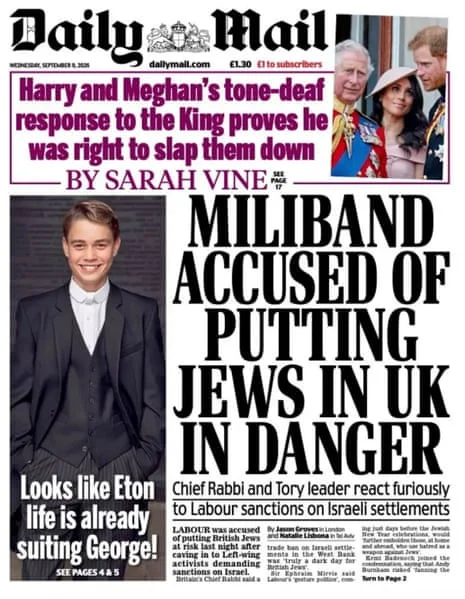
Foreign Secretary Ed Miliband on Wednesday rejected assertions that new British sanctions against Israeli settlements in the West Bank represent a "dark day" for the Jewish community, arguing instead that the measures are a necessary defense of international law and British values. The diplomatic friction follows a landmark Commons statement in which the UK government announced a ban on trade with illegal settlements and signaled a willingness to target financial institutions that facilitate their expansion. The move has triggered a sharp rebuke from religious leaders and a retaliatory order from the Israeli government to close the British consulate in Jerusalem, marking one of the most significant shifts in UK-Israel relations in decades.
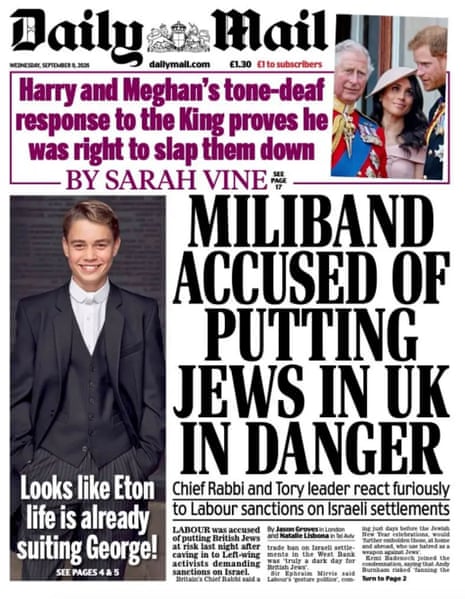
Miliband, who identifies as a proud British Jew, found himself at the center of a domestic and international firestorm after Sir Ephraim Mirvis, the Chief Rabbi, characterized the government’s decision as a profoundly negative milestone for the UK’s Jewish population. The Foreign Secretary used a series of morning media appearances to defend the sanctions on Israeli settlements, insisting that the policy is intended to address specific violations of international law rather than target the state of Israel as a whole. He further emphasized that while he holds the Chief Rabbi in high esteem, he believes the UK must take a substantive stand against the "infinite expansion" of settlements that undermine the possibility of a future Palestinian state.
Miliband defends sanctions on Israeli settlements amid domestic religious divide
The confrontation between the Foreign Office and the Chief Rabbinate has exposed deep divisions within the British political and religious landscape. Chief Rabbi Mirvis’s statement, which dominated the front pages of several right-leaning British newspapers, argued that the sanctions would alienate the Jewish community and embolden those who seek to delegitimize Israel. Miliband countered this by framing the government’s actions as a commitment to the rule of law. He asserted that it is possible to uphold the dignity of all people and prevent injustice while simultaneously condemning antisemitism in all its forms.

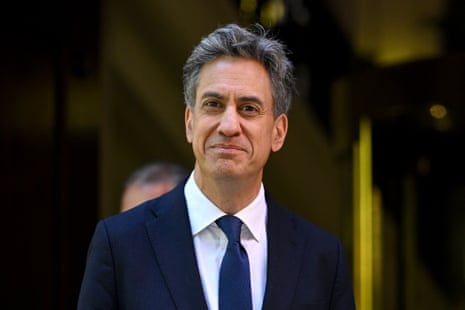
"I am a proud British Jew, and I don’t agree with the Chief Rabbi," Miliband told reporters during a broadcast interview. He went on to clarify that holding British Jews responsible for the actions of the Israeli government is "antisemitism, pure and simple," but argued that the government must remain free to criticize and penalize specific policies of the Netanyahu administration that contradict international legal standards. The Foreign Secretary’s remarks were aimed at decoupling the religious identity of British citizens from the geopolitical actions of a foreign state, even as the two remain inextricably linked in the public consciousness.
The financial scope of sanctions on Israeli settlements
While the immediate headlines focused on a trade ban for goods produced in the West Bank, diplomatic experts suggest the most potent aspect of Miliband’s policy lies in the realm of financial services. The government has indicated that the sanctions regime will eventually extend to any company that "finances or facilitates" the expansion of settlements. This move could potentially force major Israeli banks and insurance providers to choose between maintaining their lucrative business interests in the United Kingdom and continuing to provide financial backing for construction projects in the occupied territories.
Miliband confirmed that the new measures, which are expected to take between six and nine months to fully implement, are designed to make a "substantive difference to the facts on the ground." By targeting the supply lines of finance and construction, the UK aims to slow or stop the growth of a settler population that has nearly tripled over the last thirty years. According to Foreign Office data, the number of Israeli settlers in the West Bank has surged from approximately 270,000 in 1993 to more than 770,000 today. Activists have long argued that without the backing of mainstream financial institutions acting as guarantors for government tenders, large-scale settlement projects would become economically unviable.
Israeli retaliation and the "nuclear option"
The Israeli government responded to the announcement with immediate diplomatic escalation, ordering the closure of the long-standing British consulate in Jerusalem. The consulate has historically served as the UK’s primary diplomatic link to the Palestinian people, and its forced closure is seen as a direct attempt by Prime Minister Benjamin Netanyahu’s government to punish London for its policy shift. Alex Gandler, a spokesperson for the Israeli embassy in London, described the sanctions as a "nuclear option" between democratic allies, suggesting the move was motivated by domestic UK politics rather than a genuine concern for regional stability.
Gandler argued that the timing of the sanctions was particularly damaging, coming just 50 days before scheduled elections in Israel and ahead of major Jewish high holidays. He warned that the British government’s stance creates an "atmosphere for violence against Jews" and fails to account for the reality that Israel is currently engaged in a multi-front war against shared enemies, including Iran. Despite these warnings, Miliband expressed regret over the consulate’s closure but maintained that the government had carefully weighed the "costs and benefits" before proceeding. He noted that Palestinian leadership, including the Palestinian Prime Minister, had explicitly called for such international intervention.
Transatlantic dynamics and the Trump factor
The UK government’s move also raised questions about the potential impact on the "special relationship" with the United States, particularly with the possibility of a second Donald Trump administration on the horizon. However, early reports suggest that the anticipated backlash from the Republican camp has yet to materialize. Andy Burnham, a prominent Labour figure, reportedly spoke with Trump on Monday, and sources indicated that the former U.S. President did not push back against the proposed sanctions or ask the UK to change its course.
In Washington, the reaction from the current administration has been more nuanced. While U.S. officials have expressed disagreement with the specific use of sanctions by the UK, they have privately signaled to their British counterparts that they share concerns regarding the Netanyahu government’s aggressive expansion in the West Bank. This suggests a growing international consensus that the current trajectory of settlement growth is unsustainable, even if allies differ on the tactical methods used to address it. Miliband sidestepped direct questions about his conversations with the Americans, stating only that he would let "American friends speak for themselves" while acknowledging that the entire international community has reached a point of extreme frustration with the situation.
Security cooperation and the threat from Iran
One of the most significant criticisms leveled against the Miliband plan came from the Conservative Party, which claimed that the sanctions could jeopardize vital intelligence-sharing and security cooperation between the UK and Israel. Tory leaders warned that the move might put British lives at risk if the Israeli security services were to scale back their partnership in response to what they perceive as a hostile diplomatic act. Miliband addressed these concerns by stating he is "confident" that security ties will remain intact, citing the mutual interest both nations have in countering threats from Iran.
To demonstrate a balanced approach, Miliband pointed to the fact that he announced new sanctions on Iran simultaneously with the measures targeting West Bank settlements. He emphasized that the UK remains committed to working with Israeli partners to address existential threats while remaining firm on the issue of illegal occupation. "We have important intelligence and security relationships with Israel, and I’m confident they will continue," Miliband said, adding that the failure to address the underlying conflict between Israel and Palestine is itself a long-term threat to British and global security.
Public impact and the road ahead
The implementation of these sanctions marks a definitive end to what some analysts have called "decades of Foreign Office inertia" regarding the West Bank. For years, British policy was characterized by verbal condemnations of settlement activity that were rarely backed by economic consequences. By introducing a trade ban and targeting financial facilitators, the Miliband-led Foreign Office is attempting to attach a tangible price to the occupation. The move is expected to be a focal point of debate during upcoming Prime Minister’s Questions (PMQs), where Andy Burnham will face off against Kemi Badenoch.
As the government prepares for the six-to-nine-month rollout of the new financial restrictions, the focus will shift to how these measures are enforced. The Treasury and the Foreign Office will need to provide clear guidance to British citizens and companies regarding their interactions with Israeli firms that have settlement ties. While the immediate economic impact on the broader Israeli economy may be limited, the symbolic and legal precedent set by a major G7 power could encourage other European nations to follow suit, further isolating the settlement movement on the world stage.
The coming months will test the resilience of the UK-Israel partnership. With the closure of the Jerusalem consulate and the looming threat of financial penalties against Israeli banks, the relationship has entered a period of profound uncertainty. For Ed Miliband, the path forward involves a delicate balancing act: maintaining a robust security alliance while using the power of the British state to "draw a line in the sand" against what the government views as an unlawful and destabilizing occupation. The domestic reaction, ranging from the Chief Rabbi’s condemnation to the support of human rights groups, ensures that this policy will remain one of the most scrutinized and debated aspects of the current government’s foreign agenda.