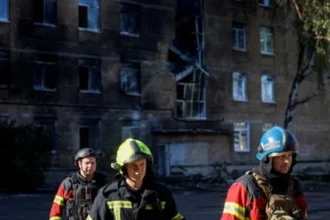
Ukrainian President Volodymyr Zelenskyy confirmed Tuesday that a massive wave of Russian strikes overnight resulted in at least 12 fatalities across several regions. Among the deceased is an Indian national, highlighting the international toll of the ongoing conflict as Moscow intensifies its aerial campaign. Ukrainian emergency services reported that dozens more were injured as missiles and drones struck residential areas and critical infrastructure.
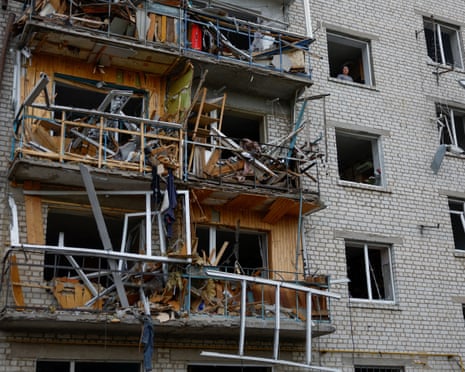
The overnight bombardment is part of a broader, sustained offensive that has seen the capital city of Kyiv targeted for six consecutive nights. President Zelenskyy stated that the strikes were specifically designed to "wear down" the nation’s resolve and its defensive capabilities. In addition to the loss of life, the attacks have caused significant damage to the country’s power grid, particularly in the southern port region of Odesa.
Local officials in Odesa reported that thousands of families are currently without electricity following the strikes. The energy infrastructure in the region has been a frequent target for Russian forces, aiming to disrupt logistics and civilian life. Furthermore, a border crossing with Romania was "deliberately damaged" during the raids, an act that Ukrainian officials characterized as a provocation against a NATO member-state neighbor.
Escalating Aerial Campaigns and the Odesa Power Crisis
The humanitarian situation in Odesa remains critical as repair crews struggle to restore power under the threat of follow-up attacks. The damage to the Romanian border crossing has also hampered the flow of goods and the movement of refugees, adding a layer of logistical complexity to the ongoing crisis. International observers noted that striking near the border of a NATO country increases the risk of accidental escalation, a concern that has been echoed by leaders in Bucharest.
Kyiv has remained under a state of constant high alert. The six-day streak of attacks on the capital represents one of the most intense periods of aerial bombardment since the early months of the invasion. Residents have been forced into subway stations and bomb shelters for hours at a time, disrupting the economy and the daily lives of millions. Ukrainian air defense systems have been working at maximum capacity, yet the sheer volume of incoming projectiles continues to challenge even the most sophisticated batteries.
The inclusion of an Indian citizen among the dead has drawn international attention. While the specific circumstances of the individual’s death have not been fully released, it underscores the persistent danger faced by foreign nationals still residing in Ukraine for work, study, or humanitarian reasons. New Delhi has previously called for a cessation of hostilities, and this latest casualty is expected to increase diplomatic pressure.

The Technical Challenge of Jet-Powered Drones
A significant factor in the recent success of Russian strikes is the deployment of new technology. Air Force spokesperson Yuriy Ihnat revealed on Tuesday that Russia launched more than 2,800 jet-powered drones at Ukraine throughout the month of August alone. These drones represent a major technological leap from the slower, propeller-driven Shahed models that defined earlier stages of the war.
Ihnat noted that the interception rate for these jet-powered variants is significantly lower, currently hovering around 60%. Their increased speed and altered thermal signatures make them more difficult for traditional anti-aircraft systems and mobile fire groups to track and destroy. The spokesperson told Ukrainian television that the arrival of these drones necessitates a rapid upgrade in Western-supplied air defense systems to maintain the current level of protection.
The use of jet-powered drones allows Russian forces to strike targets with much less warning. The reduced flight time from launch sites to Ukrainian cities gives civilian populations less time to reach safety and gives air defense operators a narrower window to engage. Military analysts suggest that Russia is prioritizing the production of these high-speed munitions to bypass the dense network of electronic warfare and kinetic defenses that Ukraine has established over the last two years.
Security Tensions at the EU Defense Summit in Ireland
As the attacks on Ukraine continue, European Union defense ministers have gathered in Wicklow, Ireland, for an informal summit to discuss the continent’s security architecture. The meeting, held under the auspices of the Irish presidency of the EU Council, is focused heavily on the "profound challenge" posed by Russian aggression and the need for closer military cooperation among member states.
Irish Defense Minister Helen McEntee opened the proceedings by emphasizing that the current moment requires a level of unity and resilience not seen in decades. The agenda includes discussions on maritime security, resilience against hybrid threats, and the continued provision of military aid to Kyiv. However, the security of the meeting itself has become a point of contention and a symbol of Europe’s defensive gaps.
Reports from the Irish Times indicate that a British warship and a specialized submarine-hunting helicopter have been deployed just outside Irish territorial waters to protect the summit. This move was deemed necessary because the Irish Defence Forces currently lack the capability to conduct long-range air defense or deep-sea monitoring. The reliance on the United Kingdom, a non-EU member, for the security of an EU defense meeting has reignited debates regarding Ireland’s neutrality and its military investment.
Germany to Formally Attribute Leipzig Sabotage to Moscow
The shadow of Russian hybrid warfare looms large over the Wicklow summit. German officials are expected to formally blame Russia for a failed drone attack that occurred last month at the Leipzig airport. The incident involved an attempted strike on a Ukrainian cargo plane, which investigators now believe was a coordinated act of sabotage intended to disrupt the supply of military equipment.

The German newspaper Bild reported that the Interior and Foreign Ministries are prepared to announce the results of a comprehensive investigation later today. While Chancellor Friedrich Merz has alluded to a forthcoming formal response, the details have remained closely guarded. The attribution of such an attack on German soil would mark a significant escalation in the diplomatic confrontation between Berlin and Moscow.
The Leipzig incident is not an isolated case. Throughout Europe, intelligence agencies have been tracking a series of suspicious events linked to Russian operatives. In Poland, authorities are investigating a suspected arson attack on a drone factory that occurred on Sunday night. The facility was a key supplier for the Ukrainian military, and the fire has caused a temporary halt in production, impacting the frontline supply chain.
Hybrid Warfare Concerns in Poland and the Baltics
The security situation in the Baltic region also remains tense. On Tuesday, both Estonia and Latvia were forced to briefly activate their air alert systems following reports of unidentified drones operating near their airspace. While no strikes were reported, the incursions are viewed as "gray zone" tactics designed to test the reaction times and radar coverage of NATO’s eastern flank.
Kaja Kallas, the EU’s foreign policy chief, urged defense ministers in Wicklow to "challenge conventional thinking" regarding these hybrid threats. She argued that Europe can no longer rely on doing "more of the same" and must instead innovate to counter Russia’s asymmetric tactics. Kallas announced the formation of a high-level group of former political and military leaders, including representatives from the UK and Ukraine, to develop a new strategic framework for responding to these evolving threats.
The integration of non-EU partners like the UK and Ukraine into this high-level group reflects a growing recognition that European security is indivisible. The involvement of British Foreign Secretary Ed Miliband in the Wicklow talks further underscores the importance of the "P3" (US, UK, France) and their European allies maintaining a synchronized front against Russian influence and kinetic aggression.
Norway’s Royal Transition Amid Continental Instability
While the focus of the continent remains largely on the conflict in the east, Northern Europe is observing a significant moment of political and symbolic transition. In Oslo, King Haakon VIII is set to take his oath before the Norwegian parliament following the recent death of his father, King Harald. The transition comes at a time when Norway, a key NATO member and a vital energy supplier to Europe, is recalibrating its own defense posture in response to Arctic security concerns.
However, the ceremony has been marred by health issues within the royal family. Norwegian media reported that Queen Mette-Marit will be unable to attend the swearing-in due to complications following a lung transplant she underwent in June. The Queen has also faced intense public scrutiny in recent months regarding past associations that have drawn criticism in the Norwegian press.
Despite these domestic distractions, the royal transition in Norway is seen as a pillar of stability for the Nordic region. Crown Princess Ingrid Alexandra is expected to take on a more prominent role during the ceremonies, representing the future of the Norwegian monarchy. As a country that shares a border with Russia, Norway’s internal continuity is viewed as essential for the broader security of the European North.
Strategic Outlook and the "Wear Down" Strategy
The coordinated nature of the overnight strikes on Ukraine, the sabotage in Germany, and the drone incursions in the Baltics suggest a synchronized Russian effort to destabilize Europe on multiple fronts. By targeting civilian infrastructure like the Odesa power grid, Moscow continues to weaponize the basic needs of the Ukrainian population, hoping to trigger further displacement and social unrest.
Military analysts warn that the "wear down" strategy mentioned by President Zelenskyy is intended to exhaust Western stockpiles of air defense interceptors. Each jet-powered drone, while expensive for Russia to produce, often requires an even more expensive missile to neutralize. This economic disparity in the air war is a central concern for EU defense ministers as they look for ways to increase production of cost-effective defensive technologies.
The events of September 1, 2026, serve as a stark reminder that the war in Ukraine is not a localized conflict but a central element of a broader challenge to the European order. From the streets of Odesa to the halls of the Irish summit in Wicklow, the pressure of Russian aggression is forcing a fundamental rethink of how the continent protects its citizens, its infrastructure, and its democratic values. As the death toll in Ukraine continues to rise, the urgency for a unified and innovative European response has never been greater.